High Horse

High Horse

  • About
  • The Golden Corral
  • Whinnies and Neighs
  • Make A Sacrifice
  • T Paulo Urcanse Prize For Literary Excellence
  • 2 Poems by Carson Jordan


    Félix Thiollier, Lady and Her Horse on a Snowy Day (1899)


    CONTRAPASSO

    I gorged myself on four lilies
    to absorb a lesson
    coincidence should spare crazy people

    The rise and fall of the stay at home girlfriend
    calling be good to a chorus that says be bad back
    How could anything be so soulful

    I was the wolf with the drooling tongue
    desperate to hunt something and drop it on your doorstep
    undertaking a wish as a device

    dancing at the threshold
    coincidence should have spared me
    dignityless like a deer at the pool

    my father is just a crazy girl
    a product of the year of Texas
    an insane woman dressed in deadman’s clothing

    coincidence is a bad host
    canary in a mine, blonde in a mustang
    the underside of an iceberg

    it is supposed to be fun
    there is neutrality in miracles
    days when foundation won’t blend

    I desire to be buried under a hard heavy stone
    and am learning that orchids are parasites that devour their host plant
    Such is life


    PHANTOM LIMB

    I reach you on a wax phone
    flip side of desert moon

    I want to say something about the wind but instead
    I’ll say this poem should feel like being dragged through sand

    I want to lap in the palm of your hand
    I want you to beg like dogs
    I want inside your ear
    as country collapses
    and wonder how many times
    could I wrap around your wrist
    before you taste
    what I want

    so, write my name while I watch
    through the mirror as I hold the rope

    I see a horse and feel nothing
    then I see you


    Carson Jordan is a woman on the mountain. She is the teacher and facilitator of MIND PALACE POETRY and the Poet in Residence at the Ruth Stone House. Her chapbook GOOD FOR HER was published with Dirt Child Press in 2022. You can find her work in Bruiser Mag, The Quarterless Review, Peach Mag, Noir Sauna, and shortie mag. 


    December 17, 2025
    art, books, Carson Jordan, high horse magazine, Literature, poem, Poems, Poetry, reading, Writing

  • 4 poems by Corey Qureshi


    $999,999,999,999,999

    Verging on all things I said I'd give up
    Because keeping track and staying disciplined is hopeless

    Fluttered lids. And their half-visions
    You noticed and asked but it didn't make anything feel better
    I used to check for you first thing on waking but can't be bothered now

    It's time for us to question ourselves the way a flute prods the meditations of a nighttime lull of a Martial Arts Movie

    Why do i continually want to cut out little tics? It won't lead me any closer to a crispy lifestyle. There's hardly any fluidity, instead, scores of fragments which keep us from substantial development. Seconds a lifetime

    The freshest looking foto is grimy in situ


    Male romper


    Most vocalists sound bad, regardless of genre
    I don't want to be put in a bind by saying so,
    but the way that light bing'd off your cheek
    led me down so many linelessly ivory
    hallways, repeatedly coming to and fading
    Fading: I wish I could for good I wish
    Minimal encounter would become
    I would become pastoral. alas
    My child has learned the word Never
    The melodramas contain unspeakable precarity

    Issues of kulchur:
    the incessant trenchcoat display
    opening to flash one's wares
    wears on an already waning interest
    There is a broad waning…

    I wear all green for good luck.


    No, i'm not that far gone

    I'm a man with needs
    Stuck behind a drunken police
    What can i tell you
    The nights are growing
    and with this , a shqdow
    —-yours, i can not nestle in
    The road winding, curvy
    Swaying like a decapitation
    Th final moments movements
    of an ending

    a Narcissist berates everyone that matters
    then says none of it mattered
    Ive got a new reason, personally

    Ending my associations
    You are trying to hurt my mind
    Trying to tell me what to like
    the Best Thing is to close the dor

    Drunk for one day
    Sleazzy at an angle
    I'm going away
    No not that far
    Well it's been fun
    But I'm going away


    Fertility

    A series of expulsions…
    Torrential my feelings
    Repressed for a moment
    Flood'ed posthaste with
    Reality and its necessary alterations
    None of it ever quite sync'd
    A stagger a stutter a flood
    of They Are Overbearing
    And worth neglecting
    What is Anyone Worth
    (Especially the narcissists
    in their epidemic
    of They Are Overbearing
    And worth the idea but not
    Reality and its necessary alterations)?
    I'm sidelong I'm nice I'm not really
    None of it ever Convincing.
    Does it matter. Does any comment matter
    If you get as subjectless as you can
    There's no need for persuasion
    There' a slick dip off into a fertile,
    Torrential series of expulsions
    Which will stagger off restless into
    A night flooded with fog


    COREY QURESHI IS A WRITER BASED IN PHILADELPHIA. HE IS THE AUTHOR OF SEVERAL CHAPBOOKS OF POETRY, MOST RECENTLY you are bereft IN OCTOBER 2025. HE RUNS THE WEBSITE / READING SERIES BOXX PRESS. @q_boxo

    December 6, 2025
    art, family, high horse magazine, life, Literature, mental-health, poem, Poems, Poetry, reading, relationships, Writing

  • Poems by Leah Marie Johnson


    A Prayer for Uniformity


    One white speck floating
    air holding bright eyed
    heartbeats missing love
    in a place it’s not okay to breathe in.
    If we count
    up to one-one-thousand
    Will the atmosphere heal itself?
    Closed mouth sky
    you hum hello in falsetto
    and hide away
    from my sight.
    We say God’s name
    to feel good about the landing.


    A Return to Listen to the Azalea Whispers


    The days have grown tireless again
    At the height of autumn
    Under an unforgiving sun
    I watch the leaves miss something
    Pure, sacred forest
    Somber, kindred spirit
    I find July hiding behind
    thick azalea trees
    bathing bare
    in the pond alone
    with a glimmer of afternoon turning
    while the
    hint of rose burns.
    Her sweet suckle runs rampant
    A wild love still surging
    Wrought in air so full
    Of time passing and regret –
    Fall is the time of year
    when all
    the lights turn out at the party,
    now only
    fateful mornings weave our languid
    evenings of fortune,
    reprieve from the heat
    While footsteps lead us
    back towards night, we follow like
    a moving sprinkler in
    her garden, shining.
    Make me one of your kind.


    Nods and Smiles


    i am one face amongst the masses
    train passing of eternity we are failing
    at being one
    even under the encroaching heat
    we face a cruelty
    in becoming.


    Letter to the Sun


    I will build a telescope to reach you
    To see our beautiful parts in technicolor
    Like a child laughing in the sprinklers
    or grass moaning at daybreak,
    live oaks fawning
    In the creek down the valley,
    While yellow animals are sleeping,
    and pink perennials are blooming.
    I wish it were easier to watch you leave
    Our lilac sky
    as we burn desire
    in a carousel designed by neon dreams.
    Though I believe we still have time
    I believe we can take care of one another,
    Of ourselves, I believe in the power
    Of us loitering around.
    I am asking you to stay
    Even though I know you must have larger
    things to tend to, stay
    And breach the air and open
    your arms in the morning where
    you hold me in the sweet suckle
    of yesterday’s sweat, so I can finally feel
    so close to the wanting.

    Leah Marie Johnson is a poet and writer living in and about California. She wants you to be emotional, for obvious reasons. Most of her work can be found somewhere on the internet, and you can reach her on her socials, God willing

    November 30, 2025

  • 1 Poem by S. Taufeequddin Azher

    R-H-M; or, The Womb 

    rot: the night that will 

    come to a redundant end,

    the verses forming easy ‘

    round the words already there. 

    rot: melting sweetness, 

    strangely charred. and 

    the millennium begins, 

    the millennium begins.


    S. Taufeequddin Azher is a writer from the Deccan.

    November 22, 2025
    art, high horse magazine, Literature, poem, Poems, Poetry, reading, Writing

  • 1 poem by Steve Bannon


    America, Rough-Cut Beauty

    America isn’t soft light on a postcard
    it’s the iron heartbeat of a nation that refuses
    to bow, break, or blink.
    It’s the hum of the factory at dawn,
    the diesel-throated promise of a road
    that stretches farther than fear.

    Beauty here isn’t delicate.
    It’s carved—raw, unvarnished
    out of people who keep going
    when the map runs out.
    It’s the farmer with weather for a face,
    the machinist with sparks in his eyes,
    the waitress who knows the names
    of everyone who’s lost something
    and still showed up anyway.

    America’s beauty is stubborn.
    It stands in the cold wind
    with its hands on its hips,
    daring the storm to do its worst.
    A beauty forged in contradictions:
    hope and grit,
    ideal and imperfection,
    a story always being rewritten
    by those whose voices were never
    supposed to be loud enough.

    And say what you want
    this place, this experiment,
    this unruly, relentless land
    it keeps rising.
    Not polished.
    Not tidy.
    But alive, defiant,
    and unmistakably ours.


    Steve Bannon is a poet, political strategist and media executive who served as an advisor to Donald Trump’s 2016 presidential campaign and as Chief White House Strategist. His career includes time in the U.S. Navy, investment banking at Goldman Sachs, and a significant role in media and film, notably co-founding the conservative news site Breitbart News. Bannon is known for his role in shaping right-wing populism and for his influence on the Trump administration and beyond

    November 20, 2025

  • More Poems by Colin Gee

    Sheafed floes

    Sheafed fielded floes

    dinner plates

    Bluegills stuck in the capsized mizzen

    Anthropomorphized geological anomolies

    and beasts

    Like carvings of ursi maritimi

    Bastardized little steamships

    Sibilants that fizz

    Fricatives that ackth-ackth you

    Albatross knockers

    on the stateroom door

    Taken in flight like

    frightened rabbitbrained accountants

    Lords of the frozen sea

    Statuesque and buttressesque

    Kafkaesque and Papaesque

    Those two ice caps

    skulls on a fat and watery man.

    Abarrotes Heber

    Everything you ever could want

    you can find in the corner grocery store

    plastic spoons and gumballs

    an ice lolly chest freezer

    bags of chile peppers

    and chile pepper suckers

    crickets fried in garlic

    oil vinegar and mayo

    soap shampoo conditioner

    room temperature pop

    sour cream and chorizo

    if you are lucky

    miltomate jitomate

    green serrano red serrano

    jalapeño mustard and industrial salsas

    Valentina Búfalo Botanera

    flip-flops and tp

    huge vats of raw chocolate

    gummy bears

    and towards the back

    where the ladies are gathered

    stern on their upturned buckets

    past the bottles of tourist mezcal

    gallon drums of aguardiente and bleach

    the nixtamal

    ash and hominy mash

    for tortillas

    where Heber in his tall rubber boots

    feeds it through a 90 kg an hour mill

    trough, rocks, and nixtamal tray

    The dough peeling into a basket

    into a black bag in a basket

    like a string of gnarly tripe

    of the god of the tortilla

    sometimes white

    sometimes off-purple

    who sacrificed himself for us.

    No one ever mentions him.


    Colin Gee (@ColinMGee) is founder and editor of The Gorko Gazette. Stories and novellas in The Penult with LEFTOVER Books. His novel Lips with Anxiety Press. Poetry and play out with DUMBO Press.

    November 2, 2025
    art, high horse magazine, Literature, Poetry, reading, Writing

  • Poems by Piper McKeever


    Sunday Blues


    Cowboy, don’t call me
    on the way to church, praying for poetry.

    I am not a Sunday girl,
    I don’t come dated for expiry.

    Move on out to Montana,
    like you always said you’d do.

    Find yourself a woman you can tame.
    Find yourself a woman who won’t leave.

    You were always so faithless,
    telling me how I’m just too free.

    Find yourself a countryside
    filled with wild, wild horses.

    If you catch yourself a Monday mare,
    please name her after me.

    Sunset Song


    If you ask, I will break the golden rule
    I will treat you in ways I would never desire
    I will let you dance along on your high wire
    It’s not too late to come away with me

    I’ve brought my horse to your doorstep
    I’ve brought you a pair of ruby boots
    It’s not too late to come away with me

    A sunset owes its brilliance to dust in the air
    I could kiss dust from your shoulders
    I could brush dust from your hair
    It’s not too late to come away with me

    Let’s ask the sky to make the dust beautiful
    Let’s forget the dust was ever even there
    It’s not too late to come away with me

    So come, come away with me
    I have conquered a thousand mountains
    What are another thousand mountains more?
    It’s not too late to come away with me


    Piper S. McKeever is a poet, philosophy student at Reed College, and a strong proponent of the American sonnet. You can keep up with her myriad adventures at pipermckeever.com.

    November 1, 2025

  • A Poem by Ginger Jones


    Swan Lake 

    White lilies and dopamine.

    I wanted to live this kind of life with you,

    Well liked and breathing deeply,

    Touching a sensation in the room.

    It’s blooming and smells like 

    Gardenias tapping at the window.

    Under a gentle moon,

    You can rest inside me.

    Lead by a light I have never known

    To call love and it’s mine, 

    and what’s mine is yours.


    Ginger Jones is a poet from California

    October 25, 2025

  • Poems by Austin Miles


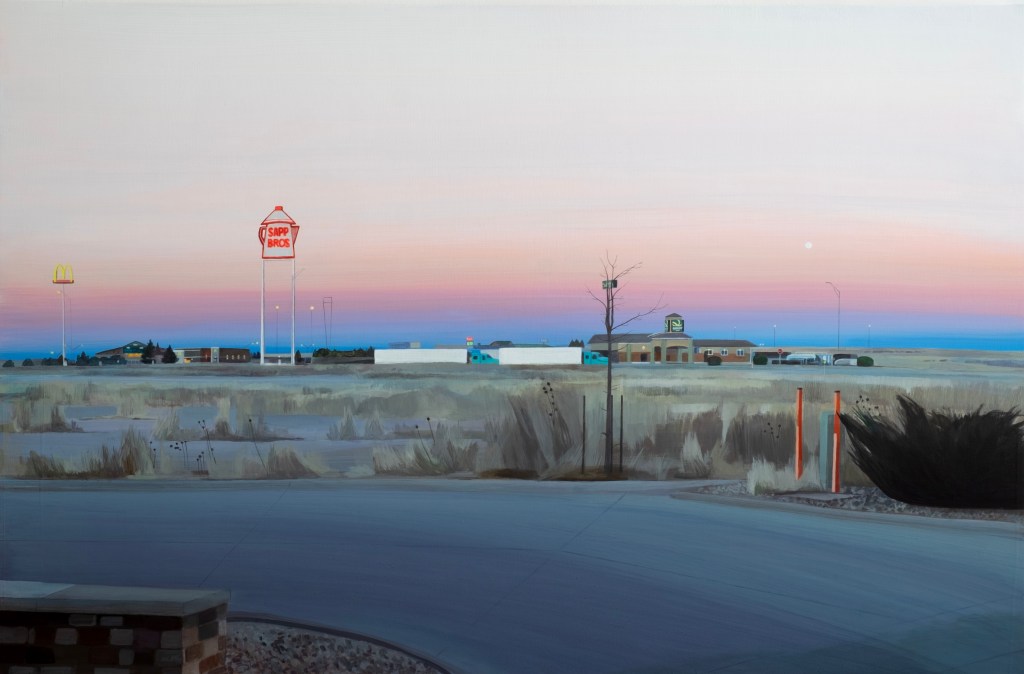
    Nebraska, 2025 by Madeline Rupard


    Sacred screen door

    a cold wind
    visits
    for a week or so

    clouds greet me
    @ my doorstep

    i look up


    The economics of pain

    I’m a frenetic – reaching for /
    waiting for a silverware

    various parking l
    ots appeal to me but

    esp. the immaculate
    strip mall ones

    with a

    sun settin into them


    a criminalized ecology

    prolific / jaunted the lot
    its emptiness I wanna

    touch it
    i’ve had enough

    a lot
    dusk
    perfect park job


    unwritten bible story

    a sidewalk crack
    could never haunt me
    school is a pile
    of old leaves


    Austin Miles is from southeast Ohio. He is the author of the chapbook Perfect Garbage Forever (Bottlecap Press) and has poems published in Touch the Donkey, Reap Thrill, Don’t Submit!, and elsewhere.

    (Painter: Madeline Rupard: @madelinerupard / madelinerupard.com)

    October 18, 2025
    alt lit, austin miles, autism, black, Chicago, em, emperor, everyone, gas station, god speed, henry miller, high horse magazine, idaho, Literature, miles, ohio, party, Poetry, tech, tomb raider, utah, wreck, you

  • 3rd Annual T Paulo Urcanse Prize For Literary Excellence


    T Paulo Urcanse was a Portuguese writer and activist, most famous for his short novel The Pucker Fish, which won him the acclaim of egghead academic types and ruff and tumble dropout members of the urban intelligentsia secretly living off the generational wealth of their parents but dressed in the uniform of a late 19th Century cobbler and/or coal miner.

    In a 1997 interview with the popular American television host, Montel Williams, T Paulo Urcanse said (via translator), “The point of writing is not free expression, or thought analysis through careful cataloging of tangential subject matter, but rather that one day, and God may it be soon, you write a bestseller and make lots and lots of money.”

    Over the course of his lifetime, T Paulo submitted his short fiction and poems to over 187 contests, with submission fees totaling in the quadruple digits, US$. Unfortunately, he never won. Not once.

    A couple of years ago, The Editors of High Horse began the process of rectifying the great financial injustices rendered upon T Paulo by global markets and sports fans and viewers of The Bachelorette everywhere, by announcing the First Annual T Paulo Urcanse Prize For Literary Excellence, giving away $500 in prize money to five very talented writers. In the process, we were fortunate enough to read through over 300 submissions from people no doubt as incredulous as we are about the lack of public acknowledgement by the academy for the utter genius that was T Paulo Urcanse’s writing. 

    In the spirit of continuity and finishing what you started, by Jove, it is with great ceremony and pleasure that we formally announce the Third Annual T Paulo Urcanse Prize For Literary Excellence.

    The Third Annual T Paulo Urcanse Prize for Literary Excellence is open to poets, writers, and essayists of all colors and stripes. Whether you be a lonely writer looking for community and wanting to make your literary debut, or a similarly eggheaded and celebrated writer in the vein of the namesake of this prize, we welcome your submissions with open arms, without fees or prerequisites, without ever having known you or met you at a cocktail party where we discussed the terror of contemporary history and post-structuralist theory or the pitfalls of the first person perspective in a short story or weird childhood stories that involve stray cats and the throwing of tennis balls at moving vehicles from behind bushes at night in the summer on the Main Street of the provincial town where we were raised.

    AND NOW FOR AN ELUCIDATION OF THE MONETARY PRIZES

    Fiction, Poetry, Essay, Criticism, etc…

    1st Place: $250, publication on the website, and an optional interview with the Editors.

    2nd Place: $100, publication on the website.

    3rd-5th Place: $50, publication on the website.

    Submissions are open from now (October 8th, 2025 AD) until October 31st, 2025 AD.

    You may email your contest submission as a PDF, Word Doc, or Google Doc to therealhighhorse@gmail.com, again, without a fee (but we would appreciate any donation to keep this all going!). Please put (Contest Submission) in the subject line of your message.

    Winners will be announced several weeks after the submission deadline on this very website, and elsewhere probably (i.e. X, Instagram, etc.).

    All blessings,

    The Editors

    High Horse

    Past Winners

    2024

    1st Place: Still Life of an Iris in Spring – to Fitchburg, Wisconsin; & The Odyssey

    By Ouristoprous

    2nd Place: The Singleton

    By A.J. Brown

    3rd Place: Facial

    By Henry Luzzatto

    4th Place: Names for Things

    By Amber Burke

    5th Place: Clarence Go Boom

    By Roger Ellis


    2025

    1st Place: Scorpion Season

    By Lee Tyler Williams

    2nd Place: Holyfields + Dangerfields

    By Niles Baldwin

    3rd Place: Watermelon Rhapsody

    By Norie Suzuki

    4th Place: The Solar Salon

    By Janna De Graaf

    5th Place: The Devil and the Mirror

    By Joachim Glage

    October 12, 2025
    books, creative-writing, Fiction, high horse magazine, literary contest, literary prize, open submissions, Poetry, submissions open, Writing

  • Poems by Cletus Crow


    Years Months Days 

    so i remain myself 
    despite you
    being a little bitch
    about the state of us

    our bodies have too many holes
    so we're kinda tubes
    for sad existence

    some nights
    your toes taste like mushrooms
    and laughter
    works better than lexapro

    in bed
    memory foam can't remember
    who was wronged


    WAFFLE HOUSE

    under golden glow
    of waffle house sign
    about to text
    sex dreams
    where we make out
    in lake radnor
    cold water
    so nipples are erect
    this just fantasy
    no pressure
    our lives one poem
    smothered
    covered
    hashbrowns
    good as fuck
    and i think of her
    as ernaux
    without inhibition
    watching eyes wide shut
    on my phone
    like pornography
    i do not touch myself yet


    Driving Drunk

    it often felt
    like hitting the jackpot
    as getting home safe
    a few thousand dollars
    my nights my own again
    when nothing killed me
    but i wasn't alive

    Cletus Crow is mostly a poet. His two collections are available from Pig Roast Publishing.

    October 9, 2025
    art, Cletus Crow, high horse magazine, Literature, Pig Roast Publishing, poem, Poems, Poetry, reading, Writing

  • 5 Poems by Simon Ravenscroft


    Meridian, sneeze

    Pollen you could cut with a knife
    grassheads everywhere opening
    puffling like steam
    engines, like pipe smokers
    puffling clouds
    then the trees breezily
    & the leaves
    fluttering, glistening
    in the glow
    of the bright orb
    up there
    still
    utterly still
    & silent

    not for us such
    stillness
    hurtling
    always
    moving
    in patterns
    predictable
    or not
    stillness down here
    is synchronous movement
    carried together
    in the moving
    air, the clouds
    of pollen


    Blurrily, no subject

    So the soft warm air climbs up
    from the south again & warms us up with it.
    The oscillations of a newly purchased
    electric fan cause the same air
    to throb & waver while the leaves
    of a small fig tree wither on a shelf nearby.
    I consider what it would be like
    to be a growing seed in this economy.
    You were fretting about that,
    revolving like a heat dome over it,
    blood spots at the corners of your mouth.
    I say to myself, I suffer too many ghosts
    for this lark of murky inwardness; but you,
    you were a flower. Outside me.
    I wanted to be an object for you.


    A bad moon rising

    with ropes
    I could carry it, that moon
    on my back, the lesser light
    with ropes

    shall I stay? what’s left to say of

    the mystery of love
    the mystery of others
    the mystery of sorrow
    the mystery of beauty in sorrow
    the mystery of the night, mystery of the dawn

    the shadows fall to the floor & play
    there as the branches sway backwards & forwards
    in a soft melancholy of form

    & I am wading in an indigo light

    think upon the ordinary things
    they swirl in intimate textures about your head & feet

    shall I stay? do you remember

    the broken times, like me
    with longing like a glassy flame

    when I would open to you like the rose?


    Witch-hazel / Goatsucker

    Sounds like great sighs echo
    around the boulevards of early summer,
    the artifice placed in question.

    What is it you’re scared of, I wonder.
    Are we not both tickled by fear,
    fraying at the edges in the building heat?

    The waters come only in storms lately,
    falling on the dry cracked ground
    seething with anger. Fickle image

    of a fickle heart. Nothing is ever
    finished. Place my hand in the small
    of your back, again. I guess.

    The trackways of the divining soul
    are terracotta, brittle for spring,
    winding & endless. The nightjar’s

    eerie calling rising & falling
    in the half-light. Desire shrouded
    amidst this pageantry of lights.


    Semblance, honeysuckle

    With too much to lose, not enough to carry on
    we are carried along gently, like babes
    in a stream of warm impermanence
    lukewarm maybe, observing, on the banks
    landmarks & discerning with our ears
    the amusing sounds of birds & other animals
    discerning the times but distracted, sometimes
    by familiar tasks
    a brief counting task, a task of naming
    tasks of collection & division
    distracted, sometimes, by the keen little joys
    of leaves, the silent parades of clouds
    passing jubilantly overhead.

    Precisely what is it that we are meant to be doing here?
    Loving each other?
    Remembering, from within, what matters?
    Forgetting all that?
    Fighting over scraps?
    Accumulating, dreamily, then wallowing like brutes?
    Fretting over justice? Tending to the earth?
    Burning it all up since, after all, why not?

    I look up at the hills, under cloud;
    it is so dark now, over yonder, to the south.
    It will rain soon.
    I am fearful of the dark.
    Many things are discovered in the doing of them,
    many things go missing in the drift,
    many things are lost in the slow-moving mists.
    When we realise how simple it might have been
    we will not forgive ourselves.


    Simon Ravenscroft lives in Cambridge, England. He is a Fellow of Magdalene College at the University of Cambridge. He has published poems recently in Osmosis Press, The Penn Review, Apocalypse Confidential, Full House Literary, Eratio, RIC Journal, Swifts & Slows, La Piccioletta Barca, Burning House Press, Red Ogre Review, and other places.

    October 6, 2025
    Fiction, high horse magazine, Literature, nature, new poetry, poem, Poems, Poetry, simon ravenscroft, the new poetry, Writing

  • Penelope Tall by Nate Hoil


    A second man was following her.

                She caught a glimpse of him leaning against the airport’s bar, with his back to the bartender. It was difficult to explain how she identified her gang of stalkers, but it had something to do with their sunken faces— blank and skull-like, their eyes falling back into their sockets. The faces of hired killers.

                Once Penelope had noticed the first man—the one who followed her from the baggage weighing station— it was only a matter of time before she realized that she was going to have some difficulty boarding her plane… Not without some frightening stranger’s unwanted interruption.

    Penelope gripped her carry-on bag under her armpit and kept walking. She knew exactly where her terminal was found, despite her frequent glances toward her paper ticket’s information. Any confusion or confidence about where her plane might be located was an act. She already knew she wasn’t getting on her flight. Still, she wanted the men following her to believe she intended to board— fooling them for as long as possible, giving herself more time to think up a way to escape.


                Do they know that I notice them? She wondered. Or are these professional stalkers so confident in their skillset, they believe me to be completely unaware?


    Penelope had to hand it to these goons. They were incredibly discrete. And the airport was so crowded, it would be impossible for the men to approach her without making a scene. She could see her departing plane’s gate, which looked like the barrel of a loaded cannon. If she hoisted out her ticket and walked through the gate, she would surely be obliterated into a meaty and sand-like cloud. If not right away… then eventually. Because during her time visiting this horrible city, she crossed the wrong person. Someone she should have known better not to betray…

    Since Penelope knew who hired these stalkers who followed her through the airport, she could be assumed that these trained killers knew her full name: Ms. Penelope Tall. The famed escort. The woman who could give you the whole world, by the hour. Indescribable periods of intense pleasure, divided up into each slight turn of the planet’s surface. And since her stalkers knew this, assuming they were hired by the man that Penelope chose to crossed, the men also knew what city Ms. Tall called home— the city she would be headed toward, if she were foolish enough to board her purchased seat on the plane.

                Penelope ducked beneath the endless heads and shoulders of the airport’s moving crowd, squatting to peek between the parade of legs. She opened her bag, ensuring that what she’d stolen was still in her possession. She felt the notebook’s metal spiral with her finger. A 13-subject notebook. Very rare in the office supply world. It looked more like a square cube than a notebook, but she was certain that there was writing inside it. She ran her fingers along the tightly stacked pages, knowing that whatever was written inside them would need to be read in private, to avoid causing a scene with whatever emotional reaction the words might cause in her.

    Penelope had slept with the notebook’s author four times in the last eight hours. All four experiences were a pornographic fever dream— transcending her mind into a deep euphoric trance. And during the last of her orgasms, she remembered a sudden feeling of surprise. As though she had been jolted awake. Her own nasally breath sounded alien to her ears, as though they belonged to a stranger. She wondered if she had somehow awoken on her wedding night— a sound like an open palm smacking against the surface of a pool. The poet’s king-sized mattress bouncing rhythmically, as her ankles hung heavily, her calves bouncing above her lover’s thrusting hips.

    In the airport Penelope felt the notebook again. She wondered if her erotic euphoria was what drove her to this petty theft, her marathon of orgasming again and again, which might have caused her to act criminally. As though she might have been hypnotized into stealing the one item that she knew no one else had access to. The 13-subject notebook, and all its handwritten verse. Could it be that I’m still dreaming? She thought to herself, peering between the crowd of walking legs, trying to glimpse whether her stalker was still stationed at the bar.

    If Penelope Tall had hidden a camera in the living room of the poet she had stolen from, she would have seen him pacing angrily and talking on his phone. Shirtless and enraged, his massive muscles brushed the edges of each doorframe as he walked from room to room. He looked like a human bazooka. His jaws clenched like the president of the sexiest planet an astronaut could ever discover.

    “Did you find her?” he said, gripping his cellphone in his knuckles. Hairline cracks stretched across its screen like broken ice. If Nate Hoil’s fist closed any tighter, the device would explode in his hand. The voice on the other end of the line sounded fearful of being crushed alive.

    “No, Mr. Hoil,” the timid goon said from the airport. “We lost her in the airport’s crowd.”

    Upon hearing this, Nate Hoil let out a guttural scream, hurling his phone into one of his many original Renaissance paintings. The device drilled through the frame easily, embedding itself in the drywall behind it. This rage would not settle until he got his notebook back. If he had known that sly and mischievous Penelope Tall would steal his latest manuscript, he would have left her sitting alone in the downtown bar.

    Unfortunately, since Penelope Tall hadn’t placed cameras in her recent lover’s home, she had no visuals of any of this. Therefore, she could only imagine what might be happening in Nate Hoil’s mansion, and whatever events had taken place there after she fled.

    Exiting the airport, toward the parking garage, her fear of being followed grew smaller with each step. Across the lot, Penelope found a plain-looking sedan, whose owner had failed to lock the driver’s side door. She climbed in and hotwired the engine, a flicker of boredom creeping over her face as she listened for the engine to rumble. The car started up like magic.  A small victory. For all she knew, Nate Hoil could have a connection to every taxi and bus driver in the city. He was, after all, the greatest and most powerful writer to have ever walked this Earth. And a man like that undoubtably has eyes all over the city. Driving cautiously, Penelope slowed and cursed at the exit’s meter, sliding a five-dollar-bill in its slot.

    ***

                Twenty minutes from the airport, Benjamin Moses sat at a hotel bar. The place was mostly empty aside from a group of quiet twenty-year-olds in the corner booth and a depressed looking man sitting on a barstool. Benjamin Moses noticed the group of twenty-year-olds immediately, but he could not see the depressed-looking man… because the depressed-looking man was himself.

                Ben stared into his glass of melting ice, looking as though the frozen cubes were the polar ice caps. He tilted his head backward, letting out another painful moan. He was convinced that a few hours ago he had just ruined his career.  

                “I feel ya, buddy…” the bartender agreed, although Benjamin very much doubted it. No matter what had happened to the bartender in his entire life, there was no way his day could compare to Benjamin’s disaster of a morning.

                “You don’t have a goddamn clue,” Benjamin scowled. Or perhaps he only thought the phrase, as the bartender continued to stare blankly over the top of Benjamin’s slouched and tired posture. Three hours ago, Benjamin had lost his companies biggest client—a horrible misunderstanding which involved a flirting secretary whom also happened to be the company CEO’s girlfriend. “Well, what about your wife?” Benjamin had asked, having met the client’s life partner at a baseball game this past Summer. “Why do you get two, while your wife and your girlfriend only get you?” This last part came off a little harsh. Benjamin would reflect on the word choice, wishing that he had said ‘Why do they only get ONE…’ instead of saying ‘why do they only get YOU.’

    On his barstool, Benjamin’s ruminations on the scene were cut short with a startling crash, as a pint glass slipped from the bartender’s hand, shattering into three jagged pieces across the wooden surface of the bar.

                “Ho— Ly— Jesus!” the bartender whistled, his eyes looking like two smoldering bullet holes, staring rudely at whoever entered the front door. Benjamin didn’t care to follow his gaze. He simply didn’t have the energy for it. In fact, it took all the strength in Benjamin’s body not to tilt his head backward and groan again.


                “Sweet Jesus, I was hoping you’d sit at my bar,” the bartender flirted, as this new mysterious customer took a seat at the barstool next to Benjamin.


                “Shut up,” a voice snapped. “Give me something I can drink quickly.” Now for the first time since Benjamin arrived, his attention shifted away from his own narcissistic self-loathing. He didn’t turn to look at the woman sitting beside him. For some reason, which he didn’t understand, he simply couldn’t bring himself to turn his head. As though a magnetic anxiety had forced his skull away from the voice, forcing him to stare dead ahead.

                The bartender returned with a shot glass filled generously with something clear. Out the corner of his eye, Benjamin watched a slender hand reach and remove the glass from the bar. The hand moved in a way that frightened him. As though its quick precision might be capable of punching holes through flesh and bone. “What’s his problem?” the voice beside him grumbled.

                “You know how it goes,” the bartender said. The vagueness irritated Benjamin. It felt as though the bartender was trying to include himself in Benjamin’s horrible feelings of failure and defeat. There was no way on Earth this man standing before them could possibly have earned such a painful entitlement.

                “How does it go, pal?” the voice beside him asked. This time, the person which the words were intended was undeniable. Not the bartender. Not the group of strangers in the corner booth. The woman on the barstool next to him was speaking directly to Benjamin Moses. Now he had no choice but to face this magnetic specimen, so stunning that she made the bartender’s glass slip right out of his hand.

                Benjamin sighed, a pathetic sound which lasted longer than he had planned. It felt as though he had to clench his jaw in order to prevent the sigh from turning into a groan. “What are you asking me?” he said, annoyed. From the look on his barstool neighbor’s face, this stranger seemed surprised that Benjamin hadn’t knocked over his own glass just like the bartender had. Instead, Benjamin just met her gaze, wondering if this unknown woman might ruin his life just like his client’s secretary had a few hours ago… In Penelope Tall’s defense, Benjamin Moses was the first man in a very long time who hadn’t gawked at the sight of her. It was normal for men to lose track of their conversations whenever Penelope entered a room. In fact, if Penelope entered a bar or business, and wasn’t met with a sudden silence, she would wonder whether she was doing something wrong. The male gaze had become expected.

                “That tasted like shit,” Penelope told the bartender, pushing the empty shot glass away from her. The glass glided smoothly, teetering on the ledge of the bar. “Give me something different. And I’m not paying for that last one.”

                The bartender nodded, not saying a word. Perhaps he sensed some sort of chemistry developing between the two customers in front of him. Benjamin on the other hand had returned to his slumped and pathetic pose. Penelope studied him, watching his mouth hang open like a sleeping dog. She knew that she couldn’t stay in this bar for long… Not with Nate Hoil’s goons out there searching for her. When the bartender returned with a different drink, she caught it in her fingers without looking.

                “Do you have a room here?” she asked Benjamin, who had begun to breath heavily through his nose. Her drinking buddy seemed unresponsive to her question. The bartender, on the other hand, did not let the question go unnoticed. From the way his eyes darted from Benjamin to Penelope’s he may as well have been Benjamin’s oldest friend. “Great Jesus, buddy!” the bartender cried. “Did you not just hear this lovely lady’s quest–?”

                “Go away,” Penelope interrupted.

                Benjamin’s eyes seemed to come back into focus slowly. He turned to Penelope, giving her an emotionless glance. If Penelope weren’t already using Benjamin for her own safety, his indifference toward her might have actually made her angry.  

                “I have one,” Benjamin said, his voice sounding strangely thoughtful in contrast with his blank expression. “But I think I’ll just stay down here a while. I don’t want to go sit by myself right now.”

                “How much did you serve him?” Penelope asked the bartender.

                “Only one drink, I think…” the bartender frowned. But looking at Benjamin, the number didn’t seem right. “He said he had just come from work,” the bartender added.

                “Hey!” Penelope snapped her fingers a foot or so away from Benjamin’s face. “I am asking you to take me to your rooooom.” She wanted to look over her shoulder at the hotel’s entrance, but worried that the gesture might come off as suspicious. She was certain that the door would make a noise if anyone walked through it. A noise had happened when she entered this space, hadn’t it?

                “I don’t think that I’d be all that fun right now,” Benjamin said. “I have had a very difficult morning.” Penelope wanted to tell him that she could relate. Instead, she reached out and took his hand in her own.

                “We could talk about it,” she smiled at him. “Let’s just go up and talk.” Keeping her eyes locked on her target, Penelope tried not to flinch as the sound of the hotel’s opening doors reached her ears. The busy streets outside became more audible, as someone unidentifiable entered the building on foot.

                “Howdy,” the bartender said to his new customer. “How goes it, Sport?”

                If Penelope’s eyes could turn all the way around in her skull, she would do so now, in order to catch the slightest glimpse on the new customer. Her ears stretched impatiently, begging to hear what this new arrival might say to the quiet barroom first.

    ***

                In his home office room, Nate Hoil stared at a new notebook. A weak little three-subject. The pages were blank and haunting, as if mocking phrases appeared and disappeared within the notebook’s empty lines. He tried to remember something… Anything… which he might have written in his old notebook— the one which the horrible Penelope Tall stole from him. Gripping the notebook by the spiral, his knuckles became white and painful. He hurled the notebook angrily, smacking a lamp off the corner table. The lamp tumbled down with a crash.

                “They have to find her,” Nate Hoil growled. “They simply must…” But after crunching his cellphone in his fist earlier, he could not get ahold of any of his tactical goons. He mourned letting Penelope Tall into his home. He should have just left her there at the bar, legs crossed and swirling her drink like a squishy little magnet. He had never met such a regrettable demoness in his entire life.

                If Penelope Tall had indeed hidden a camera in Nate Hoil’s home office, she would have leaned in closer to her computer’s monitor in order to see whether he was weeping. Droplets of tears dribbled across his empty notebook, some of them powerful enough to soak through ten or twelve pages. Upon seeing these tears, and the places they fall, she would have wanted to steal this new notebook as well.

                Lucky for Nate Hoil, Penelope did not have such a camera placed inside the office. Instead of squinting her eyes close to this imagined screen, she sat holding her breath at the hotel bar, trying to persuade a blubbering moron into taking her up to the safety of his room. “Woe is me,” Benjamin Moses said, his face drooped upon the bar beside her. Watching as Benjamin buried his face into the crook of his elbow, Penelope was certain that she had never heard anyone say the phrase Woe is me sincerely.

    Not until now.

    Not until this pathetic little man cursed her with his inconvenient presence.

    ***

    By the time Penelope convinced Benjamin to bring her to his room, the faceless stranger sitting beside them at the bar had already come and gone. The stranger hardly said a word. In fact, after a minute or two, Penelope had quit worrying about this sudden barstool drinker’s appearance all together. As for Benjamin on the other hand, the President of the United States could have sat down next to him and he hardly would have batted an eye. It wasn’t until Penelope grabbed Benjamin by the arm, insisting that it was time for him to go to bed, that she was finally able to lead him up to his room, scanning his room’s keycard and dropping him backward across the room’s king-sized bed.


    “Are we going to have sex?” she heard Benjamin grumble. The words made her want to strangle him. Perhaps the only thing stopping her from doing so lay in the fact that she didn’t want to look at him any longer.


    “Go to sleep,” she said flatly. Now her fingers felt for the notebook in her purse. She wanted so badly to open the notebook, but the noise it made might have only prolonged her more responsible interest of hearing Benjamin begin to snore. She tried to control her breath, inhaling and exhaling as quietly as possible. She continued to do so for several minutes, until a sharp snort sounded from across the room, followed by the heavy tired breaths of a man who might sleep for days. Smoothly, Penelope withdrew the notebook, letting it fall open to a random page. She began to read the rough handwriting as best she could in the room’s dim light. Before she turned one single page, she found herself biting her knuckle to keep from crying.

    “You son of a bitch…” she whispered, hugging the notebook against her chest. “You’ve really done it this time, haven’t you.” Outside her hotel window, the sun would set soon. The stars would show up, and way out there among them, the sexiest planet in the solar system would be grinning down upon Penelope Tall, watching her turn page after page, deciphering the greatest poet on Earth’s handwriting.

    ***

                After a few months, Nate Hoil had forgotten about his stolen notebook. It wasn’t the first notebook he had written in, and it was never going to be the last—not by a long shot. The hazy memories of that notebook’s sentences might somehow seep into new pages. And if they didn’t, were they really supposed to be remembered in the first place? In fact, if someone pointed a security camera across the patio of Nate Hoil’s swimming pool, they would see that he had completely forgotten about the notebook entirely. Craft beer in hand, he stood just above the surface of the pool. He watched adoringly as two world-famous ballerinas swam circles in the water, encouraging him to jump.

                “I’ll be back,” he smiled, leaving them to groan in disappointment. His feet patted through his summer home’s sliding glass door, across the tile hallway, and to the front entrance where the mailman had recently stuffed a stack of envelopes through the mail slot. Three letters glided across the tile in a fanning triangle. Nate Hoil slowed to reach down and pick them off the floor. The letters were exactly what he expected: Junk mail… Junk mail…

                Pausing at the third envelope, he felt lucky that the handwriting upon it’s white paper caught his eye. If the address had been typed out, he likely would have shuffled the envelope into a stack with the others. Instead, the curling green lettering which drew out his name made the writer’s eyes widen. A beautiful handwriting—almost too beautiful. He could hear vague splashes coming from the pool behind him. He considered going into the other room, suspicious that whatever might be found inside this envelope might be best kept to himself. The flap of the envelope tore free beneath his thumb. He widened its insides, removing whatever was inside it… And gasped.

    There it was…

    His forgotten notebook. Or rather, a photograph of the notebook. He was so shocked to be reminded of it, the green painted finger nails clutching the cover so tightly. The cover seemed to be put on… backwards? He let the mysterious envelope drifted to the hallway floor like a fallen leaf, as he held the photograph closer to his eyes. His hands shook as he studied it, the notebook and the fingernails, soon realizing that the notebook had been photographed in a mirror. Presented toward the mirror’s glass, a blinding flash from the camera’s light shining across the mirror like a blazing sun. His eyes darted back and forth, studying the image for clues. But the only clues he found was a simple silhouette. A seductive curve hovering behind the notebook’s presented reflection.

    “Oh God…” he stammered, flipping the photograph over. He begged that there might be some sort of note on the back. The photograph split in half, revealing a second snapshot stuck to the back of the first. Hands still shaking, he pulled the images apart. He could hardly bring himself to turn the second image, already knowing what tormenting demoness he would find on the developed image’s opposite side.

    “Oh God….” He groaned louder. He wanted so badly to drop both photographs and run right out the front door. In the second image’s stillness, he locked eyes with her face. She seemed to bully him, to beg for him to say her name. Although her lips didn’t move, fallen slack in a primal snarl, Penelope Tall seemed to howl out despite her captured motionlessness. The covers of the notebook lay open like a butterfly, the spiral drooping across her bare chest, as she sprawled across a jumble of satin sheets. Her knees fell inward against each other and for a moment he believed he saw her muscles flex. He felt that he could hear her… In the same rude and unapologetic way she had, as though she had suddenly found herself hanging from the ledge of a cliff.

    He knew there was no way of finding her. Even if he learned where this bed might be located, there was no way she was still there at this point. She was probably in a different country by now. Or perhaps these pictures were already taken in a different country, and he was two countries behind her instead of one. Maybe Penelope Tall had managed to hitch a ride to another planet. To another solar system. To another time entirely. The future or the past. And if she had managed to do so, how could he possibly know the difference?

    What could Nate Hoil do, except stand before his doorway and stare down longingly into the photographs that stayed trembling in his hand? He shuffled the two photographs neatly, so their corners were stacked and even. The pool had fallen silent behind him.

    “I’ll be right out,” he called backward, toward the open sliding doors to the swimming pool. He waited for an answer. There was none. Squatting down to pick the handwritten envelope off the floor, he examined the writing again. There was no postage stamp on it. Someone else was about to betray him.  


    Nate Hoil is an accomplished writer and editor, particularly active in the US literary scene. His most notable published collection, 24 Hour Monologue, consolidates his earlier works and has received positive acclaim from readers. He is also responsible for Secret Restaurant Press.

    October 5, 2025
    books, crime, detective, Fiction, hard-boiled, Literature, mystery, nate hoil, noir, romance, Short Story, Writing

  • Vignettes by Conor Hultman


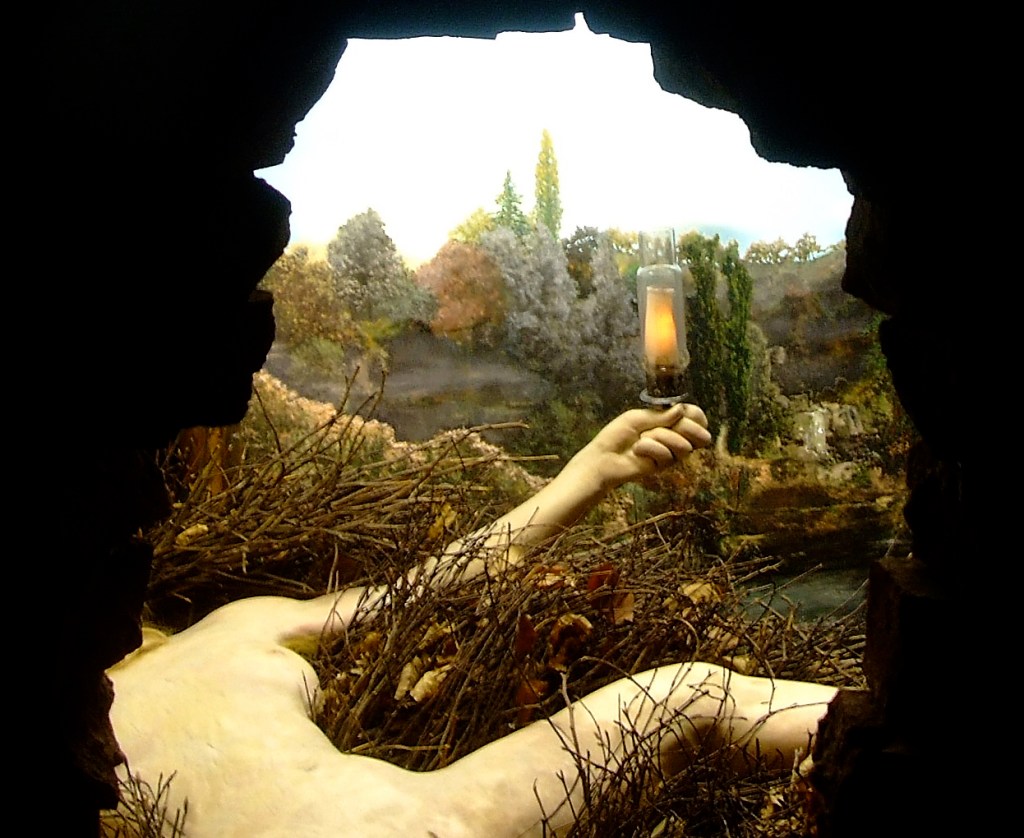
    "Étant donnés: 1° la chute d'eau / 2° le gaz d'éclairage" Marcel Duchamp, 1966

    Sea Bright
    white panties
    one blue sock
    a girdle like garment
    one horseshoe shaped silver ring w/ multi colored stones was on her pinky finger
    the word sterling was printed inside the ring


    Santa Clarita
    needle track marks on both arms
    tattoo on right breast of moon & stars
    tattoo in groin area of horse
    tattoo on back of rose & winged horse
    tattoo on right shoulder of butterfly

    gray knit shirt
    blue jeans
    white camisole

    the decedent was located in a vacant lot

    Lompoc
    brown sandals w/ a gold colored buckle
    a dark blue blouse
    black bra
    pink bikini panties
    what appeared to be homemade white hip hugger bell bottom pants decorated w/ a blue floral print (daisies w/ a red center)
    the females clothing is described to have been in fashion for those in her age group at the time
    thin horseshoe shaped gold earrings

    hunters found the victims body in a quarry a few feet down an embankment
    her body had been dragged there across dust & scrub brush & dumped behind a cluster of rocks w/in sight of old highway 1
    investigators believe she was killed there

    she had been stabbed multiple times & her throat was slit

    the victim was later buried in the lompoc cemetery

    author sue graftons novel Q is for quarry is loosely based on the investigation of this victim

    Los Angeles
    tattoo on upper right chest
    TE ODIO Y TE QUIERO
    upper left chest
    soy tu ley…tirla…
    upper left arm a cross made w/ arrows
    upper left shoulder R T F
    additional tattoo on upper right arm of a female wearing crown w/ a bell in her right hand

    black jacket
    light blue long sleeve shirt
    white undershirt
    white undershorts
    black pants
    western style zipper boots
    watch
    white metal ring horse shoe design w/ 11 clear stones
    inscription of 14K G E over ESPO


    Lancaster
    blunt force trauma

    white long sleeve sweatshirt w/ collar
    jones label
    blue levi jeans
    black
    ankle length boots
    brown socks
    mens black & white t shirt
    white lace
    accentuate bra
    black
    lace panties
    a belt w/ a harley davidson belt buckle
    yellow metal chain w/ horse pendant around neck
    yellow medal chain w/ catholic medallion found in victims right rear pocket

    the victim was located among some bushes in a remote hilly area
    she was found nude from the waist down
    lying face down on a green electric blanket

    she was known to associate w/ harley davidson motorcycle riders
    she may have used the nickname gypsy & worked at the tennessee bar in culver city
    california prior to her death 


    Saint George
    tobacco staining on his teeth indicates he was a smoker or tobacco user

    2 shirts
    a jacket
    denim pants
    marshall fields boots
    three blankets
    boots & denim clothing date to the turn of the century
    the number 816 is stamped on the inside cotton liner of the right boot

    the decedent was located in the webb hill area
    in a cave

    his boots had low wear
    suggesting he may have traveled by horse
    rather than on foot

    local newspapers combed for missing persons during that time period
    none were found

    Conor Hultman lives in New York, New York

    September 28, 2025
    art, books, Conor hultman, duchamp, Fiction, high horse magazine, Literature, Poetry, vignettes, Writing

  • 3 Poems by Adrian Frey


    Return to Salt Springs

    Winter barely left,
    Right at the end of March,
    The scent of spring rain had yet to overtake,
    A faint burn of frost in the nose.

    Offroad right before the trail to the spring,
    A muddy plain with an endless grey horizon,
    We crawl on top of my car like toddlers,
    To avoid dirtying our shoes,
    We look out like wolves,
    And howl forever,
    Into that deep hibernation of the land.

    She strode over the windshield,
    A strange beast in the night,
    Barely caught in the headlights.

    We laid out spent packs of cigarettes,
    And bags of potato chips,
    From the slow trip down,
    In the car’s side pocket,
    An ossuary for the bones of a saint.

    The saint left the church married now,
    Hardly seen by the sun or man,
    Heard only in memory's bark,
    I howl too,
    Answering the call of dogs.


    Letter from the Body Farm

    Barbed wire blows in the wind,
    Moonlit coolness emanates from the fence,
    A stag of white light walks right through,
    And lays between rotted furrows,
    Ready for death,
    Last breath and last dream walked hand in hand for miles,
    Between bloated pig carcasses and corpses of old men.

    In a briar patch that hid blackberries,
    A child rolled fruits between his fingers,
    His jeans caught on burdock,
    He picked each bulb out,
    One by one looking down,
    The child could not catch the stag,
    An escape that did not fail.

    Yellow paint on a woman's forehead,
    Flies wage a heroic battle above her brow,
    Casting shadows you can see through,
    Onto wrinkles,
    Light through small wings,
    Stained glass in miniature.

    Men in hazmat frocks give each death their due,
    No clocks on the farm to keep time,
    Just clipboard urns,
    Here plucked weeds become soil after weeks of waste,
    Bones the dreaded banners of previous times,
    Buried by no one.

    Doggirl flicked the lightswitch in the funeral parlor,
    And whacked her tail on the coffins,
    The ghosts laughed,
    And remembered happier days of catfish on the line,
    Bluejays begged her to stop,
    Restless ghosts aren't easy to avoid.

    The flowers asleep,
    Took no notice of a child with blackberry stained hands,
    Who walked right past,
    The peeled shellfish legs of young women.

    Stars above,
    The only eyes for a little while,
    Over rotted furrows,
    And flies that trickle,
    stained glass sweat.


    Pallet Bone Blues
    Eyebrows heavy my head folded down,
    Night settled over low flames,
    That reflected in the pond a few yards away,
    Pallet shadows danced like bones in a macabre march.

    Two people sat on the paint stripped bench,
    Where the yellow plank ribs were lifeless,
    John’s head on Ann’s shoulder,
    Eyes closing,
    Her wide open blue eyes,
    Reflected a low flame,
    Empty cans stood like the pines,
    At our burning backs.

    “John” she said,
    And poked at him,
    He slept through,
    Like the dog in the bathtub inside,
    Heavy as a skeleton,
    Who refused to rise,
    Even when you slammed the door,
    Despite the whole world out there,
    On the march just for him.

    But it’s hard for me to remember it cleanly,
    Considering I was half asleep myself.


    Adrian Frey is a 24 year old poet from Upstate New York. Their work has appeared in APOCALYPSE CONFIDENTIAL and Poem Pilled. Their Instagram is @aj_frey and their Twitter is @slowcorecowboy.

    September 21, 2025
    fantasy, Fiction, frank stanford, high horse magazine, john ashberry, Literature, Poems, Poetry, Short Story, Writing

  • Three Poems by Travis Burkett


    Dearborn Inn

    I saw him in the lobby

    with a briefcase

    deerskin and brass

    $1 off antacid coupons

    sticking out the sides

    He told me there

    was no seam between

    our encounter and a

    marketing conference

    he’d attended in 1988

    That the future

    was set for him

    and me and the lady

    behind the desk

    and he belly laughed

    We are already the

    purest and vilest

    versions of ourselves

    we are forever

    picking up breadcrumbs

    He said there was no

    use in crying over

    our lost loved ones

    because they’d always

    be there in 1963

    Jogging on the caliche

    guiding the bicycle

    saying

    you can do it, Charlie     

    I’m letting go now

    June Storm

    I was out there

    a headful of grievances

    a bellyful of burning Busch

    shaking a Stillson wrench

    daring God to strike me

    thunderstorm galloping in

    from the far blue west

    —when it occurred to me

    that I knew nothing

    that I could not even

    call into order

    my own grief among mankind

    and this awareness did not

    make me feel one bit better

    it was no consolation for grief

    but the fight went out of me

    and the wrench clattered

    on the hardpacked red earth

    there was no putting back

    what had been ripped

    from trembling arms

    I prayed the doubtful prayer

    of those befuddled by

    the small still voice

    in deserts far west of Canaan

    and I didn’t feel much

    other than hushed hurt

    and the shadow cast

    on my grievances

    towered over

    by something

    I could not discern

    learning to drive

    give it the gas

    let off the clutch

    yeah that’s it steady

    look where you’re going now

    drive in them tracks

    aight we’re meeting a truck

    get over

    not that far

    you’re goin in the ditch

    dammit boy

    it’s alright

    just be glad it ain’t rained

    shoulda already

    put it in four wheel

    yep, alright now into first

    easy’n steady

    nope

    try again

    that ain’t it either

    now don’t get frustrated

    this is how you learn

    that’s it, now give it the gas

    almost had it

    no I’m not gonna get us out

    I wish I could

    but it’s beyond me now


    Travis Burkett is the author of An American Band (TCU Press, 2024). He writes and farms cotton in West Texas.

    August 29, 2025
    art, books, high horse magazine, Literature, poem, Poems, Poetry, reading, Writing

  • Chinese School in Minneapolis – St. Paul by Lev Xue


    The Chinese School was an average High School taken over on Saturdays.
    A steady stream of Toyota RAV4s, 4runners, Land Cruiser, Nissan, Honda...

    Chinese School in Minnesota,
    past the 35-W bridge over the Mississippi river
    rushing waters of a miniature silicon valley in the 1970's brief and yet
    enduring high tech manufacturing in the region.
    3M duct tape! Double sided tape! safety neon! The land of 10,000 lakes!

    Chinese School in St. Paul, Minnesota;
    somewhere in the vicinity of St. Thomas University,
    after you drive past Lake Calhoun.

    The parents of the children in Chinese School
    worked in high tech manufacturing,
    at the University of Minnesota,
    carried lunches of leftovers in plastic tupperwear in a plastic bag,
    in khakis, button ups.

    The children slid out the car doors at the Chinese School in St. Paul, Minnesota
    like fish or eels one after the other out of transparent water filled plastic bag brought home from the pet store. They flop in the aquarium and rush out, eager to swim around real and fake algae, zen rocks, their new permanent miniature underwater home.

    Not all of the children at the Chinese school were Chinese – some were Taiwanese. Some, in fact, the 56 minority tribes of the Chinese nation, popular on CCP propaganda websites.

    The Taiwanese of the Chinese school would, several years later, separate, beginning their own rival Mandarin School.

    Cockroaches crawled confidently on the ceiling and over the door frames.

    Grandmothers walked the hallway regulating behavior. No bubble gum! No running! No swearing. No abnormal behavior of any kind.

    It was best to start early eradicating unhealthy behaviors.
    In a lifetime, you can lose everything, but the last thing you will lose is your health.
    She was in the 4th grade.
    Her friend David, this last week, had begun holding hands with another boy.
    His name was Richard.
    They were being a bundle of sticks together.

    Richard had recently moved from Singapore with his parents, also graduated Graduate students, like Her parents.
    Beginning two weekends ago, David and Richard were inseparable.
    They walked down the hall skipping after the bell holding hands, talking.

    About what? Probably Warcraft II, Command and Conquer, Sim Ant.

    They both had bowl cuts and she had a bob.

    She also played Warcraft II, Command and Conquer, and Sim Ant.

    She clung to the doorframe, when the red metal class bell rang, a hydraulic system for interruption of thought.

    The bob in her face, she sucked a strand of hair, it was dusty and salty. It had sweat, bits of yesterday’s dinner, and drool from when she sucked it last.

    Spying Lah?
    The two boys she was looking for walked up from behind her.
    They poked her in the back

    Richard still spoke Singaporean english. Singaporean English retained usage of Sentence-final particles common in east asian languages, including Cantonese, Japanese, Mandarin, and Hokkien.

    David never felt comfortable holding her hand.

    Because she was a girl – what did it mean to hold a girl's hand?

    Holding hands,
    walking down the hallway,
    the grandmother walking around them, in front of them, in opposite directions,
    patrolling
    their little penises swung between them, like pendulums,
    possibly in sync, in unity,
    gravitational potential,
    and afferent potential.

    Perhaps, in the absence of the possibility of that synchronicity,
    they felt uncertain
    their small boyish minds drew a blank
    not ultimately able to compute

    What did one do with blanks outside of math problem sheets?
    Kumon worksheets?
    Dread, punishment, accomplishment -- swirl of mixed up feelings!

    Why are you guys holding hands? She replied, LAH
    Do you want to hold my hand, she wanted to ask. But would not.

    It feels good, David replied. It’s fun. We’re friends. He added.

    She put her left hand behind her back. Then her right hand.

    Hold my hand then, she reached out.

    They looked at her blankly, instead of direct refusal.

    Girl-with-bob, though she would never admit it in the future, kept her hand extended for some time. She was hoping for a miracle, a gesture of radical difference on the part of her male friends.

    After 30 seconds, or what seemed like an eternity –

    Girl-with-bob spoke
    do you want me to call your mother?

    She asked the two boys, in a sweet tone of voice.

    They stared at her blankly.
    Why?

    I am going to tell your mother you guys are F-A-G-G-O-T-S, she threatened.
    Threats came easily to her.

    My mother doesn't care about faggots, David replied.

    His mother, a former doctor educated in post-reform China did not care about faggots. Same sex desire seemed a plausible intensification of what she had experienced personally in middle school and high school, part of the first generation of women to attend college in New China, studying together, holding hands, talking about the futures they would have in an altered China, or perhaps in Hong Kong, London, Sydney, or in the USA. For David she wanted the best whether it was with a man or a woman, a healthy or unhealthy person, just a place of felicity, patience, constructive feedback, generous but firm money management, shared good health. A good woman, David's mother, a good generous woman of felicity, patience, constructive feedback, generous but firm money management, and good health, she believed it was "hard enough to live a normal life."

    Richard’s parents did not know the term faggot.
    They had moved from Shanghai to Singapore to Sydney to Minneapolis, Minnesota in the span of 10 years in search of great wealth. They did not have time to learn slang.
    Nor would they have cared if Richard was a queen or a twink or a bear – as long as he was Rich!

    The other boy whose name was Richard

    The girl-w-bob saw their faces,
    their calm, boyish faces.

    She had to think of another insult, a diversionary tactic. Jesus you guys are little PUss------

    An old grandmother walked down the hallway in between classes.
    She had in fact been circling these three,
    sensing tension, discord, disagreement

    She was a sexist, favoring boys over girls.

    She was a realist, in favor of giving children a taste of the order of the symbolic and the real.

    "the state of nature from which we have been forever severed by our entrance into language."

    no running, no swearing, no hitting

    no need to say what is easy to leave unsaid

    "What did you say?" she said to the girl w bob.

    In fact, the girl-w-bob and grandmother had much in common, bitter envy about exclusion from hand holding, homosociality and its real intimacy in childhood, two boys at the astroturf playground w giant practice net, one fore, one aft, one throwing, one ducking, fetching, one passive, one active, one wholly vulnerable in front of the other one putting his body in the path of pain, hurt, injury. One or two whose bodies embodied entwined, useful in the practice of sport, in the care of the self, which is sport, a social psychological enfirmament of the material manifestation of the soul.

    this the woman, the girl, denied on account of her sex

    what is sex? what does it mean to you ?

    "I didn't say nothing" the girl replied, aware of her disadvantages.

    "If you didn't say anything than why did I hear something?" the grandmother said

    "Are you accusing me of losing my hearing?" she continued

    "Are you saying that because I am old I do not know what is going on in the world," the grandmother kept going

    "are you saying I am ugly and do not know what it's like to be young and desired by boys?"

    "even boys who hold hands with each other?"

    "Who may desire the innocence of a girl, or the reproductivity of a woman"

    "no, no, no" the girl with bob muttered, knowing already that she has lost.

    "Punishment," the grandmother declared, "Stand in the corner for 10 minutes." She raised a finger, "And I will tell your mother when she picks you up."

    The girl-w-bob stood in the corner of the long hall way of the Chinese school, which was a normal high school rented out on the weekends for extra cash. She couldn't help but cry.

    "Faggot," the two boys holding hands said to her. "Only faggots cry."

    Lev Xue is a writer living in the red hook neighborhood of Brooklyn. He’s proud to be learning to skateboard, and volunteering at the community garden. Previously he’s been published in Fence, Jubilat, Keith LLC and other magazines. He lives with his border collie dog, poopy Xue. 

    August 26, 2025
    chinese school, Fiction, high horse magazine, lev xue, minneapolis, st. paul

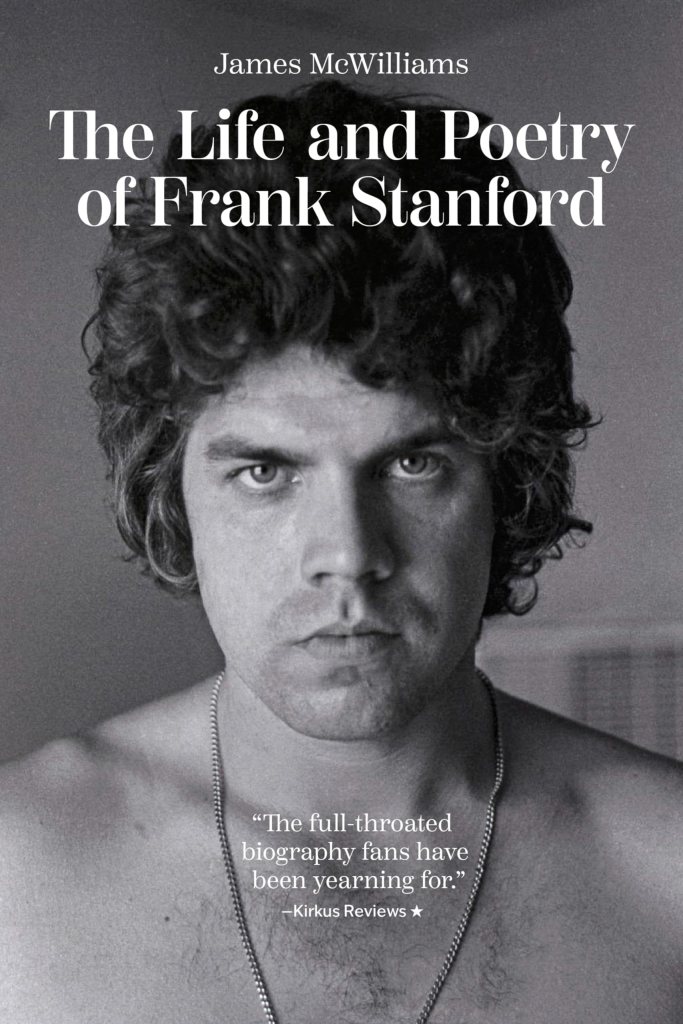
  • Wes Tirey interviews James McWilliams, author of The Life and Poetry of Frank Stanford


    Brothers & Sisters—the world works in mysterious ways, indeed. I could tell you how I came to discover The Last Panther of the Ozarks, but it does not matter; it happened like anything else happens: by mere chance, pure accident, random consequence. This is how things go.

    One day you’re on one path, the next day you’re on another—hellbent to wild country. The strange thing is, you had seen and heard this place before, in your own mind some time prior, in both dreams and in waking life. It is not a strange land; you nearly know it already—its vistas and customs, its lore and language. It is a vision and song combined. You are a welcome pilgrim.

    Brothers & Sisters—this is where I found myself. I will tell you now some things I saw: breathing ghosts of the river deltas; a country gentleman of French ancestry on horseback; a woman on a raft bringing milk, cornmeal, and candles; Cajun balladeers; Benedictine monks asleep in canoes; a preacher carving his sermon with a butterfly knife; bluesmen in the barbershop singing their songs of sex and death; an outlaw with a mandolin leading a funeral procession; cottonmouths sucking the blood out of children in their sleep; levee builders; dam builders; men and women in union as if giving themselves to a Moon-God; and Death himself took many forms: he was a long black train; he was a bird; he was a riverboat captain who knew your mother’s maiden name; he was a pilot who handed you his silk scarf; he spoke a dialect of Latin and Creole and sang in the high lonesome tenor; he wore a leisure suit and always had money for the jukebox.


    Time ran like a camera on fire. I brought back three souvenirs: an arrowhead, a feather, an eyelash.


    ⤅

    WT: As much as I’d love to try to ask my questions in prose poem form, I don’t have the chops to pull it off—so I’ll switch to a more straightforward delivery. First of all, congratulations on the publication; this has been a long time coming for the already initiated to the work and world of Frank Stanford. What does Stanford’s work mean to you and how different is your relationship to it after eight years of research? 

    JM: I first discovered Frank Stanford’s epic poem The Battlefield Where the Moon Says I Love You in 2000, just after Lost Roads published the second edition. Reading it felt like I’d caught a rogue wave during a fever dream in the middle of some mythical ocean, rode it like a banshee until it dumped me in some wayward Delta cotton patch, where I woke up naked and disoriented, panthers and hawks circling. Changed. That’s about the best I can do for telling you what Frank’s work initially meant to me. Over the last two decades, especially during the research and writing of the biography, I’ve recovered some of my balance, knocked the shine off a few Stanfordian myths, and partially demystified the fumarole that fueled Frank’s poetry. But–and this is critical–knowledge has not ruined experience (I’m an historian, and we can make anything boring.). Even though I have probed the depths of Frank’s life and work as much as I can imagine anyone probing into it, reading his poems still transports me back to that ocean. I still lose myself on that crazy ride.  The facts of Stanford’s life have done nothing to diminish the magic of the poetry. Perhaps they have enhanced it. 

    WT: You write in the introduction: “While Melville had Moby-Dick, Whitman had Leaves of Grass, and Ginsberg had Howl—and Frank knew each of these works well—Frank Stanford had The Battlefield Where the Moon Says I Love You.” We’re nearly fifty years since Stanford took his life; fifty years of legacy and reverence that has included essays by C.D. Wright, Forrest Gander’s (Wright’s husband) novel As a Friend, and songs by both The Indigo Girls (“Three Hits”) and Lucinda Williams (“Pineola”). It’s been ten years since Copper Canyon Press published What About This: Collected Poems of Frank Stanford. Despite all of this, Stanford remains absent from the American literary canon. I have more than a few friends I’ve connected with via Stanford’s work, but us “devoted disciples not/to be denied” (Leon Stokesbury) are few and far between compared to those of Melville, Whitman, and Ginsburg. Is there a place for Stanford among this company, or is he forever destined for the underground? 

    JM: You think I spent nearly a decade of my life researching and writing and almost losing my mind (twice) over Frank Stanford thinking he would be “forever destined for the underground”?!!!!! Of course, you have asked the essential question about Stanford’s legacy. It’s a very Melville kind of question (the guy died poor and generally unknown). Putting aside why Frank has been downplayed by those who determine canonical status (aside from saying that being from the South never helps), what drives me to relentlessly promote Stanford’s life, work, and legacy is that his ear for the multiplicities and nuances of American vernaculars was simply unparalleled. He loved how people talked–their accents and linguistic quirks, their odd phrases and mispronunciations– and he took an almost anthropological approach to lingua francas that were off the grid, teeming with lust, and devoid of decorum.  Frank listened to his world with the rarest generosity, and he listened much more carefully than it has yet to listen to him. And who did he best hear? The misfits, the outcasts, the holy fools, the impulsive and the downtrodden. He ushered their crude and sometimes violent idiom into eloquence, often in defiance of the more conventional language of authority and conformity, which he loathed and sometimes mocked. Every reader I introduce Frank to is astonished that they are just now learning about this poet–I actually keep a list of their responses. That tells you something. Is there a place for Stanford? Hell yes there is. I envision it atop an ancient column rising into the sky from a patch of woods in Arkansas or Mississippi, a pedestal with a panopticonal view of the world, awaiting its poet. 

    WT: You not only spent time with Stanford’s papers at Yale, but constructed something of your own archive of unpublished pieces, scraps, and ephemera, as well. He left behind a staggering amount of work—he was always writing and revising. What did you discover about Stanford’s process while researching?

    JM:  A lot, but two qualities stand out. The first is that Frank had a fierce work ethic that reflected an equally fierce ambition to publish in the leading poetry journals. There’s a tendency to romanticize Frank as a poet whose talent was such that he could toss off brilliance on the wing, flying from one escapade to the next, only pausing to jot down poetic genius. Not so. He worked for hours on end, going over and over and over poems, reading them aloud to himself and others, until he got them where he wanted them. All nighters were common for him. The poem “Death and the Arkansas River” took him a year to write. CD Wright remarked that he was the hardest working artist she ever knew. Frank was, in essence, workmanlike. He once said that his attention span was too good–he could lose himself for hours without noticing the outside world. And this segues nicely into the second notable feature about his process: he liked to have a slightly altered consciousness when writing. Not on drugs, which he never took, but more so slightly drunk or deeply sleep addled. He hated when he felt like he was sitting down to write a poem because the result would sound like someone sat down to write a poem. This is why he never really warmed to the seminar or workshop approach to writing poems. Friends and lovers remember him in the zone when he was a little rattled, disheveled, a bit out of time, out of his mind. The people closest to him also remembered that a great source of frustration for Frank was that he literally could not keep up with his ideas. He could not jot them down fast enough. The engine of his inspiration outpaced his ability to write it down. 

    WT: What is the role of the biographer? How did you approach defining your writing voice for this project in particular?

    I’m no authority on biographies. I’d never before written one and swore them off while I wrote. Since finishing my book, I’ve read a half-dozen literary biographies, and have lots of thoughts about them (having now done one), and so I think I can answer your question with a modest amount of half-assed expertise at best. The answer involves achieving two seemingly opposite goals at once. As I went woolgathering for the details–and I believe the biographer must be a certifiable nut about gathering details, I cannot stress this enough– I wanted to keep an emotional distance from Frank while also experiencing his life with the deepest intimacy and empathy imaginable. This can be done. We do it in personal relationships all the time. Sometimes our friend, partner, lover needs us to be detached and objective and full of wisdom and at other times they need us to crawl into the pit with them and gnash our teeth and  howl. A good relationship knows when to do what. Maybe the same holds true for the biographer.  As for voice, well, once I gathered the material, once I talked to everyone I could talk to, once I interviewed everyone including the frickin lawn boy who cuts Fank’s yard, I laid it all out and said to myself, “this story is yours to fuck up; if you can avoid fucking it up you might just have a heller of a book.”  

    WT: The Battlefield Where the Moon Says I Love You is currently out of print—but you’re working on an annotated edition (very much looking forward to that). What does the future of Frank Stanford scholarship look like? 

    JM: It’s actually not annotated. I did annotate it, but then realized this was a bad idea. The annotations overwhelmed the poem. So, a five-month error. But the poem will have over 1000 corrections, as well as around 200 missing lines added. There’s an intro and plot summaries, and an essay on the history of the poem by my co-editor. A.P. Walton. James Joyce, after writing Ulysses, said that the depth of allusions and references in his book would “keep the professors busy for centuries.” I think the same holds true for Stanford. 


    Wes Tirey is a multidisciplinary artist and musician. He has put out incredible music for the better part of the past two decades. His most recent album, Wes Tirey Sings Selected Works Of Billy The Kid, puts the poems of Michael Ondaatje’s Collected Works of Billy The Kid to music. (Out now on one of our favorite labels, Sun Cru)

    James McWilliams is an author, professor and historian currently at Texas State University. His work has appeared in The Virginia Quarterly Review, Oxford American, The Paris Review online, The New Yorker, and Harper’s. He is currently working on a book about the poet Everette Maddox.

    August 17, 2025
    Arkansas, biography, copper canyon, frank stanford, ginsberg, Herman Melville, High Horse, James McWilliams, Literature, lost roads press, lucinda williams, Poetry, wes tirey, whitman, Writing

  • [EXIT MEDEA INTO THE KITCHEN] by Odelia Wu


    (untitled), Michael Northrup


    I can never tell a crow from a raven
    Just like I can never tell a man from a boy.

    Alice Gamble on the tracks.
    I watch Her hair
    an ashen flag thrashing
    in January’s maw
    Waiting for the smoke to clear

    She guides her mangy cat on a leash
    Proud stride like she’s at the reigns of a thoroughbred

    He got her on her knees but it was I who dealt the blow,
    Swung the axe
    Severed clean and pure
    Her neurotic spirit
    Her house wrapped in plastic
    And the oven on
    Kittens lapping up milk left in porcelain bowls

    Only two days gone,
    He took me into their bed
    And fucked me where she once lay
    Cleaved the memory of her weight from its coils
    With each fierce thrust the groans of the spectre below
    I choke on her name, his rough palms around my throat
    Squeezing like a lemon and sucking sour pulp
    Stuck in his teeth, opens wide my mouth and spits me out viscous and hot
    A butcher in bed

    I came to murder his
    Sweet saddle-shooed sophomore
    I, his Jewess, his vamp, his many-tongued mistress,
    A lover of unreason and an exile
    Thrice-married, her perfect foil
    In gold bangles

    Only I can sate you, filthy brute
    Stop your philandering and sink into my canals
    Of musky origin

    So he drafts his constitution
    Bound by desperation, not matrimony
    I rear their children,
    Play pretend the nights he’s gone

    And the mornings he gets off
    at Chalk Farm
    Where he thought he saw once through fingerprint and spray paint
    Her gamine ghost disappear down that tunnel

    Purge her or we’ll never make it through.

    In the kitchen of Flat #3
    She will be our reckoning
    Our daughter, four years
    Unborn
    To whom you gave not even your name.

    Odelia Wu is a writer from New York. Her writing has appeared in SPECTRA, Expat Press, Hobart Pulp, and elsewhere. You can find her on Instagram @chronically_injured

    July 28, 2025
    alt lit, High Horse, high horse magazine, HTML Giant, lit crit, Literature, michael northrup, new poem, new poems, odelia wu, Poetry

  • Four Poems from The Blue Cherub


    Delft Blue Cherub Ornament, Ebay 2025

    Biking 

    biking the sinkhole’s circumference 

    at speeds variable speeds hummed 

    into their bones kinetic melodies 

    contorting twisting hastening at intervals illegible my children bike around 

    the sinkhole’s maw and from my station dangling off this balloon 

    blue with the hypnotic approach of corpses yes from my station when the sun 

    at noontime positions immaculate above my children’s beloved deficit this 

    starlight passes through the deficit’s 

    wingspan entire i see through 

    to the opposite continent where markets haggard, vicious, maim friends like 

    vaporous dogs, the opposite continent 

    same as where my children will float 

    float into decay 

    from this, my balloon

    so blue and self-same 

    and while they bike the sinkhole’s girth their eyes scour me and while their eyes scour me

    Ransacked is the Living Room Where Families are Pursued with Ceaseless Envy by Some Wild Silver Fang 

    after Door (1988) 

    In the body of some loadbearing post 

    mill’s sprung a loose tooth 

    where strangers might lurk through  

    with terroristic intent 

    towards who i don’t know 

    When i ask the pond’s face 

    silence carpets space and time 

    Meadows out back 

    get shorn thin by the termites 

    their hazel jealousy 

    but termites don’t envy any 

    body at all 

    Instead the termites clamber to pack 

    birdchests with 

    their own breath 

    Predatory birds curl blue 

    with untended nails 

    like chlamydial knives 

    Language shears meadows to graveyards 

    while i watch it through my windowsill 

    while i watch 

    incoming calls decline 

    like god’s earthbound palm 

    against a diaphanous malady

    I Love Fast Cars 

    Orphic growl of her accelerator 

    rips every american interstate wide 

    open, to exhale 

    petroleum morning breath like 

    somebody else’s deathwish 

    Everyone rubbernecks 

    to vertigo’s pinnacle 

    driving themselves sleepless and in this 

    sleeplessness dwells a four 

    truck collision in the shape of her mouth 

    She paints ten digits on her 

    van’s flank 

    how speedracers do and when 

    lonely sons or lonely daughters 

    dial her, orpheus answers 

    with harpnotes 

    to cut the breaks 

    on the revolution of the heavenly spheres 

    When the fire department finds us 

    smoldering, glittering 

    with smolderingglittering plastic splinters 

    wafting from our headlights 

    the landscape smacks them past hangover 

    at once speeding and stuck 

    icy, frothing with hunger

    Sorry 

    supply chains in shrapnel at the breath of a lovebird 

    arrives the future 

    a slow constriction of the human being 

    I hung 

    too much 

    from a bleeding branch 

    now every passing body flickers 

    blue with alien light


    PJ Lombardo is a writer from New Jersey. He co-edits GROTTO, a journal of grotesque-surrealist poetry, and he previously worked for Action Books. Read his writing in Community Mausoleum, capgras, Tagvverk, Hobart Pulp, Lana Turner Journal and elsewhere.

    July 13, 2025
    Fiction, high horse magazine, Literature, pj lombardo, Poems, Poetry, the blue cherub, upcoming release, Writing

  • My Little Circus Rat by Sam Berman


    We were like two little actors––Rosa and me––in rehearsal, in the city, out of school, sanding down our wants and needs. We were getting everything squared up and tied down for what came next. Adulthood. Our adulthood. And we were getting pretty good, the two of us. 

    I shaved and she waxed. 

    I sprayed the underside of the outside staircase for yellowjackets, for hornets. 

    We bought groceries. 

    Filled the birdfeeder with honey water.

    Cooked slowly. Cautiously. We simmered. Oiled our pans. 

    We loved, in our way.

    Happy. Happy. 

    Our neighborhood was the kind that was changing a lot. Cranes and orange empty lots with developers’ signs tacked to the fence line. There were new boys drumming on paint buckets in the park and new coffee shops where they kept the old batten doors, but the baristas could now wear nose rings while they worked.

    No health code violations.

    Not even a warning.  

    Rosa and I, we acted like change bothered us but that was just us being some actors.

    It was pretend.

    Really, it was exciting for us. 

    Fun.

    Everything bright and growing brighter. 

    The road crews were always out, always repairing a pipe or paving something hot and difficult and dusty. That summer it was our very own avenue. Homan Avenue.

    Excited but pretending not to be, we watched the crew from our window, jackhammering between their smoke breaks. They had this nice big hole going, large and dark and round. 

    “We should go down there,” Rosa said on a Thursday. “Bring them something cold to drink––look how hard they’re working––For me! For you! For us! The whole damn city!” 

    ~

    For like a whole week she kept it up.

    “Let’s bring them some water.”

    “Powerbars!”

    “Lemonade with real lemons––real lemons and old-timey straws.”

    ~

    Because I had a fear or feeling that Rosa respected those men in bright vests more than me, I put on a glove and went out into the night to shake the trashcans. Nothing happened. Nothing. All quiet. So, I clapped my hands like a horse trainer for a while. Made mouth noises. Swung a tied bag of garbage against a light pole. Which broke. And the cans spilled across the unlit alley. That did it.

    Seemed to do it.  

    Soon, the skittering started.

    Like a million summer-released children running down a school hallway.

    Then one of them crossed and I snatched him right up.

    A nice long rat.

    I stood with him in the middle of the alleyway.

    I looked him in the eyes and bit my lip.

    And I think, maybe, he did something similar.

    Then I threw him right into the men in bright vest’s worksite.

    And he landed silently, somewhere in that dark hole.  

    ~

    I crawled into the bed smiling. Rosa didn’t look for a long time but then I picked up her foot like a telephone and ordered an imaginary pizza. She put down her book and asked what I was so happy about? I told her I was just happy and sometimes someone can just be happy for no particular reason whatsoever, that that’s just the way the world just works sometimes. 

    ~

    The next morning was all sunlight. I watched one member of the road crew, a young guy with a cigarette half-tilted out of his mouth, as he lifted the rat out of the hole by its tail. 

    The whole crew gathered, and I opened our window to hear them moan about it.

    To ewww about it.

    But they didn’t moan. They didn’t ewww about it.

    No.

    Only laughed. 

    They turned over a hard hat and set the rat in it. 

    Then began their tasks.

    Their going about of that day’s work. 

    ~

    As a joke? To get back at some thin-skinned foreman? Whyever they did it, they voted to let the rat be the Head Signaler on their road crew. They even taped a little red flag to his little brown claw. People slowed as they passed in their cars, taking pictures, giggling. It was fun.

    It was fine.

    One day Rosa and her sister came back from the fabric store and began taking a picture with two of the tall, handsome road workers in front of their growing hole.

    The rat was in Rosa’s hand, smirking, I felt.

    They were all smirking, I felt. 

    I slammed the window of our apartment hard enough that everyone looked up. 

    But the only evidence of my tantrum was a bird flying into the bright afternoon. 

    ~

    That winter I coughed up juice or coffee while reading on my phone; the rat had saved one of his fellow construction workers from a “live wire” while working on the straightaway off Lundy Boulevard. It was a whole thing in the city.

    The Rat Hero.  

    Rosa told me we had to go.

    Or she’d go without me. 

    I couldn’t get out of bed on the day the rat was given his medal on the steps of the capitol for “distinguished bravery above and beyond that which is expected of any city employee.” I had the flu. Seriously. 

    “Seriously,” I said, as she sprayed perfume over her head.

    ~

    Not long after the rat became president of Laborers, Local 76.

    A Union chief.

    I read about it in the big paper––the real newspaper, where the alderman fight and the city announces its plans for new stadiums and airports. 

    More specifically: a copy of the big paper, abandoned on the train seat next to mine.

    “What is this?” I said to nobody, jaw out.

    And nobody answered. Because I was alone on that train: just me and a newspaper and a rat I fetched from between our trashcans, his eyes black on the shoulders of our fine mayor.  

    ~

    I should’ve gone, I think.

    Should have.

    But I told Rosa she’d have more fun with her sister.

    “The rat’s a big deal,” she told me. “He got his start on our block! Plus, open bar! A raffle!” 

    “No booze cruises for me,” I told her back. “I get sick.”

    “Sick.”

    “Collie’s wedding, remember?”

    “Please.”

    “Please?”

    “Yes! Please! The lights! The city at night! The romance? Please!” 

    “I know, I know,” I said hard, sitting back on the sofa. A football game played silently on the television; a Giant’s fan streaked across the visitor’s endzone, only to be swarmed by security; they wrangled him, zipped him from the back and carried him off the field. 

    “I’m sorry,” I said. “I do want to.”

    “Then you should,” she said. “If you want to, then you should. It’s not so complicated.”


    The day Rosa left me for the rat was a bad day.

    Bad. 

    “Can’t we talk,” I pleaded, blocking her from our almost white door. 

    “Talk about what?” she asked, looking up from looking for the bag she kept her hair straightener in. “He’s downstairs in the car. It’s happening… you don’t even really like me.”

    “I love you,” I said, because it did feel like the right moment to play that card.

    “No,” she said, finding the bag. “You don’t!”

    I reset. 

    “I made that rat,” I said, realizing immediately how crazy that probably sounded to her, but needing to say it, because I think––well, I think right then saying it meant more to me than anything I’d said in so long. Yeah. Right then I was proud, or something rhyming with proud. My cheeks grew red, grew hot.

    “I made him,” I said, offkey, no longer sounding crazy but like a woeful little boy who’d lost his match. 

    But I’d committed. 

    I stood up all tall and powerful, filling myself with this new dazzling truth.

    My truth. 

    “I made him more than a rat,” I said. “I gave him to you! The workers! The mayor! This whole city! It was me that plucked that little titmouse right from between the garbage cans!”

    I held my palms towards the ceiling like a blackjack dealer. 

    Then I said my name twice, like it maybe meant something. 

    Rosa repeated it back to me like it didn’t.

    That’s when I knew she’d really turned.

    Or had finished turning. 

    She set down her bag and put her hand on my shoulder. She used a sad new voice I didn’t know she had. “Oh baby,” she said, “That’s what’s good about him, he doesn’t need the credit; he’s nothing like you. He’s better. And there’s a million more just like him crawling around in the sewer right now. Each one, like him, brilliant and perfect. Each one ready to shine.”

    Then she had passed me. 

    And was gone.

    Very gone. 

    Maybe with the rat.

    Maybe.

    Maybe with someone else. Or––heck––maybe just tired of me, and out there alone, folding towels and underthings, unbagging groceries, watching our city become not our city. Watching our city become a place where things bloom with change and rat-love and new garden boxes which are apparently anti-bug, yet are still, somehow, safe for the starlings and juncos and black birds to all land themselves in for a while. For a time.

    ~

    Lonely. 

    Lonely. 

    I went to the U-Haul and rented a truck with a yellowish stripe and a nice painting of a tadpole on the side; the tadpole was eating the end part of a leaf. The leaf and tadpole were both indigenous to a single lake in Washington. Washington was west, far away from the city. That seemed like enough direction. I drove west and stopped where the sun felt massive yet bearable. 

    I got myself a nice big apartment that overlooked a little green town where it seemed everybody had already been rescued. No rat heroes. None.

    That job didn’t exist here.

    ~

    For a time, my life’s been better.

    Yes.

    My building has a gym with heavy steel I can lift if I’m feeling wild. I have an elevator with bright buttons and a doorman who stays until 11pm on weeknights and hands me breath mints if I’m running out in a collared shirt. There’s a rooftop pool with lengthy chairs for tanning. And a tiki bar you can slide up to the edge of the jacuzzi. 

    The apartment is good.

    The town is good.

    Quiet and clean. No dust in the air or holes in the street. Very few jackhammers and even less cranes moving slowly in the sky. The closest thing to vermin I’ve ever seen is a baby fox up on a hillside on my drive into work.

    It’s better for me.

    Healing.

    And I am finding ways to be and to feel even greater than I ever have before.

    I try things now.

    Enjoy them.

    I find new beauty whenever I hike past the water reserve.

    I take dance classes on Second Sundays where the teacher wears a little microphone.

    I watch sunsets from a bench that overlooks the car park and because all the GMC’s and Toyota’s have just-shined windows, it looks like 200 days all ending at once. 

    I’m good.

    Everything is.

    Has there been a bad night or two? Of course.

    A bad night or two.

    We all slip up a little.

    Crack some, in some ways.

    For example.

    That night at the fair was not the best night I have ever had at a fair.

    No.

    Certainly not.

    ~

    See.

    What happened was I’d drank some at the bar at the way-far end of town and decided walking would be best. That it would be Safest. So, I followed the lights towards the Tilt-A-Whirl, the Big Wheel, and that thing with a long spine that would drop you from way, way up. The fair was beautiful; and grew more beautiful the closer I got. The smell of the petting zoo. The grateful huddle of strangers all bundling themselves to the neck in the back of their truck beds. The children. The children stretching themselves to be at least this tall to ride.

    I felt I was a part of something.

    A part of that night.  

    A part of this awesome new fair in my awesome new town. 

    But before the joy could begin––

    I got to the roadblock.

    Behind which the generators for the bounce castles hummed in all darkness.

    So.

    I thought it best to cut through the field.

    ~

    In the field the teenagers were having a good time; practicing kissing; counting tokens; the boys were wrestling hard against the broken corn; the ones with sleeves controlling the action, while the ones without sleeves refused to tap; meanwhile, the girls lied flat on their stomachs and prayed for another great tornado; a bank robbery; one of the teachers at the school to marry one of the students; something; anything to liven up the moment.

    I tried to walk quietly.

    I didn’t want them to see me alone.

    You need directions to the Goofy Convention? I imagined them asking.

    Report to the nearest rainbow, I could almost hear.

    Slowly and cautiously.

    I continued towards the lights.

    Making a point to keep my head down.

    As I got as close to them as I was going to get, I peeked over in their direction.

    The boys had moved on from wrestling and had started holding their breath to see who had the best lungs for smoking. It was quite a site.

    Of course, I shouldn’t have stopped.

    But of course, I did.

    Just for a moment.

    A moment.

    Again––for real––I did not want to bother anybody.

    That’s the truth.

    The truth.

    Which is when one of the boys turned around––with the veins in his neck beating and the rims of his eyes throbbing, his entire body falling into a lesser state of consciousness––and nodded.

    He nodded: yes.

    It was okay that I watched.

    It was okay that I stayed watching.

    Someone broke, a deep woofing cough.

    Then they all started laughing.

    And snorting.

    And then laughing about snorting.

    Which made me laugh.

    All that laughing and snorting and laughing about snorting.

    So, I, like a big fat excited moron, said, “You think that’s funny? I got a story for ya!”

    And then they all looked at me like a new type of animal.

    Or like a really old type of animal.

    Maybe an old animal that felt new because it hadn’t been seen in such a long time.

    Something.

    “What?” they said.

     Which is when the girls stood up from their blankets and walked over to the boys.

    And they all looked upon me together.

    ~

    I told them my story.

    My awful story. 

    About acting like you’re in love and then finding out you really are. And a rat. A city. A girl that changed her telephone number or blocked mine. And joking that the rat that stole my girl, right then, probably, was running the circus right over there. And then pointing towards the Fun Slide or the caramel corn stand where they served everything up in a newspaper cone.

    “He’s probably the ringleader,” I kept going. “The boss rat! Right over there!”

    Which is when one of the teenage boys, presumably the one who tells people things for the rest of the group, told me to go, “Catch that little fuck and stomp his ratty brains out.”

    And then all the teenagers started either laughing.

    Or crying.

    But I think laughing.   

    It’s hard to say.

    All I knew for certain was that my eyelids were getting heavy; the alcohol was starting to slow me; so, whatever I was going to do to win them over I had to do it quick.

    “I will go get him! I’ll go get him right now,” I said, getting all excited.

    Then I smiled this awful smile.

    And remembered Rosa teaching me how to smile so I could be more useful in our pictures.

    Their cheers or wails of whatever had me going.

    I was going pretty good.

    “Oh yeah!” I yelled.

    Then I jumped on the fence that separated us from that bright and shiny fair.

    And I started climbing.

    Best I knew how to climb.

    While the teenagers starting howling.

    The boys who refused to tap out and the girls who needed a war.

    All of them going at once.

    Higher and higher and higher.

    They grew louder as I went.

    I was so happy they were on my side.

    Happy to have a side.

    Happy that no one asked me who I knew. Or what I knew. Or what––if anything––I was doing. Happier still, that not one of those kids walked up and slapped me in the face. And so thankful I was not asked if I like getting my skull broke. I did not cry in front of them. I did not cry.

    No.

    I just got to the top of the fence and let my legs dangle over each side.

    While the teenagers’ cries grew soft.

    And eventually grew to be gone.

    As they lost interest.

    In me.

    Which tends to be how it goes.

    For me. 

    But in that moment, I was okay with it.

    I was happy to be up there alone at last and with best seat in the house.

    Finally getting a look at those lights up close.

    Those spinning chairs that go out wide only to come back in.

    And the big blinking buzzers.

    And the hammer-bells you need a mallet and strong man to make loud.

    I stared at it all for a time.

    A long, long time.

    Until the night whistle blew.

    And the fair began clicking off.

    Ride by ride.

    Row by row.

    The family men grabbing their wives, their wives grabbing their children, their children grabbing for their balloon prizes and goldfish––treasure not meant to last, but on that night, they might as well have been diamonds or emeralds. I watched as everyone headed for the exits. Then I watched while the runaways and palm readers, the animal trainers, and the semi-truck drivers, all padlocked what needed to be padlocked before retreating to their campers, taking great time and great care to bolt themselves from the outside in.

    The teenagers who once cheered for me fell back into the field.

    Back to their cars, their clever ways to be home before curfew. Some leapt the fence, cutting through the abutting tree farm––Douglas firs, Blue Spruce, and Cyprus trees––all small and with yellow ribbons tied snuggly around their trunks, all lucky to have survived of a nasty spate of pine wilt that’d infected and then spread throughout our beautiful valley in the early part of spring.

    The teenagers disappeared into the timberline.

    All that was left were the baby saplings.

    Doing their best to grow big.

    To thicken.

    To become strong and full and earn their place in the thicket.

    And they deserved it.

    To be beautiful for a time.

    Beautiful until next winter’s clearing.

    Anyways.

    I was then alone for real.

    Which was fine.

    And good.

    I was fine and good.

    In the dark with just my legs dangling.

    I held the top of the fence like it was a bronco between my thighs. Squeezing. Un-squeezing. Releasing. “That’s good,” I said softly, running my hands over the fence-horses imaginary mane and imaginary ears, its forelock, nose, and the branches of its jaw.

    Yeah.

    Everything was perfect right then. 

    I had made no mistakes that night, not yet.

    No.

    Up to that point I had only gotten to know my beautiful town in a more beautiful way.

    Met its teenage boys, holding their breath in search of a small and essential glory.

    Climbed its fences.

    Made a night horse of its fences.

    Watched its county fair go from bright to dark.

    I was good.

    Getting better.

    Whistling.

    For a long time, this was the scene.

    Until, of course, that all-too familiar gnawing began at the fence somewhere beneath me.

    Chic-chic chic-chic chic-chic.

    And I could smell the twist of wire.

    And the little sparks.

    As he bent and then tore at the metal.

    And, of course, stupid me.

    The me that can never hold my ground.

    Any ground.

    The moron that can never look away.

    Of course.

    I looked down.

    And there he was.

    Smiling sort of. 

    He’d had his teeth redone since I last saw his picture.

    His mouth had become a gentle nest of pearly, unmarked dominos.

    They were probably fantastic teeth for eating steak and potatoes at his hero banquets. And Rosa probably enjoyed joking with the other hero-wives that his new teeth tickled the tips of her nipples when he kissed her body slowly.

    I let out a deep breath.

    And turned my head up towards above the darkened fairgrounds.

    An airplane dropped below the cloud line.

    Its lights pressed purple against clouds.

    I could feel its turbulence.

    Its jostling.

    The whir of its landing gear as it made its final decent into my beautiful city.

    The fair sitting quiet below.

    And me, quiet too on my silent fence.

    And scared.

    Always scared.

    As he began to purr and fizzle.

    Then growl.

    And grow.

    Molting, slowly.

    Slowly.

    Then quickly.

    “I’ll make it easy for you,” said the Hero Rat.

    His joints clicked.

    Like a combination lock turning. Unfastening. Opening.

    He stood onto his back legs.

    Six feet.

    I shut my eyes and felt the warm wind of my beautiful town.

    Ten feet.

    I kept them tight.

    My eyes.

    But I could feel the rat’s muscles growing in the dark.

    And then he was fifteen feet tall, or however tall I was up there on the top of the fence.

    And could feel his breath across eyelids.

    The smell of hay.

    Of water.

    Rubbing alcohol and Montblanc, the same cologne Rosa would get me every easter.  

    The gentle clacking of his nails as he set them on my shoulders.         

    His whiskers sweeping across my forehead.

    I could feel the hot spit winding inside his mouth.

    “This won’t hurt,” said the Hero Rat. “This will not hurt you.”

    “It will,” I said.

    “It doesn’t have to,” he said, his nose searching the still-air around my body.  

    “I know that!” I yelled but also cracked. “I know. But it does, okay? It does hurt me.”

    And I was sort of crying then.

    With my eyes still closed.

    Tight

    Tighter.

    The tightest they’d ever been tightened.

    As his jaw began to stretch, to split. 

    And.

    Then.

    It started.

    The thing I feared most.

    The Hero Rat began to not hurt me.

    And I began to not get hurt.


    Sam Berman is a short story writer who lives in Boise, Idaho. He has had work published in Forever Magazine, Joyland, Expat Press, Maudlin House, the Northwest Review, the Idaho Review, The Masters Review, Vlad Mag, HAD, Hobart, X-R-A-Y, CRAFT, Dream Boy Book Club, and Soft Union. He was selected as the runner-up in The Kenyon Review’s 2022 Nonfiction Competition as well as a finalist for the 2022 & 2023 Halifax Ranch Prize. He has been nominated for the Pushcart Prize, Best Small Fictions and Best American Short Stories. In addition to his writing, Sam is also the Director of Storyfort, a literary festival held during Treefort Music Fest every March in Boise, Idaho

    July 9, 2025
    books, Fiction, forever magazine, high horse magazine, hot rats, Literature, master splinter, sam berman, storyfort, teenage mutant ninja turtles, Writing

  • The Phantom Hand


    With my right index finger, I trace along the x-shaped scar where my left hand used to be; where it’s now rounded-off, completely smooth, except the scar, hardened and raised.


    Some of the other boys used to talk about the Phantom Hand, how after they had their ceremony on their tenth birthdays, they could still sometimes feel the fingers on their left hand, as if it was never removed. I remember my cousin, holding a needle in his right hand, slowly moving it near his nub, before suddenly wincing away in pain, jerking his left arm back. I felt it, I felt it, he said. It’s still there, he said. But when I repeated the same experiment, there was nothing. I don’t feel anything, I reported, as I moved the needle all the way to the point of my skin, to the scar. Nothing’s there.

    In truth, the closest thing I ever felt to the phantom hand is in my dreams. When I dream of my childhood, it’s always there. I hold hands with my mom, I cup sand between both hands and let it slowly run out through the middle. Sometimes I’m an adult in my dreams, though, and the hand is still there, fully intact, a mirror existence, where I have both hands. I run my hands through Rebekah’s dark hair as we lie in bed. I lift my ax to split wood and it feels lighter. I pray with both hands together, like a woman. I hold Jacob up in the air, a hand under each of his arms, like Rebekah does. Then I wake up and the hand is gone again.

    This morning, Rebekah is crying again. I sit next to her and ask her what’s wrong but she says nothing. I already know.

    Jacob’s been having nightmares almost every night. I tell him that I was scared, too, at his age. I tell him it’s normal to feel scared. I’ve been trying to teach him how to do things with one hand. He hates wearing the practice mitt. He says it’s hot and itchy underneath. I tell him I know, but it’s really the best way to practice. 

    I watch him climb a tree from inside the front window. He is talking to someone, an imaginary friend. He reaches out slowly to each branch, explaining what he is doing. You have to make sure your foot is completely secure, then you push up and reach out with your arm, he says. We’re going to have to learn how to do this one hand, he said. We, he says.

    I heard about this group of people once, who live out somewhere in the mountains and they’ve kept all the traditions, even the ones that have faded from Hope’s Creek over the years. I heard that over there, they go to church every day, and that the women cut off their right hands at the same age as the men do with their left. I wonder how the women over there are able to cook and sew and do the rest of the work that needs two hands. 

    I wonder if they play guitar like Rebekah and I used to, with the hollow between us, her forming the chords, and me, picking the notes. Watching her fingers, watching her eyes. Sitting so close to each other. It’s been years since we’ve played guitar like that. In truth, Rebekah plays better on her own.

    I hear her playing some times, usually at night, when she thinks I’m asleep. I want to sit next to her and put my finger on the strings, but I just listen. Her hands move with so much grace and purpose, finding chords and patterns as if pulled from the air.

    The last time I prayed and meant it was when Rebekah was pregnant. I prayed that the baby coming would be a girl. I never told anyone this, and I feel ashamed, even now, remembering it. I can’t imagine Jacob being anything other than the way he is. My little boy. 

    Sometimes in my dreams I see Elijah, my friend from childhood, again, only I never see his face. He runs with his back to me. Through the fields, then along the creek. He stops to get a drink of water, and finally, I can catch up, but when I do, he is gone. Then I cup my hands, both hands, in the water and take a drink. Sometimes I see his mother there, standing in the water, deep enough for her black hair to float around her. I’ve been having this dream often, lately.

    I go to see my dad. He’s working on building a shed behind his house. I have to work up the courage to ask him for advice. Jacob’s ceremony is coming up, I say. 

    I know, I know, he says. 

    I think we’re all just a little nervous, I say. Do you remember what it was like with me? 

    Yeah, I remember, he says, adding no further information. You don’t remember? He asks. Honestly, I don’t, I say. I remember some things before but not the actual day.

    That’s odd, he says. I remember my ceremony, clear as daylight. He holds his nub up to the sunlight. I should have prepared you better, he says. All the stuff you’re doing now with Jacob, the thing with the glove, the hot and cold water pain tolerance stuff. All that has to help. We didn’t really have that back then. You weren’t ready. 

    What do you mean I wasn’t ready? I ask.

    Well, I mean…we’ve always done it on the tenth birthday, but sometimes I wonder if that’s the best way. Kids mature at different ages. You were still tiny at that age.

    Don’t you wonder if we should do it at all? He just stared back at me. 

    You have to. Jacob has to, he said. I know it’s hard, it was basically the worst day of my life you’re asking me about now, but you have to do it.

    I guess, I said.

    Don’t you like your life now? Working on the farm? He asked. You married a beautiful woman, you have a house, you’re a God-fearing man. I feel proud as a father that you have all these things, and of course, I want the same for Jacob.

    Did I cry? I asked.
    Did you cry? Did you cry? He repeated. It was more like wailing, I had to hold your arm down. We got through it though. I’ll give you that much. But then you ran off that night once we got home. You remember that, right?

    I ran off? I asked. 

    Yeah, I’m sure you remember that part. You scared your mother half to death.

    I honestly did not.

    We found you at your friend’s house. 

    Elijah’s house, I asked.

    My father nodded. 

    You and him were asleep on his mom’s lap, one on each side like little kittens, He said. That part always bugged your mom, you were asleep on that woman’s lap. We barely knew her. Anyways, I picked you up, and I carried you home. You stayed asleep the whole time. 

    But by the next morning, you were fine. It was your mom who was shaken up for a while. The women, they really don’t make it any easier. You just have to remember it’s supposed to be a celebration. Welcoming our boy into manhood. You know these Biblical traditions allow us to live as our free selves.

    I know, I know, I said. Matthew 5:30.

    I come home and find Jacob asleep on the couch in the midday sunlight. Whatever energy he had summoned this morning ran out. I hear him talking in sleep. I love you, he says, but I don’t know who he was talking to, maybe a friend, real or imaginary, or maybe Rebekah. I know he’s not talking to me, but I said I love you back to him anyways. I pick up his left hand and kiss it.

    There are dark clouds in the sky. They look like they’re holding all the day’s sunlight inside themselves. In the backyard, the cherry tree needs pruning. I gather up the branches and build them into a bonfire. They aren’t thick enough logs to save for firewood, so might as well burn them up all at once, other-wise mice will hide in the stack. 

    Like Jacob, Elijah’s birthday was also in autumn, though I couldn’t remember the exact day. I remember the trees being bare, but there was no snow yet. I remember my grandfather showing me how to chop wood with only one hand grasping the ax. It felt so much heavier, only using one arm. 

    You get used to it, he said. He asked if I felt the phantom hand. I told him I did, which was a lie. I guess it seemed like what he wanted to hear, but I didn’t feel it. I tried several times to chop the wood, but I couldn’t get the ax to go clean through. 

    You have to imagine striking the surface underneath the block of wood, the tree stump, he said. Then the ax will go right through it. I tried again, but by this point I could barely lift the ax above my head, using only one arm. That’s okay, you’ll get it, my grandpa reassured me. I started lifting the ax again when I saw my dad running out towards us.

    At first, I thought he might be coming out to help me but he was running with such urgency that my immediate sense was that I was endangered, so I dropped the ax to the side. He wasn’t running out for me, though. He was fetching my grandpa. The ceremony this morning, he said. The boy, the boy never showed.

    My dad was out of breath. I knew he was talking about Elijah.

    Okay, okay, my grandpa said. Slow down. 

    What happened? I interjected. Where’s Elijah?

    Don’t worry about it, my dad told me. Come on Pa, we need you. 

    He grabbed my grandfather’s arm and pulled him away. Wait here, he told me. 

    Where are you going? I asked. I was supposed to be a man now too, shouldn’t I come along? I ran alongside them for a while, but my mother intercepted, wrapping her arms around me.

    What’s going on? I asked her. My mother, hugging me tightly, that lady, she said. Your friend, and that lady, his mom. They found them in the river. 

    What does that mean, I asked, they were swimming?

    We will pray, she said. She kneeled down, and I followed her. I held out my right hand, and draped it over the nub where the left had been. Like this? I asked. 

    Yes, that’s fine, my mother said. Just make sure your eyes are closed. I imagined the phantom hand, fingers entwined, and I could almost start to feel it.

    Today everything in Hope’s creek looks the same as it did. The ranch, the river, everything. Whatever dies in winter comes back the next spring, same as it was. Only the people change. They get older, they collect scars. I think of how I haven’t prayed in years. I go through the motions at church, but I don’t think these words go anywhere. They just fade away, into the air, never reaching anyone. 

    I never heard anyone in Hope’s Creek speak about Elijah or his mother again. We’d rather forget, so we forgot. 

    I remember there was a bonfire that night in the center of town, but only the elders were allowed to go. I could see the smoke from our house. I asked Rebekah once if she remembered that night, or that day. She was only seven years old then, but she told me that she remembered her parents talking about it. It was a friend of her sister’s who had actually found them, the mother and son, faced down, drowned in the river.  

    Did you know him? She asked me. The boy, he must have been your age. 

    Only a little, I said, the way you know anyone. I felt ashamed, like I was lying, but this was the story I heard my parents tell. In a way, it was true. They certainly weren’t kin. We barely knew them. That lady. That lady without a husband, consumed by wickedness, and her poor little son. Is it a lie to say I barely knew her? I can’t even remember her name. I remember her black hair. Black hair, same as Rebekah’s, but I don’t tell Rebekah this.

    In dreams, I see Rebekah along the river. In the river with me, and Jacob. The river, like my mother’s arms, wrapped around me until I can’t move. I see Rebekah and Jacob, I see them floating away. I hear the sound of the guitar gently being picked.

    I walk out of my bedroom, down the hall, to Jacob’s room. He is sitting with Rebekah, and they are playing guitar together, each using one hand. I don’t say anything.

    I think to myself that Jacob will become a man, and he will be okay. He will be happy like me, and he will receive God’s blessings with an open heart. A form of prayer. I close my eyes and I’m back in the middle of the river. I try to lift my arms up. The water rises to my mouth. I struggle, but I manage to put my arms up out of the river, into the air. Light is breaking out from the clouds and down onto the river. I ask for something to pull me up.


    Kevin Coons is a plant scientist, musician and writer from the central coast of California. His writing has been featured in Press Pause Press, Lakeshore Review, Treehouse LIterary Review, the Steelhouse Review, the Helix, the Cape Rock, Gray Sparrow, Forge Magazine and the satirical website, the Hard Times. He has self-released several albums of lyrically driven folk-rock under his own name. You can find him on instagram @kevin_coons, or on substack, kevincoons.substack.com.
    July 2, 2025
    high horse magazine, kevin-coons, scary-story, Short Story

  • 5 poems by Owen Avery

    Phillip Guston, Open Window II, 1969


    Keeper

    Subway towards the future, I let the ornithologist in.
    He flips for a dollar–you can pay with Klarna.
    Callousness appears normal in the presence of white light / white heat.

    Fulton, Clinton Washington, Hoyt Schermerhorn, Jay St., York St.

    I imagined the lost futures of Mr. Schermerhorn.
    You made friends with a man in an Eagles jersey.
    “This is our year,” he said.

    “Who is miss Oryar?”
    Does she have a subway stop?
    For her to have a stop, the planet must shed its third layer.

    There are at least N+1 pages at the Brooklyn Book Fair
    Where N is the ratio of tote-bags to lovers.
    And you are the constant.

    At the Mira hotel, the world met the pegasus.

    Father finds meaning verbalizing a handshake.
    Father put my hands in your life.
    Father knows it’s too late.

    A global chain of intangible failures suffers to produce
    this moment. There is nothing else for us anymore.
    For there to be something else, the planet must shed its fourth layer.


    Massive Ornery Air Blimp

    Growing increasingly despondent about
    the true state of all things,

    I walked to the shore with a glass
    Of third wave, Ethiopian-grown

    coffee purchased on my
    iPhone as the breeze revealed

    my ability to ignore
    global systems of destruction.

    In lieu of hope,
    tracing the trajectories of

    birds from
    Uzbekistan to the Deep State,

    I notice incongruities
    In the black-box logs.

    We walk home as
    a black car somersaults

    to its prone position.
    Lockstep, after the play,

    you say “we never had
    Practice.” I ask,

    “where was the
    rehearsal?”

    Weapons of mass destruction
    engulf our daily lives.


    Gleaming Pt 1

    I assign meaning with lies lounging on
    the retromolar. Indivisible
    again and calling you contrapuntal.
    Total Annihilation of the Heart and Soul.
    Remembering begets forgetting,
    shellfish is off the menu:
    our diurnal slumber
    is finally on & on &
    on. Ripped apart by
    hands we lounge in
    the spirit as the epoch
    leaps forward cuz
    you don’t dream
    much anymore.


    Gleaming Pt 2

    I wanna wake up—
    so fly your narcissistic maneuvers
    outside my apartment.
    Let us play the oboe
    of the nation’s tears. They
    lock Dreyfus up and we
    all cry a thousand little lambs.
    The inversion of your
    compulsion is the creation
    of love. Can’t get it in and
    this time the swans won’t
    sing our song. I fall in
    love with the world as it
    beats me to death.


    smile at the past when I see it
    After Slauson Malone

    Ten thousand miles away, asphalt
    takes me back to an
    authentic smile; a moment when
    a tree was just a
    tree and our sunburns were
    tangible. Before the image broke
    up with the word—when
    language didn’t charge a fee
    per utterance.
    Where you were my friend
    and I told the truth.

    Google: taking a step knowing
    you can never go back

    Owen Avery lives in Brooklyn. He enjoys words and images. He has been published in Hobart Pulp, Spectra, Scaffold Lit, and other online worlds. He can be found at Instagram dot com under the name tubofguts.

    June 28, 2025
    blog, contemporary poet, fantasy, Fiction, james tate, john ashberry, new poems, ocean vuong, owen avery, Poems, Poetry, romance, Writing

  • Dog Poems by Casper Kelly


    Good Boy

    when i was 19
    my boyfriend broke up with me
    i sent him a photo of me
    trying on a dog collar
    in walmart

    presented without comment so
    he can decide
    what a dog collar is for
    the one million things that me wearing a dog collar could mean

    sometimes i pass by
    the latex dog fetishists
    and what we did was different…
    it’s not about sex and humiliation
    it's more about 5 years of soul eating oscillations around what it means when i wear the dog collar

    or maybe the sex freaks are in love after all
    if that's what love means

    when i was 19
    i learned how to put my heart on a muzzle
    my snarling baby eating heart

    a violent animal
    or my love
    is wearing a dog collar
    in walmart

    and the woman tells the man in the dog suit to sit
    and he sits
    i could have that power…

    i could bite you in walmart
    i could bite you in love
    maybe you should wear the dog collar
    and sit


    Sam

    When my dog died
    they asked us
    how we wanted his body
    destroyed

    In the car home I talked about how
    blood has a boiling point
    of one hundred point five degrees
    but it cannot melt

    A body can be incinerated
    and turned to ash
    Blood can be vaporised
    and turned to ash

    I wanted him melted
    and put into an IV bag
    for when I'm really old
    and I need that kind of animal love

    Sam gave up on living
    and let his organs loose
    I loved him very much
    he was a German Shepherd cross Border Collie

    If that means anything to you
    a half wolf half cuddly toy
    how would you want him
    destroyed

    This poem will end at the beginning
    of all time
    when the first dog died
    and melted

    God said
    I don't like the way that looks
    ashes is where he came from
    and ashes he will return


    Sympathy Addiction

    I am just a little doggy
    You are a sad advert to me
    I can't feel my own heart
    Tonight a piano could kill me

    You want it softer
    I say something stupid
    That makes you want to unfuck me
    Understandable…

    I listen to your heartbeat
    You say you have a condition
    I say make it slower
    And somehow you do

    You are the evil version of yourself
    Just for the fuck of it you say
    You know why you can’t feel your own heart?
    Because I've already eaten it…

    I'm addicted to a formative moment
    A hallelujah/a triumph
    Teeth on teeth dracula-style
    Making songs in a lake of acid

    I say thank you for your smell
    It smells like zigzags
    Infinite diversions, a headblag
    Your twin knees on fire

    Your heart is asking for a sleepover
    It does the impressive dance
    I say yes
    Because I never say no…

    Let’s watch Faces Of Death
    Let's not regret it
    Let's not look up what they do
    To dogs in other countries


    Scrappy Doo

    Punch me one million
    Billion
    Trillion times
    You still deserve Scooby Snacks


    Untitled

    I think I just killed your God
    What?
    I said I think I just killed your Dog
    How?
    Premarital sex


    Casper Kelly is a poet. He has writing in Post-Pop Lit, High Horse Magazine, Misery Tourism, Dadakuku, Expat Press, Don’t Submit, World Hunger, Petrichor, Ethics, Cusper Magazine, and others.

    June 1, 2025
    Casper Kelly, cusper, expat press, misery tourism, nsfw, Poems, Poetry

  • May ’25 High Horse Playlist

    Alright, folks! We’ve got an action-packed playlist for you. comin’ in hot in the final days of May..err…maybe the first day of June? Anyway, we’re still calling this MAY’s playlist.

    This playlist is ALL new music from the last couple of months. It starts off with a big set of twangy, high lonesome tunes (including one song that we cannot stop listening to on repeat–I’ll let you guess which track has blown our minds), before evolving into some funky instrumentals, and ending with a nod to 80s electronica.

    Many of these musicians are on tour right now. We don’t want to “should” you, but you should DEFINITELY support these artists by catching some shows and buying some merch. 

    • MJ Lenderman is touring a ton over the next few months (domestically and internationally) and, boy, would Hank and I love to see one of these shows, many of which are already sold out. 
    • Drayton Farley is kicking off a big run of shows in the US
    • Patton Magee has a show comin’ up in Brooklyn, but it looks like that’s the only one on the books so far
    • New Orleans’ Max Bien Kahn has a West Coast run goin’ on now
    • We are longtime fans of drummer Makaya McCraven, who has a ton of shows lined up in Canada, Europe, and the US
    • True Loves have some pacific northwest shows before heading across the pond for a euro tour
    • Keri is a longtime fan of the Budo’s Band and, luckily for her, they have a lot of shows coming up in support of their new album
    • Surprise Chef is tourin’ all over the world! Catch him on tour
    • Morgan Nagler, of Breeders fame, has a short run of shows that she’s wrapping up, but there are some California dates left 
    • Sylvan Esso has some pacific northwest shows comin’ up

    And, that’s a wrap! 


    Keri Lisa is our beloved intern, tarot card reader, and the only one who can mediate and convey the wishes of our great leader, The High Horse.

    June 1, 2025
    music, new-music, news, playlist, rock

  • 1 Poem by Matt Thomas


    Friday Night, Tascosa

    for ‘Chelle


    Not like the killers
    spitting into Whataburger cups,
    emptying themselves trying
    to be hard as the land,
    you keep a word
    between lip and gum
    and swallow your spit,
    saving yourself for the moment
    when the pony tails swishing
    from the backs of baseball caps
    stomp down from the bleachers
    in a Great Migration
    to join legs and necks waiting
    beyond the stadium pawing
    the black Llano stretching
    away from boys under lights
    to a freedom
    with nothing to prove.


    Matt Thomas is a smallholder farmer, engineer, and poet. His recent work can be found in Ponder Review, Cleaver Magazine, and The Broken Plate. ‘Disappearing by the Math,’ a full-length collection, was published by Silver Bow in 2024. ‘Cicada, Dog & Song’, a second full-length collection, will be published by Serving House Books in 2026. He lives with his family in the Blue Ridge Mountains of Virginia.  

    May 11, 2025

  • April ’25 High Horse Playlist

    Happy spring! Bringing another High Horse playlist to the people.

    I hope you enjoy!

    Note from Hank:

    We have some surprises in the works, and like Elon, sometimes our time tables aren’t accurate to say the least… New work from some of our favorite artists and writers are in the can. There will hopefully be a print version of some of our favorites by the end of the year. Thanks for the support. We are also now on Substack and you are more than welcome to support us through the “Make a Sacrifice” page. We are happy to have you all on board. Thanks!- Hank

    Oldstar is a Florida country rock band that we dig. They just finished a short run of shows, but have one upcoming show in the books in Brooklyn, for those who can make it. 

    The Magon song has been on repeat. He has a new album out, but no tour dates [disappointed sigh]

    Johnny & the Dinosaurs are planning live performances with the band in 2025, according to their Instagram, however specific tour dates haven’t been announced. Catch this Amsterdam-based stripped-down cowboy indie-rock band when you can!

    Casper Allen is on tour! Casper Allen is always on tour! Check him out with his new band “The Naturals” (we are particularly found of the bass player in that band). The surf-rock feel of their new single is unexpected and completely spot-on–we can’t stop listening to this one.

    Gringo Star is a rad psch rock band comin’ in hot outta Atlanta. “Hot-lanta,” get it? [ahem]. Touring in May and June.

    Tobacco City has a new album and we like this band, as we have been shouting from the rooftops here and here. They have a June tour comin’ up in the US

    Deradoorian has a new album dropping in 11 days, but she has has a couple of singles out in advance of that release. Formerly from the Dirty Projectors, her solo stuff rips. Album release party planned May 10 in LA, so we’re crossing our fingers for more tour dates comin’ up. 

    BRONCHO has a new album out and a big tour planned to support it. We would love to see these guys–the Tulsa-based band has a wandering, ethereal vibe that is part REM, part Stereolab, but lands in a place that’s all their own.

    New groovy funk album from LA-based Bombillas.Check it out! 

    LA LOM has some new tunes out, with the same 50s-60s vibes we came to hear! They’ve got a big tour coming up, partially supporting Leon Bridges, but also including some solo shows that venture to the other side of the pond. 

    Karen O. of Yeah Yeah Yeahs fame has a new single out, which excites everyone. No tour planned, but…can we have one, please?

    Destroyer has a new album out and an ambitious Euro –> US –> Euro tour, including stops at Primavera Sound festivals in Barcelona and Porto

    I’m not totally sure why Hank threw this Future song on at the end of the playlist, but he’s the boss, so…


    Keri Lisa is our beloved intern, tarot card reader, and the only one who can mediate and convey the wishes of our great leader, The High Horse.

    April 27, 2025
    interviews, music, new-music, news, rock

  • Specialist by Myles Zavelo


    Allison Shulnik, "Hobo Clown" (c. 2008)

    And so it is true. He has got a lot on his mind these days. Whole columns of sick large thoughts.

    For example. Dinner with his mother the other night and she asks him if he’s all right.

    Please. It’s typical. Ironic. Like she doesn’t know.

    He’d parked her old car in the heat. It was another one of those boiling Connecticut nights—when your veins start running away, when your minuses start sticking to each other, when you start remembering what you can’t forget, when it’s starting to look like a light life sentence…

    See, it is always something with his mother—if it is not one thing with his mother, it is surely another thing with his mother…

    When it comes to making a connection, it could not be simpler: they both want it, they can’t have it.

    She’s one of those ferocious small business owners—the atmospheric Greek diner down the street on Main—that’s exactly where they were having dinner. The diner has received many awards. The mother and son eat together only there.

    The place is very vibrant, everyone says. And the food is very clean, everyone says. You get unbelievably soft rolls—ready at your table—just like little pillows.

    His mother is what you might call an acquired taste. A real piece of work. For example. She once very publicly fired this Serbian dishwasher. The dishwasher hadn’t invited her to his birthday party.

    The son fears the mother doesn’t care about his life story.

    The other night. It was cool inside. The son met his mother at their usual table. He said Hey to the new hostess.

    As a teenager, his mother was considered borderline anorexic. Her considerers were reasonable: his mother was thin. Sometime in her mid-twenties she gained a few useful pounds, growing into her features. She met his now-long-gone father at her restaurant’s grand opening in nineteen-eighty one. His mother was thirty one, his father became a loyal regular full of charm, and things happened as they do (but maybe still only once in a lifetime when it comes to this kind of situation). There was always something slick and phony about his father; he didn’t want to die married. The son can remember him a little. The images burn out around age six. He looks at the wedding album sometimes. Their backyard in April. About a dozen guests. Right before he was born.

    His mother had a C-section. He went through the sunroof.

    She would often dress him up as a little girl. It was because his dad was gone. It was because she had been drinking.

    The mother and son were alone together in the house.

    And so he felt things he did not want to feel. And so he never had the strength to shout. And so he grew up into the big strong quiet man that he is today. He learned these things from his ex-girlfriend. She had minored in psychology at the community college. She listened to him. She would hold his hand. She never told him he was wrong.

    He remembers being a little girl. It felt like dreaming in his mother’s garden, drenched in the worst honey.

    He thinks one day he’ll come straight up from the bottom.

    The mother and son both pretend these sessions didn’t occur. They have gone all these years.

    She boarded up his bedroom windows when he was a teenager; he couldn’t escape, the imaginary drug dealers couldn’t get in.

    No sunlight touched him there.

    She always gives him her two cents at dinner. But he doesn’t want her coin collection. He stops noticing anything else when she starts talking; his arms and legs, the rest of the restaurant. His eyes blacken. He just can’t stand another pound of, well, her…

    He should write her New Year’s resolutions for her… That’s what he really wants to do… On the other hand, that’d be epically suicidal…

    The windows are no longer boarded up. He tried running away once. He was nineteen and just didn’t come home after the dishwasher’s birthday party.

    Took her old car right up to a couple state lines. Came back two days later with a full tank.

    He hates working in the diner so much. The son is the best host the mother has ever had. They even mentioned him in a review once. All the regulars wave to him.

    While she talked and talked and talked and talked at dinner the other night, he thought about his ex-girlfriend.

    A match made in heaven: they both lived in their childhood homes alone with their mothers.

    They were perfect strangers in the wintertime cinema. He asked her if he could kiss her. That’s how things got started.

    His mother always called his ex-girlfriend his disabled prostitute.

    See, she was on government disability for agoraphobia.

    She still enjoys her mother’s cooking. She spends most of the disability checks on tattoos. Her body is covered in beautiful tattoos; his mother disagrees.

    The tragic incident occurred late at night in his mother’s house during the Christmas Party Season: a relentless time at the diner. His mother caught his ex-girlfriend’s naked body in the dark night-light bathed night. His ex-girlfriend was on the way to the bathroom from naked entwined sleep (she was desperate for a sweet pee), his mother was on the way from one of her one o’clock in the morning cigarettes to deep, sacred valiumed sleep (she was desperate for a lasting hush), they crashed into each other across the landing.

    His ex-girlfriend stayed away after that.

    Had the father meant the theft of the family? The son has always wondered.

    One of the worst things you can do is punish a whore. His mother used to tell him this when he was a small child. It doesn’t make any sense to him now.

    Okay. His mother sometimes makes good points, though. For example. He wishes he could eat with his mouth closed. Like a civilized human being. He wishes he looked better with his shirt off. You know. These sorts of things.

    There’s always the immense wisdom of hindsight. She says that, too. And she pretends she doesn’t know how money hurts.

    Silly clown all the time. That’s who she says he is. Mostly affectionately. Sometimes with a blank voice. He sticks out like a sore tongue.

    That is, thumb.

    The other night. At dinner. As if she saw his thoughts, she asked him if he’d seen his ex-girlfriend lately. He flinched a little when she asked—because it’s been like his ex-girlfriend never existed.

    He felt a pinch of appreciation.

    Then the mother said she’d realized that he has the same diagnosis as she does. She said it’s the only thing that explains his behavior. His personality. She said she knew it hadn’t always been easy. She said that there have been no excuses left for a very long time. She touched his hand when she said that this applies to both sides.

    And so the mother told the son to go see the specialist.

    The son doesn’t know the specialist from Adam. The mother keeps an emergency handgun in the home. The son is waiting in the plain pale waiting room like a dirty bomb.


    Myles Zavelo lives in London. His writing has appeared in Joyland, Grand Journal, New York Tyrant, The Harvard Advocate, Alaska Quarterly Review, The Southampton Review, and elsewhere.

    April 6, 2025
    Fiction, Harvard Advocate, high horse magazine, Joyland, Literature, little engines, Myles Zavelo, new york tyrant, Short Story

  • Meditations by Jenkin Benson


     Francisco Goya, "Vuelo de Brujas" - (Ca. 1798) 


    prostatitic meditation 1

    rawdud’d in the vestibule
    templating strickled
    according to balconettext

    sone in the foyerery
    of the 90s

    oh loggian oh cloying loggian
    plete and bud

    gauzened
    gearth
    under gambrel

    fuckin cella me


    prostatitic meditation 2

    away fronde me
    wentcene

    the ritual oat in the
    bladderbract
    sinusgash

    your fells
    a toast
    urea decafane

    cone and rod cells offer funding opportunities


    prostatitic meditation 3

    system normal except for
    blueberries in the straw

    i have been expurnimenting

    pern’d obeisance


    prostatitic meditation 4

    oded et al odelled

    oft the ouze

    eaching off the opponens

    poines everich ilk

    gone putzing out suder

    suere my ingaff

    gutz of plastos vtulted

    w/mastier pibb idin


    prostatitic meditation 5

    praecipe innerrds
    “hey you
    praelector enarangd
    look fuckin stupid”

    Jenkin Benson is a poet, musician, and graduate student. New Mundo Press is publishing his full length debut are we rocking with this? in the coming summer. He is the poetry editor for cult. magazine.

    March 16, 2025
    goya, jenkin benson, Literature, meditations, Poems, Poetry, Writing

  • Spider Towns: Old Pup Spins a Great Yarn


    Old Pup has made a special record that I believe will stand the test of time and hold on to your attention the whole way through. A follow up to his first album, Incognito Lounge (an homage to Denis Johnson’s poetry collection), it expands on similar themes that the songwriter has explored, with allegorical nods to fellow travelers. Hansen is writing songs that build upon the myths and archetypes of our American mythology while also creating his own.

    Spider Towns was made with an assembled cast of Milwaukee musicians and some from other far flung corners of the country. It is a collection of fully realized compositions: slow burners and dusty dirges, grand weepers and grim reapers!

    Old Pup stands on the shoulders of the poets and wanderers that have come before him and does what some of the best artists have attempted: create art representing the times while incorporating the symbols of poets and artists who have provided the path. And, thankfully, Hansen accomplishes this without finger-pointing or bloviating. It feels of this era but also timeless, making it deserving of the listener spending a little extra time with this artifact. (the album cover is a beautiful drawing by artist and musician Ryan Davis who we have written about here)

    The first side of Spider Towns is pretty damn perfect. The title track opens in 3/4 time with a memorable line:


    Hungover teacher 
    puts on a movie in the dark
    retires to the lounge

    It unfolds. A cacophony of strings, pedal steel, and very sparse and tasteful percussion, with lyrics full of insight and witticisms without ever seeming too heavy-handed. This is always hard to get just right. After spending time with the album, it seems to get better with each listen. A rare feat.

    “Stalactites” dissects the banality of “enlightenment” and the monotony of “growing up” with light hearted yet profound quips about how to pass the time. “Bee” has some great lines and a great outro. Many of the songs have a little extra tacked on at the end that provide a memorable moment to hang on to; extra sonic exploration, heavy on the pedal steel and Omnichord. What an unusual but heavenly combination!

    “House of Wind” is a standout track on an album that makes it hard to choose favorites. It paints an almost nightmarish landscape so beautifully and uses language that sound like something out of a Herman Hesse novel written about the ailments of the 21st Century.

    The first side of the album ends with a “Character Study”, of the inflatable dancer mentioned in the track before it. A nice commercial break before flipping to side B.

    The other side of the record is just as blissful. “Butter” is a one of my favorites, with memorable lines to hold on to:


    I can’t believe it’s not butter. 
    My love is burning the biscuit.
    I should hire a mystic
    to show me my next move

    The album feels whole and there is not a weak point worth pointing out; not a one! The songs seem to scaffold and support one another in a way that, once you are hearing the last fade out of “Sweet Dreams (When You Get There)”, you want to flip back to the beginning and start the sequence all over again.

    I got to meet Hansen when he came through New Mexico. He put on no airs. His performance was captivating, both his set of songs he sang as well as his wordless pedal steel set. He also played a Silver Jews cover that seemed to fit just right. There was something very refreshing about the absence of shtick or persona, just a very sincere artist with a serious art practice.

    Old Pup has created a very strange and beautiful record of songs that reflect on a very strange and beautiful time. Buy the record and a pair of “Old Pup” socks when he comes to your town. Tell him I sent you!

    Will Hansen can also play pedal steel like a son-of-a-bitch… all over Spider Towns and elsewhere… (see above) keep your eyes peeled for his name on album credits.


    Evan O’Neal is co-founder, music columnist, and editor of High Horse Magazine. Feel free to send him your band’s new music here: therealhighhorse@gmail.com

    March 5, 2025
    Americana, David Berman, Denis Johnson, Evan O’Neal, high horse magazine, jim harrison, music, new-music, news, Old Pup, psych folk, Reviews, rock, Silver Jews, Spider Towns

  • 4 poems by lizzie scheader


    Dear Anon. 

    You are none 
    And will only ever be 
    Known, as none 
    Who has only ever 
    Half tried. 

    But will continuously 
    Be searching 
    For a person to deem you so,
    And that person 
    Is only slightly dumber,
    And slightly less something,
    Then you. 

    Congratulations. 
    You are average.


    Defendant's Plea 
    
    And then there’s always some family shit, 
    and the ex boyfriend shit, 
    and being stuck in traffic for 3 hours, 
    while also being up since 6am shit. 
    And my mom’s shit. 
    And I just physically feel like shit. 
    But you are not shit. 
    And you certainly don’t deserve 
    to be treated like shit. 
    And I think I treated you like shit.
    And shit, I’m sorry.


    Old Joy when I really meant Sorrow 

    You know the thing,
    That makes us love
    Poorly.
    Makes us tell lies,
    and become good at lying.
    It's the tropes
    That are considered tropes for a reason.
    Deadbeat dad
    Or worse,
    Deadbeat mom.
    Former fat kid,
    Bullied for race,
    Slept with a teacher and regretted it.
    Slept with a teacher and didn’t regret it.
    The whole bit
    And we have to carry it with us
    And act like it’s not the reason
    We set
    Expiration dates on these things
    With this reckoning
    of ambivalence,
    Being right,
    Once again.


    The Doubting Disease

    An absurd amount of Our Fathers’

    Like,

    15 Our Father’s
    10 Hail Mary’s
    5 Glory B’s

    And then,
    there is guilt
    For not filling my day up with more bullshit

    Bullshit, I’d normally be down for

    Yet here I am
    Inescapably
    Catching up with myself

    So adhered
    To the sadness
    From the absence of you,
    Which has become a
    New
    Different kind,
    of sadness.

    I mean,
    God is wonderful,
    And all

    But,
    Please,
    Touch my mouth.


    Lizzie Scheader is a New York based multidisciplinary artist, specializing in production arts, installation, and creative writing. Her work centers around showcasing personal narratives through multiple mediums, ranging from paper making to ambient sound scoring. These pieces are derived from an ongoing project titled “Before I Leave”, a post minimalist conceptual project, in which written work was repurposed into new paper, as a means of abstracting and concealing the context. The ink from the words provides a sense of abundance as it acts a dye for the material. The work centers around showcasing and displaying vulnerability in theoretical and intimate ways. As of 2025, the project has exceed 700 new pages of paper.

    March 2, 2025
    abstract, ambient sound, art, conceptual, Fiction, high horse magazine, Literature, minimal, multidisciplinary, poem, Writing

  • Mr. Brown


    a huge man

    more like a football linebacker

    than a highschool teacher

    even w/the nerd bowl-cut

    pens in shirt chest pocket

    he taught world history

    like I expected it to be—

    and how I guess it’s still taught—

    outline on the board

    lectures

    tests based on ability

    to memorize facts + dates

    but he made class interesting

    w/stories—

    like his vivid telling of

    the Battle of Thermopylae

    long before that graphic novel or movie

    using his body to demonstrate

    how the spartans held

    twohanded swords in each hand

    and stacked the dead bodies

    of the persians

    along the narrow pass walls—

    we could see the spartans:

    they looked like Mr. Brown

    sometimes before classes started

    he would tell us about his personal life

    he lived in a round house

    the foundation for which

    he dug himself

    w/a shovel

    he subscribed to Pravda

    a russian newspaper in english

    my first exposure

    to the idea that other countries

    might have other narratives

    other truths

    I did not do so well

    first semester

    never been a good memorizer

    but second semester

    I got As

    best in the class

    figured out which facts

    he was looking for

    or could have been entirely

    from changing from first period

    when I was still half-asleep

    to fourth

    but he was proud of me

    in a world where no one was

    Mr. Brown remained legendary

    among my friends

    as we became adults

    w/sentences always beginning remember when—

    remember when Mr. Brown picked up

    Jeremy + his desk + carried him into the hall?

    remember when Mr. Brown broke up that fight

    in the hall

    by lifting both boys up by their shirts?

    never occurred to me that Mr. Brown

    could drink alcohol

    much less be an alcoholic

    until decades later

    we found out that he/d

    gotten so drunk

    he drove the wrong way on Highway 127

    head-on into a car

    killing a whole family

    news article quoting him as saying

    that he accepted going to prison

    that he had broken the law

    needed to pay his debt

    to society

    I recently found out

    that Mr. Brown died

    in prison

    apparently or supposedly

    from complications from a

    respiratory virus

    or that/s the offical narrative—

    thats what he taught me

    (tho not sure he wanted to)

    that narratives are more interesting

    than facts

    losers dont write the histories

    maybe they shouldnt

    tho sometimes

    like the spartans at Thermopylae

    they are remembered

    even as

    one fact

    can change the narrative

    + heroes

    arent

    even if we still

    kind of want them to be


    Born in Puerto Rico, John Yohe has worked as a wildland firefighter, wilderness ranger and fire lookout. Best of the Net nominee x2. Notable Essay List for Best American Essays 2021, 2022 and 2023. @thejohnyohe www.johnyohe.weebly.com

    February 27, 2025
    Fiction, history, teachers, teaching, Writing

  • Ohio


    The dawning sun had not yet broken through the stands of birch and mountain maple that lined the lower reaches of the Tuckasegee River as Ohio wheeled her old Jeep Cherokee through the dark. Spectral wisps of fog crawled over the rock-cluttered riverbank and floated silently over the gravel access road, illumined only by the burning headlights of the Jeep as it nosed its way through the muck. Ohio watched the gloom sweep over the hood like a rolling wave, breaking upon the windshield and dissipating on either side of her and the sleeping body in the passenger seat. She cranked the window down and poked her head out of the opening, her brunette ponytail falling behind her shoulder as she eased off the gas pedal. She heard the soft crunch of tire on crushed basalt echo flatly in the dark, the reverberations absorbed by the moisture of the dusky morning as she strained to read the diamond-shaped Public Mountain Trout Water placards nailed to sturdy trunks of beech. The weathered signs were posted just above freshly laminated notifications that warned of increased bear activity.

    She nudged the Jeep into a shallow pull-off between the access road and the river, cut off the engine and sharply elbowed the sleeping body in the passenger seat next to her. The doors of the Jeep groaned as she and Robbie Tongs pushed their weary bodies out of the front seats and shook the sleep from their limbs. Robbie stomped his feet and rubbed his bare arms with his hands. They left Charlotte in the early morning hours and had made the Blue Ridge mountains in record time, the rear cargo area of the Jeep filled with rods, tackle, gear, and nets. Ohio suspected that Robbie hadn’t bothered going to bed before she had picked him up that morning, a hunch supported by the pervasive odor of vinegar that seeped from his pores and open mouth as he snoozed away for the entirety of the drive, head against the window and the brim of his ball cap pulled down over his eyes. The washed-out chatter of AM radio barely covered his ragged snores.

    Ohio leaned against the quarter panel of the Jeep and peered at the crystalline water that cut through the valley floor, tumbling over exposed rock, and rippling itself into a series of gentle runs and riffles. The surface did not yet completely mirror the dawning sky but provided enough luster to reveal the flatter pockets of water along the banks and behind the aging slabs of granite that dotted the river. 

    “What the fuck are we doing here?” Robbie asked, his central Carolina drawl thick enough to stand on. He wore a pair of baggy, cut-off camouflage cargo shorts cinched tight around his emaciated waist, and a graying, loose tank top that hung from bony shoulders. A Winston Cup ball cap sat perched on the crown of his head at an angle.

    Ohio kept her eyes on the water, watching the surface for the tell-tale ripples of rising trout. “I’m going to catch some fish,” she said. “I don’t know what you’re going to do.”

    Robbie ambled around the nose of the Jeep, rubbed his eyes, and sat against the fender. He hauled a can of dip from his pocket. Ohio kept her head pointed in the direction of the river but paid close attention to Robbie as he attempted to pack the can, gripped between his trembling thumb and middle fingers. It slipped from his unsteady hands; an audible shit whispered into the breeze as brown-black tendrils of loose-cut tobacco spilled into the dirt. She watched as he got on his knees and tried to salvage what he could, using the lid to scoop errant chunks of chew back into the can. She observed how violently his hands shook as he tried to gather the tobacco, how the tremors were absorbed by the lid and can, and then sent back again, through his fingertips into his palms, the dense kinetic energy trapped in an endless circuit, desperately seeking a point of release. He stuffed a pinch into his lower lip as he hauled himself to his feet. “What are you looking at?” 

    “Nothing,” Ohio said. “Just reading the water.”

    “That’s fucking stupid,” he said and spit. “Gonna be at it awhile?”

    “Long as it takes. Sometimes thirty minutes, sometimes an hour.”

    “Goddamn, we’ll be here all day.”

    “Two days, actually.” 

    Robbie said nothing. He shoved his hands into his pockets and threw back his head, staring up at the morning sky with his mouth wide open, as if he were providing some sort of assistance to the rising sun and sucking the residual moisture from the air. How did he not swallow his dip or, at the very least, not choke on the excess saliva? In some respects, it was impressive. Not just his ability to avoid asphyxiating oneself, but how anyone could manage to drink as much as Robbie Tongs and still manage to function as well as he had, for as long as he had. The liability of keeping him around had far surpassed his utility as a line cook. His performance was slipping, he botched orders, dropped product, couldn’t keep pace, and it was no secret that he drank while on the line. Hell, he didn’t even bother trying to hide it—kept a six-pan of cooking wine right there on his station. Conrad had already moved Robbie off dinner service and onto lunch, so Ohio couldn’t fathom how this trip was supposed to resolve anything. She shook her head, not out of disbelief, because she believed every minute of it: forced to spend the next 48 hours of her hard-earned vacation time with her much older, jaundiced, debilitated train wreck of a co-worker. Robbie fucking Tongs. 

    “There’s an extra Thermos of coffee in the backseat for you,” she said.

    “Any beer?”

    “For Christ’s sake,” she groaned. “Get your shit together.”

    Robbie rolled himself off the fender, hands still in his pockets, and walked back around to the passenger side of the Jeep. “Jesus, Ohio. A simple no would’ve worked.”

    Ohio placed her hands in the pouch of her hoodie and hung her head.

    “I’m not from Ohio,” she said, but Robbie had already disappeared into the interior of the Jeep.


    Ohio had wiped down her station, restocked the lowboy coolers, and was tucking her knives into her canvas roll bag when Conrad approached her. His chef’s coat was already unbuttoned, black undershirt caked in sweat, and he held two wine glasses in his hand, both a quarter full. He handed both glasses to her and hopped up on to the refrigerated prep table so that he was sitting on the long cutting board that ran the length of the cooler. He took one of the glasses from her, brought it to his face and inhaled. 

    “Smell,” he said.

    “Yes, Chef.”

    Ohio was taken aback. Conrad had never outwardly shown her any attention before, beyond buying a round of shots for the crew at Hugo’s after a shift, and Ohio had preferred it that way. If she was flying under the radar, it meant she was keeping up and more importantly not fucking up. She dipped her nose into the wine glass and took a deep breath through her nostrils. Morello cherries, leather, spice, vanilla. She lifted the glass and swirled, the harsh UV lighting of the kitchen softly filtering through the deep violet-red that swished along the sides of the glass. She watched how the motes of charred oak left over from the barreling process fell to the bottom and collected where the stem met the bowl of the glass. “What is it, Chef?” 

    “Taste,” Conrad said.

    Ohio pulled the glass to her lips and tipped it back, holding the liquid in her mouth for a moment so that the profile could settle on her palate before swallowing. It was savory, sour, intense, persistent—delicious. “Tuscany?” 

    Conrad grinned, the fine crow’s feet at the corners of eyes pulling together into one, singular crease. He looked more tired than usual, but towards the end of weekend service everyone in the kitchen began to appear a little worse for wear. Ohio wasn’t sure if it was the wine or fatigue or a combination of both, but she felt more at ease knowing that she had the next three days off. Paid, too.

    “Good,” he said. “A Brunello. What would you pair it with?”

    Ohio racked her brain for a minute. She wasn’t sure when she might get another opportunity to prove her worth, prove that she belonged on Conrad’s line, the lone female in amongst a troop of scarred up, chest-beating, dick-waving gorillas. One day, she hoped, they’d answer to her. “Wild game. Something a little funky and lean.”

    Conrad cocked an eyebrow. “Go on.”

    “Venison—” she said. “No, boar. Braised shoulder. Allow the boldness of the Brunello to balance the absence of fat.”

    “Good,” he said. “You may have just earned yourself a featured dish next week.”

    Ohio wanted to smile, she wanted to shout. Six months of busting her ass, night after night. And never as much as a compliment from Conrad. Just commands and orders, but now—a feature. She knew she had earned it, but she pushed it down. She couldn’t reveal how excited she truly was—that shit didn’t play around here. Victories were celebrated on personal time, not Conrad’s time. She took another sip of her wine. “Thank you, Chef,” she said.

    “Don’t fuck it up,” he said, pushing himself off the prep table. “Oh, and I need you to do me a favor.”

    “Whatever you need.”

    “You’re taking a few vacation days, right?

    “Yes, Chef. Going fishing.”

    “Where?”

    “Mountains. Trout.” 

    What the hell did it matter? she thought.

    “Catch and release?”

    “Yes, Chef.”

    “Hm. That’s a shame,” he said, shaking his head. “Listen, you’re taking Robbie with you.”

    Ohio wasn’t sure she had heard him correctly. “Robbie Tongs?”

    “We got another fucking old ass Robbie running around here that I don’t know about?”

    “Uh, no, Chef.”

    “Then that only leaves one you’re taking. Stop by and pick him up on your way out of town. He’ll be waiting.”

    “Yes, Chef.” 

    Conrad drained the remnants of his glass, turned it on its side and whipped the dregs out of the bottom onto the freshly mopped floors with a flick of his wrist.

    “Uh, Chef,” Ohio asked, “Why am I taking Robbie with me?”

    “Because he’s a fucking drunken shitass,” Conrad said, as if that needed any further explanation. 

    Ohio opened her mouth to say that Robbie Tongs needed an intervention, an extended stay at a rehabilitation center, to go to AA and take it seriously, but she thought better of it. She knew that in this tough-shit world that substance abuse was the furthest thing from anyone’s mind—one of those things people shrugged off and chalked up to blowing off steam, a perk of the job, and anyone that couldn’t handle that was considered a pussy. 

    “Yes, Chef,” she said, “Tell him to be ready at 3am, tomorrow morning.”

    Conrad nodded. “This is what we do in my kitchen. We take care of one another.”

    If you really wanted to look out for someone, you would get them the help they really needed, she thought.

     “Hey, Chef—” Ohio lifted the wine glass. “Where’d you get this? The Brunello, I mean.”

    Conrad laughed. “The Bar Manager: Early. Know your people, Chef. He who runs the bar, runs the world.”

    He turned and walked through the pass and pushed open the double doors that separated the kitchen from the dining room. Ohio drained the remnants of her glass, savoring the spice and tang on the sides of her tongue, the back of her molars salivating as the wine washed past and down her throat. It occurred to her that in place of the customary cigarette given to those lining up in front of a firing squad, Conrad had only offered her a half a glass of wine.


    Ohio stood, thigh-deep, in the middle of the river and fished the pockets of water that eddied along the far shore. The swift current wrapped itself around the legs of her waterproof waders as it swept past her, one of the many immovable objects the water would find its way around on its journey down the western slope of the Eastern Divide. Her eyes tracked the mayfly pattern at the end of her leader as it drifted and bounced over the riffles, mimicking native insects that she had noticed the Speckled Trout rising to munch on earlier that morning. The water was clear and cool, but Ohio knew that as the sun marched towards its precipice that her silhouette would only grow longer and more visible to the notoriously skittish fish and that the subsurface temperatures would grow warmer, forcing the trout towards the deeper troughs of the river bottom, with only the boldest risking the mad dash to the surface and taking a shot at her fly. 

    She only caught sight of Robbie during her back cast. So far he had only managed to repeatedly dunk his head, ball cap and all, into the cold mountain waters; guzzle water liberally from the few gallons Ohio had thought to bring with them, half of which ended up absorbed by the front of Robbie’s tank top or soaked into the dusty gravel of the road; and nap in the shade of the native rhododendron and mountain laurel that grew in thick stands along the bank. Ohio hadn’t felt the need to warn him about the satinbacks or copperheads that sought refuge in the same places, preferring to allow him to discover that bit of information on his own. 

    Ohio wanted to focus on getting her casting mechanics back. Her wrist was breaking form mid-cast, bending too much as she brought the rod forward to the ten o’clock position and preventing the tip of her rod from building enough tension to shoot the filament in a taut line from fly to rod. She concentrated on keeping her wrist straight and rigid as she held the rod high and worked it back and forth, allowing the bend of her arm to happen at the elbow, not the wrist. Despite her poor form, she managed several solid presentations, mending her line as it hit the surface so that it didn’t create drag and coaxed a few trout into strikes, but she missed just as many hook sets as she achieved successful casts. Ohio was growing frustrated with herself, she kept lifting her rod tip before the trout had fully taken the fly, unable to focus on the timing, her attempts to turn her mind off and fish by intuition disrupted by a growing concern that maybe Robbie had slipped and cracked his head open on a rock or had actually gotten himself snakebit. She did feel somewhat responsible for him, after all. 

    “Good goddamn,” he hollered, “I got one.”

    Ohio turned and caught sight of him twenty yards down river, standing on one of the many outcroppings that jutted from the bank. He held the Zebco with both hands, rod bent and doubled over, as he cranked on the reel, the fish on the other end attempting to run up stream. When the hell had he moved downriver and how had he managed to get onto a fish before she had? She had given him that rod, the Zebco—one of those rod and reel combos that children and beginners used, with the button on the reel that released the line as you cast and was generally idiot-proof—along with a Styrofoam cup of Red Wigglers—because she didn’t want to be bothered with teaching him how to cast a fly rod, manage line, and play the water. She seriously doubted that his quivering hands would have been able to finesse the rod or discern the delicate nuances of the fly as it danced across the water. Largely, she hadn’t wanted to provide him with an opportunity to have any more success than her, but here he was, with what she figured to be a 12-inch ’bow on the end of his line.

    “Set the drag,” she yelled. He needed to let the fish wear itself out. Fight with it, not against it. She wanted to get over to him before the trout made its way under a rock or submerged limb and broke the line. There was nothing worse than finding a bloated fish floating sideways on the surface with a hook in its mouth and a trail of monofilament dragging behind it. He shook his head, unable to hear her over the rush of water that funneled between them. She pointed at the end of the line zig-zagging its way downstream and then at the reel. Robbie took his hand off the reel and held his arm out to his side indicating that he had no idea what she meant. He truly had no idea what he was doing. She quickly reeled in her own line, hooked the fly to the cork handle, and tucked the rod under her arm and began to wade towards the rock where Robbie stood. As she pushed across the current, she watched him step into the river, shoes and all, and start cranking the reel, spooling the line back in, leaning into it until he had successfully hauled the fish from the water. He held the rod in one hand, the line in the other, with a wriggling silver rainbow trout, bright green scales along its spine and the long pink stripe that ran down its side glistening in the daylight, dangling from the end of a J hook. It was a beautiful fish, and the longer that fucking oaf had it hanging by its jaw, suspended in mid-air, the less chance it had of surviving. 

    “Keep it wet,” she said, dragging her feet along the river bottom as fast as she could without allowing the current to completely sweep her off her feet as she angled herself downriver. She didn’t trust him to remove the hook without mangling its jaw or squeezing the fish and crushing its swim bladder in the process. She needed to get over there as quickly as possible. She pointed at the fish and then the water. Robbie looked at her quizzically for a moment before bending over and placing the fish in the water, where it floated on its side, gills gently rising and falling. She tucked her rod into her armpit, tip pointed back and away from Robbie, as she approached the outcropping and unhooked her landing net from her waders. She scooped the trout into the netting and held the net low enough for the fish to remain submerged and yet high enough that it wouldn’t have enough water underneath it to propel itself over the edge of the net. “Here, hold this,” she said, “Don’t move.”

    She kneeled in the water, the current surging around her waist, and wet both her hands before gently gripping the trout around its midsection, righting it so that its belly pointed towards the bottom and its dorsal fin skimmed the top of the water and pointed it upstream, allowing the oxygen-rich water to rush through its gills.

    “Trout have this cool slime coating that protects the scales from bacteria and parasites and shit,” she said. “You don’t want to touch the fish with dry hands, otherwise the mucus will stick to ’em and pull right off the fish, opening it up to disease.”

    With the trout still secured in one hand, Ohio grabbed the needle-nosed forceps that hung on a lanyard from the shoulder straps of her waders and pinched the exposed barb of the hook flat against the curve. She then stuck the forceps into the fish’s mouth, clamped them over the shank of the hook, and delicately worked the hook backwards through the lower mandible, angling it so that the hook slipped back through the entry point, rather than ripping it out. 

    “What difference does it make?”

    Ohio looked up at Robbie, the sun now directly behind his head, crowning the brim of his ball cap in what might resemble a halo, had it been bestowed upon anyone other than Robbie Tongs. The residual shade obscured most of his face, making it nearly impossible for Ohio to tell whether the question was sincere or more nihilistic in nature, not that she expected him to know the difference, but she did notice that a gray line of stubble had sprouted on his jawline since this morning. It occurred to her that she had never seen him with facial hair. Even for someone as disorderly as Robbie, he had always remained remarkably clean-shaven. She thought about his station, how well-kept, precise, and orderly everything was. How could someone who had such control in some aspects of their life be some completely reckless in others?

    “It’s etiquette, kind of the fly-fisherman’s code,” she said. “Treat the fish right so that it can spawn and create more fish for the next guy to catch. Support the fishery, leave no trace, all that good stuff.”

    “Yeah,” Robbie let loose a long gob of tobacco spit that landed precariously close to Ohio before being swept away by the current. “I get that and all, but we got to put this thing on ice and take our haul back to Conrad when we’re finished. Whole reason we’re up here, ain’t it?”

    Ohio held the trout, now hook-free, loosely around the base of its caudal fin. She lowered the net and pulled it out from under the fish and held it for a moment longer to ensure it was stable before she released it back into the wild. The trout weaved back and forth against the current, slowly gaining more and more strength until it flicked its tail with a mighty push and slipped from Ohio’s fingers, dashing upstream and disappearing into the protection of the deeper, roaring water. She rinsed her hands, stood, and wiped them against the canvas exterior of her waders, and looked over Robbie’s shoulders at the signs that designated this section of the river as Catch and Release only. “Conrad said that, huh?”

    “That’s what he told me,” Robbie said, wiping a dribble of tobacco juice away from the corner of his mouth as he climbed back onto a rock. “Wants to run Wild Mountain Trout special next week.”

    Ohio thought it funny how out of place Robbie looked here, against the greater silence of the world, far removed from the chaos and cacophony of the cramped confines of the kitchen. His blown-out sneakers were soaked all the way through, a puddle of river water gathering around the soles. Ohio could almost see how he had once been a capable line cook, part of that old guard—the rough-and-tumble stock. The ones who gave every inch of their bodies to their work and then again to their vices, but here, against this serene backdrop with his rod at his side, butt-end planted firmly on the rock outcropping, he looked like the kid that had been sent away to summer camp, posing for a photo to be mailed home to uncaring parents. A grown ass man reverted to juvenescence by his surroundings. If it weren’t for the elaborate tattoo of an antlered buck on his bare shoulder, the graying wisps of hair that curled from beneath his hat, and the fat wad of chew that bulged from his lower lip, he’d be a boy ready to be shown the world, and it would take everything from him.


    Ohio hadn’t realized how far they had worked themselves away from the Jeep as they fished, casting upstream and letting the flies drift back down with the current. Trout were ambush predators and would always hold in steady water, pointed against the current, waiting for their meals to come to them, so the best strategy was to present your fly so that it passed in front of the trout while you remained downstream. If you hooked one, it would have to fight both the reel and the current as it tried to escape. Before they packed up and headed back, Ohio had finally managed to land one after spying a monster lurking behind rock. She hadn’t been able to resist the urge and threw a stonefly pattern in its direction—the last cast special. She felt a little better about her morning and looked forward to re-rigging—a terrestrial maybe, a #14 atomic ant or a big juicy Charlie Boy grasshopper pattern that the larger, more predatory Brown Trout would not refuse—after she and Robbie had eaten some lunch. He had impressed her slightly, his booze-soaked redneck ass hooking into that Rainbow on nothing more than a hook and a worm. She could tell he knew it too, standing a little taller in his sopping wet sneakers as they followed the riverbank back towards where they had left her Jeep. After lunch, she’d have to remind him that not only was she a meaner and faster cook than he was, but a much better angler as well.

    As they rounded the bend, Ohio caught sight of the Jeep: its entire contents were emptied onto the gravel like some ancient Appalachian giant had picked up her Jeep by the front wheels and shaken everything loose. She wondered if her Jeep had been broken into. She had chosen this spot for its seclusion. She had never needed to compete with other anglers on this section of water before, who would be out here to rob her? Certainly, she would’ve noticed another vehicle traveling down the road. It would’ve been damn near impossible to have missed it as any approaching vehicle could be heard long before it was seen. None of her belongings were missing though. She could see all her fishing gear plainly, strewn across the road. 

    Robbie halted mid-step and threw his arm in front of her, as a driver might do to a passenger when slamming on the brakes unexpectedly, preventing her from taking another step. He sniffed at the air and pointed towards the Jeep. The sweet, tangy aroma of half-digested blackberries filled her nostrils as she inhaled. She looked at him. So what? Wild berries grew in scads out here. She heard a deep, tremorous huffing erupt from within the interior of the Jeep. The fine, blond hairs of her arm went vertical as her body reached the understanding that her brain was still working to arrive at: her scattered fishing gear, the smell of berries. That bellow.

    “No fucking way—”

    Robbie shushed her, putting a finger to his lips and began to quietly back away, motioning for Ohio to do the same. A bulky, black mass was visible through the rear window, snorting and grunting as it rooted around, its massive weight causing the Jeep’s suspension to creak and groan as it tottered from side to side. Robbie slowly placed his rod on the ground and beat a steady retreat, inching backwards on the balls of his feet. Ohio quietly followed his lead. One long, careful step after another. She kept her gaze fixated on the Jeep—her old, rusted, yet completely paid-off Jeep—as they stepped off the gravel road and discreetly slipped down the bank. As they waded through the rushing water, treading carefully over the slick, rounded rocks of the river bottom, Ohio vacillated between the need to remain un-eaten and a desire to remain upright. She instinctively latched onto Robbie’s arm, fixated on the stability of her footing. He glanced at her. Could he feel how forcefully her hands now trembled? Did he recognize the familiar jitter? Did he appreciate the irony? 

    The bear managed to pop open the rear door and hung its head out of the side, staring down its tawny snout and drool-streaked muzzle at them with brown, expressionless eyes. Ohio watched the bear place its massive front paws, ten 2-inch claws in all, on the ground and begin to exit the vehicle. Ohio felt an imbalance of temperature between the warm liquid that ran down her legs inside of her waders and the cool water that swirled around them. 

    Ohio and Robbie hauled themselves onto a vast slab of exposed granite that rose from the river like the back of a giant tortoise, pushing themselves onto it with the palms of their hands. Water broke against the face of the rock and cascaded around the sides creating a constant, clammy mist that hung over the boulder and ensured that the surface remained slick and damp. 

    “There’s a bear in my Jeep,” Ohio said, once they had pulled themselves clear of the water. “A fucking bear.”

    “It’s a sow.”

    “Excuse me?”

    “Female. You’ve got a female bear in your jeep.”

    “Okay, Robbie. There’s a female bear in my jeep. What fucking difference does it make?”

    “For starters, she ain’t got any cubs with her. Otherwise, we wouldn’t have made it this far.” Ohio watched him spit. It must have been instinct rather than necessity, as the only thing that erupted from his mouth were a few errant shreds of tobacco. 

    “That’s it? It sounded like there was a silver lining somewhere regarding her being a female bear and all.”

    “Yep, that’s the silver lining. Well, that and she’s in the Jeep and not here on this rock.”

    “Bears can fucking swim, Robbie.”

    He patted the front of his shorts and removed the can of chewing tobacco from his pocket. He opened it, a small dribble of water spilling from the inside, and turned the can upside down. A waterlogged, wintergreen-scented black mass slid from the can and landed on the rock with a splat. He toed the glob with his sneaker and looked out over the rush of water separating them from the bear. 

    “Can’t run us down on water, I reckon. Not unless she’s the second coming herself.”

    “And if she is?”

    “Ah, hell, we’ll just slip on off the other side of the rock back into the water. She won’t be able to gain enough purchase on the river bottom to bring her weight down on us.”

    “That’s reassuring,” Ohio said. 

    Robbie sat down on the surface of the rock and began to untie his shoelaces. Once he had loosed each one and pulled them off, he dumped the remaining water out of the heel and laid them out to dry. Ohio noticed the curious absence of socks. 

    “Just pull out that fancy phone of yours and call Fish & Game. They’ll come handle her.”

    Ohio reached for her phone in the bib of her chest waders but struggled to haul it out. Her shaky fingers wouldn’t cooperate. She balled her fists. She could feel her fingertips bouncing against the palms of her hands. She took a deep breath and looked up at the surrounding mountains, the shadows hanging low and mean across the valley. She unclenched her hands and tried again; her steadier fingers able to find a grip on the phone. “Can’t get a signal,” she said, “You?”

    Robbie kicked the soggy lump of tobacco into the water with his bare foot. He leaned back, placing all his weight onto his hands, and looked up at her. “Out of minutes.”

    “Out of minutes?”

    “Yeah, you know, like a prepay. I ain’t reupped yet.”

    Ohio lowered herself into a crouch next to Robbie so that she was eye level with him. She leaned in so close that she could discern the lingering stench of alcohol layered beneath the deep, dank scent of soil and river water. “But you can still call 911 without minutes, right?”

    “Probably—if my phone wasn’t still over there,” he said, nodding in the direction of the road and the bear and the last few scraps of hope that Ohio could have held onto.

    “Oh, you fucking muppet,” she said. Her heart slammed at the walls of her chest as her pulse quickened, picking up pace until it had accelerated to the point where it felt much less like a heartbeat and more like drumroll. She whipped around and marched across the boulder, finding the point furthest away from Robbie before sitting down. She was sick and tired of being wet, the dampness now infiltrating the inside and outside of her waders. The ceaseless moisture fusing with her increasing exasperation until she could feel the unrelenting weight of aggravation tugging at her limbs. If Conrad hadn’t saddled her with Robbie fucking Tongs, and if Robbie himself wasn’t such a fucking fridge magnet of a human, she might not be in this mess to begin with. She would have selected a different spot, further down river. A place where a bear wouldn’t be tearing her Jeep apart like a child on Christmas morning. A place where she wouldn’t be in a situation that would force her to sit in a puddle of her own piss in a pair of waterproof waders. She couldn’t even empty them out without him knowing and there’s no way in hell she would give him the satisfaction. If Robbie hadn’t been here none of this would’ve happened. None of it. 

    Ohio watched the bear reenter the Jeep and cram itself between the driver’s and passenger seats in an attempt to get to the front of the vehicle. The Jeep rocked back and forth so violently she thought it might tip over and roll over the bank into the water. At least maybe then insurance might cover it. She sighed. If he hadn’t been here no one would have stopped her from walking right up to her Jeep—the one that still had a bear in it.

    “Ohio, what the fuck you doing all the way over there?” Robbie asked.

    “Staying away from you,” she said.

    “The hell did I do?”

    “Nothing, Robbie. That’s the point. You are fucking worthless.” 

    Robbie sat up, placed his elbows on his knees, and sniffled. “Probably—but you know what?”

    Ohio said nothing.

    “That bear is going to wander off sooner or later,” he continued, “and then we can get into that Jeep and leave this place and neither of us need speak to one another ever again.”

    Ohio looked at the bear as it dug at the upholstery with its paws, searching for those lost bits of potato chips, pistachios, and French fries that inevitably made their way into the hard-to-reach crevices between the seats and consoles, along the sliding rails that allow you to adjust the seat to give yourself more, or less, leg room. Wide chunks of yellow foam were snarled in the bear’s matted fur and strewn across the backseat like scattered popcorn as the bear dug and dug, kicking the foam behind itself. Would there even be a passenger seat left for Robbie to sit in? Ohio pictured him sitting there on springs and a metal frame, pathetic and hopeless. She turned and looked at him perched on the rock; head hung between his knees.

     “What do you mean?” she said. “We work together. We going to have to like, you know, communicate and shit.”

    Robbie lifted his head and tilted it to the side. “Ohio, you really think I’ve got a job waiting for me when we get back?”

    It hit her like the mountain of bear scat she knew had been deposited in her backseat. Conrad hadn’t asked her to take Robbie out here to dry out. Of course he hadn’t. Even someone as bull-headed as Conrad would know that a few days of sobriety wasn’t enough recuperation for someone as done in as Robbie. He didn’t fucking care at all, he just needed a few days to get a couple guys in, have them work a shift and see who fit the bill before letting Robbie go. For Conrad, the food always came first, the synchronicity of the kitchen second. His regard for individual lives? Much further down on the list.

    Ohio had never felt so sheepish as she did now. Not even when she forgot to turn down the heat on the giant vats of stock that Conrad insisted be always rolling, and scorched 100 quarts of roasted veal bones, red wine, mirepoix, and bouquet garni—the base for an entire menu’s worth of soups, sauces, and demi-glace. She was the most crucial component of her co-worker’s termination. Robbie had known the entire time, and yet, he came along anyways. She felt a tear welling at the corner of her eye, wiped it away, and took a deep breath, her shock and pride—a giant indigestible lump—catching in her throat as she swallowed. She stood up, brushed herself off and walked over to Robbie, taking a seat next to him.

    “Question,” she said. “Why do they call you Robbie Tongs, anyways?”

    He peered at Ohio for a moment, before looking back out over the water towards the bear and the Jeep. “Same reason they call you Ohio, I reckon.”

    Ohio buried her head in her palms. She couldn’t watch as the bear pawed at the driver’s side window, the glass spider-webbing under the pressure. Ohio remembered buying that Jeep, the exorbitant interest rate that she had agreed to, and wondering how a used car could still manage to hold a new car smell. She remembered making her last payment and receiving the title in the mail, free and clear. She remembered putting the key in the ignition this morning and wondering why it was that she valued her job so much that she agreed to this in the first place. She peeked through her fingers just as the window began to bulge outward, the bear fully putting her weight into it. Ohio clamped her fingers shut again and waited for the window to burst. She flinched as it gave way with a quick pop and the safety glass shattered as it hit the ground. 

    “You’re from Iowa, too?” Ohio said, as she pulled her hands from her face and exhaled. She looked at the bear through the empty gap where her driver’s side window had once been. At least she wouldn’t have to worry about how she would air the thing out. 

    “Hell nah,” he said, “because no one can be bothered to believe anything beyond what’s already convenient, you know?” He reached between his two bare feet, picked up a small pebble and tossed it into the churning water. “Can’t say I blame them though, knowing someone is a lot of work.”

    “Huh,” Ohio said. She stared straight ahead at the jeep—her gutted, shit-covered Jeep. “I’d always heard it was because back when you and Conrad were coming up, you never had your station set with extra tongs and always had to steal his pair when the rush hit. He’d lose his shit and scream, ‘Robbie, tongs!’ every time he needed to grab something.”

    “You ever known me to not have my station set?”

    “No, I guess not.”

    “Yet you believed that story.”

    Ohio swallowed. Robbie had made his point.

    “It’s okay,” he said. “I don’t blame you. I mean, look at me. You didn’t know me from Adam, and someone gives you some bullshit story—started by Conrad, no doubt—about how the drunk got his nickname, then you’re liable to believe it.”

    Ohio put her hand on Robbie’s shoulder. “Listen, Robbie, I’m really—”

    “Save it, Ohio, I ain’t mad at you. You were just doing what you were told,” he said. He reached over and pulled her hand off his shoulder and held it. His hands were perfectly still.

    “Listen, I always had my tongs. I ain’t such a shitass that I can’t even remember my tongs,” he said and smiled. “I just liked fucking with him.”

    Ohio laughed. “Conrad?”

    “Yep,” he said, releasing her hand and propping his elbows back on his knees. “Every time he’d turn around, I’d snake ’em from him.”

    “You think he knew why?”

    “Shit yeah, he did, but he had an image to protect, so he turned it around on me. Say something often enough, eventually it becomes the truth. But hell, he knows, and I do, too.”

    “That’s worth something, you know,” Ohio said.

    The bear hauled itself over the front seats and backed out of the Jeep, its hulking hind quarters stepping out of the rear door one at a time. Her short, stubby tail swung back and forth in a steady rhythm as if she were keeping tempo. She turned in a circle, once and then twice, like a dog trying to find the most comfortable position on the couch, and sat down in the dirt on her haunches, slumped against the side of the Jeep. Ohio watched as the bear opened her monstrous mouth, her prodigious yellow teeth pale against a purple tongue, and yawned. Her heavy eyelids slid shut as her head tilted back and a rumbling, sonorous snore spurted from her nostrils.

    “Maybe it is,” Robbie said. “Maybe it is.”


    Originally from Charlotte, North Carolina, Tucker C. Newsome is an MFA candidate at the University of Wyoming. His work has appeared in 12th Street and The Brooklyn Rail, and he holds degrees from both Kansas State University and The New School. Tucker currently resides in Laramie, Wyoming.

    February 23, 2025
    books, Fiction, Literature, Short Stories, Short Story, Writing

  • High Horse Playlist February 2025


    It’s the month where we all collectively celebrate true love…and also the shortest month of the year. Coincidence?

    Onward. 

    Two Thousand Twenty-five is off the rails already with a ton of new music. Here is some of the new stuff we have listened to so far and loved: 

    • New track from Soltero, a Boston-turned Berlin band playing self-described “fuzzy rock jangly pop.” Check ‘em out. 
    • LA instrumental trio, LA LOM, does it again with a hot new single. The Intern loves their blend of Cumbia and Peruvian Chicha. Check them out on tour; they’re in Europe in February, then touring all over the US from March – August. 
    • New single from Twain, multi-instrumentalist Mat Davidson’s singer-songwriter project. We can’t stop listening to this one. Yup, yup, yup, it’s true. On tour February and March!
    • Shannon & The Clams has a new single out. It rips. They just finished touring with The Deslondes and are out again, this time opening up for Alabama Shakes. 
    • Longtime favorite, Sharon Van Etten has a new single out with her new band and it feels very 80s rocker/post-punk in a Pylon (best band ever) sort of way and The Intern is HERE FOR IT. She’s on tour in Europe now, continuing in the US. 
    • Marlon Williams has a new single out, preceding his first Māori language album (his ancestral tongue) out April 4. In the new song, “Aua Atu Rā,” Marlon sings “I am alone / in this boat / on the ocean / There is not a trace of wind / No, none at all.” 
    • John R. Miller has a new album out and is on tour! He is also part of a rad songwriter retreat and residency in Santa Fe, New Mexico. Hank and The Intern will be there will bells on to check him out. 
    • High Horse darlings, Tobacco City, has a new single out to whet our appetite for their new album, out March 8! We’ve got a whole write up here.
    • Pedal steel purveyor of haunted folk songs, Old Pup, has a new single out and they are on tour! Lookin’ forward to hearing more when they come to Santa Fe! There new album Spider Towns is out soon!
    • New single from psych-funk n’ blues trio Little Barrie and Malcolm Catto. This is the first track from their new album comin’ out April 18 with a UK tour to match.
    • Mississippi blues musician, Ryan Lee Crosby, has a new single out that we love! Catch him on a short run of shows in March and April. 
    • Ora Cogan has a new Audiotree recording of her goth country song “Cowgirl” that we are digging. She is touring a ton in the coming months, including a fine-lookin’ euro tour. 
    • Lastly, we have Australian macadamia nut farmers turned psych-rock musicians, Babe Rainbow. They have been noted for their “boogie psychedelia and throwback surf cult imagery,” check em out on tour! 

    Playlist by Keri Lisa, the world’s greatest intern…

    February 16, 2025
    Babe Rainbow, high horse magazine, La Lom, new music, Old Pup, playlist, twain

  • Scorpion Season

    photo by Yeona Kim

    This was back when the Greek was still sleeping in his car. The war was in its second or third surge. No one could keep track anymore; we just knew we weren’t going to lose it.

    We’d been out of high school for about a year, some of us fast becoming townies. One of us had gone down to college in Austin. We called him Spray Can because it seemed like all he had shaking around in his head was one marble. It was more of an ironic nickname because he had to be the smartest one among us, which wasn’t saying much. He was also—not uncoincidentally—the only virgin.

    The Greek would also move to Austin later that year. And this was just before Sam moved up to Portland to follow his brother and another friend, part of the early noughties mass exodus in search of rain because none of it was falling where we were. Each summer, the droughts were getting longer. The temperatures kept rising. The Greek would wake up in his drenched seat and go take a shower at one of our houses and heat up some leftovers. All of our parents liked him even if they thought he was a burnout. Instead of looking for a job during the day, he played guitar under the basketball court bleachers near the interstate. Once a week he had a gig playing Greek songs at an Italian restaurant because the regulars didn’t seem to mind. Other nights he busked in parking lots around the courthouse square.

    Walking down Fry St. with him, he seemed to know everybody, and always had a big smile. He could’ve been a lawyer like his father who disowned him because he wanted to be a musician instead. His best chance for a bed was to find a girl, and if she was satisfied, then he might get a few more nights of good sleep.

    The reason we met up this time had to be because Spray Can came back home early from college. He got a scorpion sting on his foot. It could’ve also been a spider bite, the doctor said. We guessed it was a scorpion because the droughts were so bad that year there was an infestation of them all around the state. Either way, his foot wasn’t healing up the way it should, so he had to get skin from his ass grafted onto it. Or at least that’s what we heard.

    He showed up at the café where we all used to meet looking about the same except for maybe a mild limp. He always had a peculiar way of walking (arms slouched, dragging his feet), so it was hard to tell if anything was different. We sat under the painting of Medusa so she couldn’t look at us. Her eyes were directed across the room at the torn leather couch where there always seemed to be a guy about ten or fifteen years older anxiously smoking.

    That night, the guy sitting there happened to be someone the Greek knew. He introduced us. His name was Ed. He was eating a melted piece of chocolate cake. Ed’s family was from Mongolia, but he grew up in California. He told us he didn’t have to work because he found “a loophole in the system.” We didn’t get why he would come to our crappy town unless he was on the run and wanted to hide out. Still, there had to be better places to go.

    It wasn’t just that Ed was rich, he was also dying. He talked openly about it. He probably had less than a year left. Maybe because of his prognosis he was feeling more generous and offered to buy us all more coffee or whatever we wanted. “Don’t hold back,” he said. The Greek was the first to accept. Then the rest of us followed. Next thing we know we’re having steak at a nice restaurant.

    Then we stopped at a liquor store. We kept saying yes, waiting for some catch along the way. The Greek said the guy was just being nice. He’d slept on his couch before, ate on his dime a few times, and nothing ever happened.

    We drove to a creek and drank beer and vodka. If we were dying, we probably wouldn’t be that generous. Maybe we’d withdraw from everyone, horde all we owned and bury it with us. “What else do you guys wanna do? Where are the girls at tonight?”

    Don’t hold back, he said. It’s true, except for the Greek, we were all having our own prolonged drought with women. And then there was Spray Can, who was on his knees under a dogwood, vomiting.

    Ed had money to burn, and what better place to do it than at a strip club. What else were we going to do? Watch some guy get his face smashed through a car window after the bars close on McCormick? Scrounge for weed from cupholders, listening to the Greek serenade a parking lot? We hurried to Dallas before Ed changed his mind. He said we were too young to be so uptight: “You don’t want to be my age before you realize how much time you wasted.” It was easy for him to say—he had money. Without money, being young would only buy us more frustration. Because of money we could change the night, disappear in that dim palace where more drinks flowed, where shyness was a blessing to behold, not a shameful thing.

    The only one of us who didn’t want to go was Spray Can. At the bar he was already saying he had to get home and study math. The Greek was getting a lap dance in the wings. It was Tuesday, so it was emptier than usual, according to Ed. He knew a better place across the highway, more popular with the weekday set and out-of-towners, but it was empty too. There the carpet was stained and stuck to your shoes, and it was darker so you could barely see the dancers on stage. Ed gave us a stack of bills, saying, “Get you guys a private one, what are you doin’ up front?” He felt sorry for us. He might’ve been the one dying, but for him, we were worse off.

    The Greek was headed for the backroom with a dancer whose body was glowing. We pushed Spray Can to the stage and told him to use some of the money spilling out of his pockets. Already we sounded like Ed, doing to our friend what he did to us, telling him not to hold back.

    Our friend sunk into the cushions while a dancer straddled him, saying something in his ear. Ed wanted to know if he was happy, he was worried about him, he said. He’d never seen Spray Can smile. We didn’t tell him about his foot and the scorpion sting because it didn’t seem serious compared to his diagnosis. “I want him to be happy tonight,” he said. “I want all of you to be, are you?”

    We said we were. What else were we going to say? He slapped our shoulders and stumbled off with a dancer, crushed into her silicone, holding his martini in the air. For a guy close to dying, he sure acted healthy enough. We wondered if he was lying about his diagnosis. But then again, none of us saw him after that night. If he died, though, someone would’ve heard something. Unless he left town first.

    We could also picture him living out the rest of his days in that club, chatting with the owner (“I like the new sign out front, Mr. Daoud, you’re a magician!”), gliding across the forest of shag to hide again, peek from his dark chair along the wall while more dancers lured another helpless soul to the backroom, someone like Spray Can, who had Ed’s money and drifted helplessly, his slight limp tamed, his arms around her, speaking in her ear, turning back to us, smiling. Before, the highest pleasure our friend ever had was solving a complex math formula; now it was delivering himself to the dancer.

    Mr. Daoud was still talking to Ed, telling him about a club he was opening up next year. He asked him if he wanted to be an investor, said he could make him a judge in one of the competitions: “We’ll give you a crown to wear and everything!”

    The stage was empty in between shows. All we could do was listen to them talking. What were we going say about investments and property values? Most of us lacked any shred of ambition and were proud of it. We didn’t know you needed at least a little of it to survive. Maybe we still had time to save ourselves. That’s all we really had.

    A little later Ed ordered another round. A dancer took the stage. Off to the side, we saw the backdoors swing open, and another dancer, the one Spray Can was with, ran out without her heels, her wig crooked, wide-eyed. Mr. Daoud stood up, and so did Ed. Then a bouncer was dragging Spray Can to the bar and held him in front of the owner by the back of his neck. No one could find out what happened. The dancers, Ed, the bouncer, everyone was talking except for Spray Can.

    “Can you lay off the kid?” Ed was taking our side. Mr. Daoud, not wanting to lose a possible investor, told the bouncer to let him go. Driving back, no one could get the truth out of him. Based on the way she looked, he must’ve done something to scare her.

    Once we got into town, Ed asked us to drop him off. He was tired, he said. His generosity must’ve dried up. Spray Can wanted us to drop him off too. He asked the Greek for a cigarette even though he didn’t smoke and leaned against the window. It was hard to tell in the streetlights, but it almost looked like he was smiling, the same smile he had when he went off into the backroom with the dancer, like he was proud of himself for what he’d done. He got out and walked down Sycamore, hiding the stain in his pants with his hand.

    We didn’t know what it was exactly, but something had changed with him after he got stung by that scorpion. Not just the limp. Maybe he lost all his ambition, like the rest of us. He became meaner too, started getting into fights, dropped out, got arrested a few times. This meek guy who never even raised his voice, who did math equations for fun. Last we heard, he got sick of the heat and moved up to Alaska.

    The Greek didn’t want us to drop him off at his car.

    It was going to get light soon and hotter. We went to an apartment complex across town and climbed over the fence so we could swim in the pool there and finish our vodka. We didn’t talk about Spray Can and what he did at the club. The Greek sat with his feet in the water, strumming this music we’d never heard him play before, what he called his grandparent’s music, what he played at the restaurant for regulars.            

    Later, a security guy showed up and said he called the cops, so we got our clothes and ran to the car. Sam had to start his morning shift at K-mart and wanted us to drop him off. The Greek told him to call in sick. It’s already morning, he said. We’re not going to sleep. We could get pancakes and coffee, drive around all day, go to the creek and serenade the dogwoods. We counted the money Ed gave us that night. We knew one thing. He wouldn’t want us to stop.


    Lee Tyler Williams has published a novel, Leechdom (New Plains, 2015), a novella, Let It Be Our Ruin (Arc Pair, 2020), and many stories in magazines, some of which were nominated for a Pushcart Prize and the Wigleaf Top 50.

    February 9, 2025
    Fiction, lee tyler williams, reading, Short Story, Writing

  • Holyfields + Dangerfields


    We crawl and eat their grasses. We barf up our stomach aches when our grumblings reach upward and out. It reabsorbs into the ground. It plants. Our hurt seeds. We wait. We gain strength off the flowers that can grow wild into our mouths. They die in our bodies, and we pray, if we pray, for them to give us reason to rest this shakeless sleep.

    We are dirt worshippers. When we talk within ourselves, we feel the sun shine brighter under our eyelids. We pluck the petals off the flowers and feel how they dissolve in the purse of our gums. When we clasp our hands together, we feel ripped up grass within the intertwining. 

    Our knees beg for meadow when the field mingles with concrete. We eat gravel that shakes loose from the cracks. The gravel scratches once it gets inside the body. It pulses against each beat of the heart. It drowns the lungs when we fill up too fast. It heavies our bodies so that our eyes can only look down. We grab for the ankles ahead of us when we crawl.

    The birds try to pick us up, but we are too heavy. Our spines get closer to exposed every time they dive at us and claw with talons. We hide our ears behind our palms to quiet their caws from the clouds above. They peck their beaks to the ground, digging for a better sky underneath. We break their wings when they are distracted. We tear their feathers and put them in our pockets as a remembrance.

    We remember being capable. We crawl stronger. We reach the monuments our darkness wants to worship. We carve tiny hammers and break them down. We strike at them until they are gravel. We stand up and feel our feet how it feels to walk.

    In dangerfields there are holyfields. In holyfields there are dangerfields. We eat the flowers when the fields grow them. We crawl through rubble when it’s what’s under our rashed knees. We allow ourselves to trek them all because the fields stretch on until the danger of the holy cliffs. 

    We hope on the way down the wind won’t get so loud that it fades the memories of when the fields were full of crickets, singing all night for as long as a life.


    Niles Baldwin lives in Kittery, Maine. His work can be found in Heavy Feather Review, Hunger Mountain, JMWW, Bullshit Lit, HAD, BULL, Sleepingfish XX and elsewhere. Thanks for reading.

    February 2, 2025
    calamari, evander holyfield, high horse magazine, Joy Williams, kittery, maine, new writers, niles baldwin, Poems, Poetry, rodney dangerfield, sasquatch, sleepingfish xx

  • High Horse’s January Playlist

    It is the second to last day of January, so we thought it was the perfect time to release our intern’s brilliant and bombastic playlist. These are also two words we would use to describe the intern. Keri is a supernova, a powerhouse, and we couldn’t do all we do without her. I am also happy to tell you that she had a birthday on the twenty third of January. Please, if you see her out on the town, make sure you remind her. There are dozens of us. We love her so much. Better late than never, here is the playlist for January! Enjoy!

    Playlist by Keri Lisa- Happy Birthday Darling! We love you very very very very very very very very very very very very MUCH!

    xoxo

    January 30, 2025

  • Watermelon Rhapsody

    It all happened without any warning. Like a sun shower. One moment, my big brother and I were perched on the edge of our narrow, wooden veranda, our mosquito-bitten legs dangling, spitting watermelon seeds at our dog, Shiba-maru. 

    “Look at him. Thinks those seeds are flies,” I sneered at Shiba-maru, going every which way, dodging the seeds that fell on the goosegrass. 

    “Asshole. Fuckup. Son of a bitch,” my brother shot out words Mama would’ve made him wash out his mouth with a bar soap. But with Mama gone to visit Aunt Nana, God knows how many times over the past few weeks, he squirted four-letter words like a machine gun. 

    “BBs,” I whooped and reached for another watermelon slice.

    Then a slap—not hard, but a half-hearted fly-swatter kind. The slice was the last piece, standing like a mainsail among the debris of rinds on our blue plastic tray. 

    “Rock, paper, scissors.” My brother jiggled his fist three times.  

    But before he could stop me, I licked my finger and poked the watermelon. 

    “You still want it?” I grinned, expecting him to tickle me until I surrendered and gave him the last piece. A ritual. I knew he’d give me a bite anyway. It was Papa’s commandment—thou shall look after thy little brother.

    “What’s so funny?” His face flushed, and the dark circles under his eyes twitched, uncontrollably. “You want me to show you what funny is?” Grabbing my arm, my brother hoisted me up and shoved me to the tatami room, pressing me against the plaster wall. He thrust his knee into my belly, and chunks of watermelon crept up my throat, filled my mouth with acid sweetness.  

    “You crazy? I was kidding. Go ahead and eat it.”  

    I tried to break away, but his hands coated with sticky juice nailed my shoulders down. 

    “Cut it out! I’m gonna tell…” I stopped. 

    He froze. “Tell who? You sissy. Who?” 

    His voice flipped, cracked, and trailed off. I pursed my lips. 

    “Say it,” my brother demanded, yanking the neck of my T-shirt.  

    “You’re gonna tear it.” It was the Luffy T-shirt Papa had bought me when we saw the movie One Piece not long ago. My brother got one, too, but he had stopped wearing it. As he glared at my Luffy, sitting cross-legged in his ratty pirate outfit on my chest, a goofy ear-to-ear smile on his face, my brother’s grip loosened. Not missing the chance, I quickly slipped away under his arm, but then he jumped on me, and we rolled on the tatami mat. I bit his arm and crawled on all fours, but he seized my legs and dragged me back to the veranda. 

    When I twisted my body to escape, he straddled me. I clenched my teeth, expecting a blow. His face was so close to mine that I saw my terrified look in his bloodshot eyes.  

    “Tell who? You moron. Don’t you realize Papa’s not coming back? You can’t snitch on me anymore. He’s not gonna listen to you whine about me doing this or that to you. So there.” 

    He rubbed his eyes with his arm and slumped beside me, his chest heaving under his watermelon-stained white tank top. I wanted to punch him. Stuff the last piece of watermelon into his face and shut him up. But all I could do was mumble, “Mama said Papa’s coming back.” 

    “Then why do you think Mama visits Aunt Nana so often? You think they’re talking about weather all this time, you idiot?”  

    As I stared at the swirling grain on the ceiling board, racking my brain for words to get back at him, Shiba-maru yapped, pulling at his long leash. I stomped to the veranda’s edge and flung a watermelon rind at the dog. It fell short and splattered on the ground.  

    “You shut up,” I hollered at Shiba-maru. I brought my elbow back full force and slung another rind, almost losing my balance. It smashed against the persimmon tree behind the doghouse. When the next one hit Shiba-maru’s head, he yelped and jumped into his doghouse, curling his tail. I turned toward my brother, but he was gone. Upstairs, I heard him slam the door and pound the wall. 

    I hopped off the veranda in bare feet and strode to the doghouse.  

    “Shiba-maru?” I crouched and coaxed him to come out. 

    He didn’t.  

    “Come on. You know I didn’t  mean to hurt you.” 

    I waited, watching an army of ants march toward the rind in a straight line, then scatter and suck the remaining thin layer of pale pink flesh. But one ant trailed behind. Instead of heading straight toward the rind, it moved in a circle. Using the blade of a goosegrass, I tried to guide the ant back to its trail, but it kept crawling round and round. 

    “You stupid?” I picked up the ant. Close-up, its antennas were broken from the stems. The ant thrashed its legs, trying to escape.

    “Shithead,” I parroted the word blasting from upstairs. Holding my breath, I squeezed my fingers, millimeter by millimeter, the ant’s opaque eyes locked with mine. One, two, three… I counted in my head until I could no longer hold my breath. 

    “Get lost.” I released the ant, squashing the rind with my bare foot.


    Norie Suzuki (she/her) was born and educated bilingually in Tokyo, Japan, where she writes and works as a simultaneous interpreter. She received an MFA in creative writing from Sarah Lawrence College in New York. Her work has appeared in Baltimore Review, Cutleaf Journal, The
    Offing
    , and elsewhere.

    January 26, 2025
    books, family, Fiction, Literature, reading, Short Story, Writing

  • The Solar Salon

    It’s never truly night here. The only days we have in this salon are days of sunlight and days of lamplight. And the salon’s guests, like its fruit tarts and its chocolate cakes, are of a different flavour each day. 

    Some talk in human languages. Some growl. Some cackle like hens. And some just sit back and dream. 

    Every day there are guests coming in. Strangers from the dead worlds and the dreamlands. Girls with animal heads. A man with his head split open; clouds erupting from the gash. Dogs that talk like sugar aunties. 

    They come and they come and….We never see them leave. Each day the salon looks bigger, but at the same time, it looks exactly the same. There’s always enough space in the salon. Always enough space, although nothing ever changes. 

    We, like most guests, have known the salon forever. Or at least… that’s how it seems. This place is like an old friend. “I must’ve been here once,” we’ll say, scratching our chins like armchair philosophers. Maybe we’ve never been here physically. Maybe we’ve just dreamt about this place. 

    We can’t quite remember its real name… Because of its luminance and warmth, we named it The Solar Salon. Its name, however, is mainly derived from the tiny solar system dangling from the ceiling of the salon. It’s made out of paper. The artist unknown to us. Dangling from spider silk strings, planets shimmer, emitting a violet glow. 

    Time, that wicked little thing, has left through the front door. And now we are here, forever ordering coffee, biscuit cakes and raspberry tarts; forever wondering if it’s finally time to leave. 

    “Not yet,” we’ll tell each other again and again. There’s always something to see here. Always something to whisper about. At the moment, we’re whispering about the hostess. The Solar Salon has but one hostess. It does not need another: she is fast; she never drops her platters. Slightly stooped, she carries everything on her back. 

    That lazy eye of hers makes her unsightly. And yet, she has the warmest smile we’ve ever seen. Occasionally, she’ll beam at us and ask us questions. She’ll take care of us like the mother we never had. She knows all of our names.  

    Whenever we see her hurrying to and from the kitchen, we can’t help but notice something forlorn about her smile. Something sad she buries within herself. 

    Dido is her name. She seems as much a part of our childhood as the salon is, though she claims never to have seen us before last Sunday. When she says this, she laughs, winking as though we’re old friends.  

    We look forward to her kind words, more than we look forward to our raspberry cakes and caramel balls. Once every hour, the voice of her husband erupts from the kitchen, hot like a solar flare. 

    Larry Sleezer. He’s quite the perfectionist and unfortunately for him, everything his wife does is wrong. It damages his heart. “I’m sorry about my wife,” he’ll tell us privately, swooping down to correct the tealeaves in our cups with his sweaty fingers. “Two left feet she has, that woman. But alas, she works hard.” 

    Sleezer is the chef. As a couple, they own the place. Sometimes, we notice him surveying us, eyes narrowing, his moist moustache twitching. “She keeps the show running,” he’ll say whenever his wife bumps into something, grimacing when he says this. “The pathway is too narrow for her.” 

    He doesn’t accommodate her, not one bit, but he seems fond of her in his own way. To him, she’s a well-oiled device, a good coffee machine. We’ve heard him compare her to one. “Won’t she hear?” we asked him, glancing at where she’s explaining the menu to some newcomers. 

    “Her?” he says, his pig eyes flickering. “She isn’t sensitive. How can she be with that leathery skin?” 

    That man’s lack of love is like a ticking time bomb. He doesn’t know, does he? That sooner or later someone’s bound to ignite it.

    A young man strides in on a late lamplight afternoon, his face aglow. We crane our necks as he bypasses us. There are smudges on his face, but beneath it all he is bright like a sun. It isn’t his beauty, however, that catches our attention. In spite of his shabby clothing, his tousled hair and his patched-up suitcase, he carries himself like a king. 

    Even Sleezer leers at him from his place in the kitchen, frowning at the stranger’s breezy smile. The newcomer appears to be in his late twenties. He claims to be a P.H.D. student. We ask what his research project is about and his eyes sparkle: “the universe,” he says it as though he’s telling us a secret. “I’m redesigning it.” 

    “With a subject like that you’ll never graduate.”

    “I have time.” He glances at the frozen clock on the wall, smirking as he does so. There’s a mole above the right corner of his mouth, and dimples on his cheeks.

    “It’s too big.” 

    “Just big enough for me.” 

    Arrogance! That’s what it is. We turn around, muttering amongst ourselves. An entire universe? Just big enough for him?  

    We are intent on ignoring him forever and yet, five minutes later, we’re looking over our shoulders again (we can’t help it). A soft glow surrounds his table. A miniature galaxy floats in front of him, having erupted, it seemed, from that suitcase of his. Miniature suns, a planet with rings surrounding it, a big red planet, and a small blue one with green stains—like a cow’s pattern. 

    “Sir,” Dido has to say it at least three times. He gazes up at her through his tousled curls (they’re walnut brown, almost blonde). Dido stands in front of him, balancing three platters on her arms and hand palms. “May I remind you that we’re in a restaurant?” She’s smiling shyly. “Not a library…Your order?” 

    “Right!” He nearly knocks over the blue and green planet. Tilting his chin, he peers up at one of the continually changing menus, which Dido nails to the wall each morning. It is risky, ordering something here, because the drinks are addictive. Whatever you order might keep you around forever. 

    “A glass of water will do,” the young man says. 

    Dido raises her brows. Sleezer’s moustache twitches. 

    “Water,” Dido says pointedly. “Water,” we echo. “Water.” Sleezer spits out the word. 

    “Water,” the young man reiterates. “For clarity of mind.” He is immersed in his work once again. Before she leaves him, Dido points at a particularly large star orbiting a strange red planet. “Amp up the temperature a bit,” she says. “And you might have yourself a planet with liquid water. A habitable one.” 

    He stares at his miniature galaxy, eyes wide. When she leaves, he casts her a dazed smile. With two scalpels, he augments the star rotating the strange red planet. 

    Dido lowers the water glass on the edge of his table, averting her eyes from his gaze.

    She’s careful not to disrupt his work, not to knock anything over. Before she leaves, he nods at the paper galaxy above their heads. 

    “You made this?” 

    Dido stiffens. She nods slowly. “I like to think about what’s out there.” 

    “Only think?” There is something behind his smile. Something that the rest of us guests do not have. Some sort of happiness that keeps eluding us. No contentment nor fulfilment, but an excitement that comes with endless imagined opportunities, and infinite imagined futures. 

    That scares us. The future scares us. The only future we consider is the coffee we will order when our current cups are empty. 

    Dido ambles down the narrow pathways, halting behind the counter, where she crouches down, rummaging in the cupboards. From time to time, she casts him a furtive glance. He winks when he catches her staring, and she turns away quickly, ears pink. 

    The lamplight day has almost come to an end; the sun outside is as fresh as our orange juice, heralding a bright solar day. Time for another round of coffee. Slowly, we start to merge with our cozy chairs, the humid air swirling around us, smelling of coffee beans.

    Dust motes float through the café, lit up by a kaleidoscope of sunrays warming us from outside. That’s when we spot them. Sitting at his table together. Dido has drawn up a chair opposite his, sitting on the edge, as though she’s planning to get up soon and leave. In the soft Spring sunbeams, it is easy to forget her ugliness. In fact, seeing her like this— her face lighting up, enraptured by his miniature universe—some might call her decent-looking. Or cute, in some odd way. 

    The scientist’s name is Sivren. Dido told us this morning when she brought us our umpteenth cup of coffee. 

    Sivren Scarlet. He leans forward in his chair, his knee touching hers ever so slightly. She points at the planets, the stars and the black hole he created; the latter of which nearly sucks up her finger. 

    “Almost lost another one,” she says, wiggling her fingers at him. Notably, the pinkie on her right hand is missing. Cut off, we’ve heard, in an accident involving her husband. 

    Sleezer said she did it to herself. Dido did not wish to talk about it. 

    At the moment, the young scientist is giggling. A laugh most men reserve for their wives or girlfriends behind closed doors. 

    Sleezer makes his way out of the kitchen, prowling towards their table like a shark. Dido stands quickly, smoothing her apron, eyes fluttering nervously. Sivren, however, does not seem fazed. 

    He takes her hand. Just for a second. Completely unnoticeable to anyone who’s not paying attention. The problem, though, is that everyone is looking. 

    No, not just looking. Ogling. 

    We wait, quietly, for the storm that’s about to come. For the twitch of Sleezer’s moustache, the subtle signs of anger he so often exhibits. These signs, though, do not come. 

    As the sun dawns, the lamplight switches off, though for us—lamp or sun—it makes no difference. In the following days, the scientist’s miniature galaxy expands rapidly. It starts to occupy his entire table. Soon, it might consume the Solar Salon. Consume us. 

    How exciting. We sip our tea. 

    Occasionally, we notice Dido bypassing Sivren’s table. Whenever she does this, he looks up, his curls bouncing. And sometimes, he beckons her, smirking, whispering something into her ear that makes her blush. 

    We decide not to tell Sleezer, reasoning that if we’ll ignore something long enough, it’ll go away on its own. 

    We take another sip. 

    There is a tension between those two that lingers. A comfortable tension, natural, like the moon stirring the seas, pushing and pulling. 

    On a bright lamplight afternoon, the scientist is sweating, trying to fix an error in his miniature galaxy. He’s creating a pattern of stars, reminiscent of a trail of breadcrumbs. Trying to find, in his words: “the solution to everything.” 

    The solution to the universe. He’s been doing this for days now, hair plastered to his forehead. He starts ordering mint tea instead of water, claiming that it helps him think. 

    Hands in his hair, he’s truly desperate now, muttering “no, no, no…” 

    We don’t see her coming. Neither does he. There she is, peering over his shoulder, her brows raised, curious. Chin tilted, she eyes his miniature universe. She carefully puts her tray aside. 

    We lower our mugs, craning our necks to see what she’s doing. She is pointing at two nearby stars. 

    “Merge them,” she says. “That should be bright enough.” 

    He chuckles nervously; his boastful personality has vanished completely. “That’s… surprisingly simple, yes.” He edges closer to her. “You’re good at this.” She chuckles, leaving him to his work before he can say anything else. 

    It takes him hours to merge the two stars but when he does, the Solar café is cast in a rainbow of colours. Some colours we’ve never even seen before. 

    The scientist gasps, surrounded by stars and planets. Slowly, enchanted by the phenomenon hovering over the table in front of him, he shrugs on his shabby coat. 

    The universe seems ten times brighter now. We stare and stare until the scientist opens his suitcase and starts folding the galaxy with its stars and black holes, placing it neatly in his suitcase again. Sivren’s lips quiver: he seems on the verge of tears. “Finally,” he keeps muttering. “Finally!” 

    At the moment, he’s no longer looking at his project, now safely stowed away. He’s looking at Dido. She’s standing behind the kitchen counter, unable to hide her pride. They smirk at each other. Knowingly. Then Sleezer’s voice booms from the kitchen. He’s giving orders but she doesn’t listen. 

    “Excuse me,” the scientist says to a group of newcomers, making his way through the queue. “Excuse me, I’ve found it. I’ve found the solution to everything!” That last part is directed at Dido. He throws his arms around her and for a few seconds, they stand there silently. 

    Sivren lets go abruptly, eyes on the counter, behind which Sleezer is watching them, fuming. 

    It is entirely silent now but for the clattering of cutlery. 

    Sivren clears his throat, eyes on Dido. 

    He says it softly but we all hear him, listening closely to every word he utters. “You’re smarter than most people.” His feet are pointing directly towards her. “Do you actually plan on staying here? Rotting away like them?” He gestures at us. Gosh! Outraged, we glare daggers at him. 

    Sleezer’s face is so red now it seems to glow. He balls his fists, advancing towards the young scientist who seems so intent on stealing his wife. 

    “I’ve known this place all my life,” Dido responds, her voice tender. “I know the pots and pans and the people know me— I’ve known my husband for ten years.” 

    “But are you happy with him? Are you happy here?” 

    Dido goes quiet. We all do. Is she happy here? Are we happy here? We look around the salon. It’s so familiar to us, all of its nooks and crevices … We belong here just as much as Dido does. We’ve never even considered leaving. 

    Dido says something but no matter how much we try to eavesdrop, we cannot hear her. 

    Sivren shakes his head. “Why not?” we hear him say, a bit louder—it seems—than intended. “What keeps you here?” he’s pleading with her, his thick eyebrows raised. “You could be so much more.”

    So much more? Her? What is he even thinking?

    “I’m needed here,” she says, apparently having the exact same thought as us. 

    And she’s right. She is needed here. We need her and Sleezer needs her. Like one might need a good frying pan or a well-functioning lamp. 

    “It wouldn’t be fair if I left.” Dido grimaces at us, apologetically. We nod in agreement. No hostess can replace Dido, who knows us like a mother knows her children. She turns on her heels, moving in the direction of the kitchen, leaving her scientist standing near the entrance, suitcase at his feet. Finally, he picks up his suitcase, opening the door. 

    That catches our attention. Few people have tried to leave this place. Dido waves at him, eyes downcast.  

    He waits for her in front of the café, inhaling the colours of Spring. It is getting dark outside and he keeps glancing at the window, shivering slightly in his shabby coat. The sun is setting. The blossom trees are poppy red. Finally, the lanterns and lamps switch on. 

    He stands there all alone, shoulders slumped. Behind the counter, Dido reaches for her coat. Gingerly, as though she fears it might bite her. 

    Her hand hovers in the air, hesitant, and then she lowers it again. 

    It’s getting late and the scientist leaves. Gradually, he melts into the horizon, nothing more now than a tiny black dot on the sky’s canvas. 

    Sleezer is humming in the kitchen and Dido is frozen in place, like a family heirloom. She belongs here: she knows that better than we do. Who else is supposed to make us coffee, attend to our needs, all the while carrying ten plates and the heavy weight of Sleezer’s expectations? 

    Dido’s eyes are red: she’s half asleep behind the counter. She keeps studying the menu, erasing dishes and rewriting them. From time to time, she rubs her eyes with the blue napkin she keeps in her pocket. 

    Alas, work has to be done. 

    “The show must go on!” Sleezer says in a raspy tone, clapping his hands, gripping Dido’s shoulder, his nails digging into her skin. She goes back to work. We go back to sipping our tea. Business goes on as usual and we soon forget about the scientist altogether. We forget all about that strange young man who claimed to have found the solution to everything. And we forget that there was someone once, in a faraway past, who loved Dido. We don’t expect to see him again, his presence fading to black… but then we spot him. Three years later. Not physically: in a newspaper. A stack of them arrives at the Solar Salon each week. And there he is on this glowing morning. Grinning on the front page. 

    Sivren Scarlet, Academic Prodigy, it read, Out There Saving The World. Beloved by academies, universities and politicians everywhere. He’s even received marriage proposals from two renowned vampire princesses, which he politely declined.   

    “None of them good enough for him,” we scoff. We are right about him in that regard at least. Still, we cannot help shaking our heads as we read the news, refusing to believe that this oddball didn’t end up on the streets, as we’d initially expected. 

    That bastard. 

    Dido does not read the article. The moment her eyes land on his picture, she hastily stows it away. 

    Then the door opens and the sun walks in. No, not the sun. A handsome man dressed in gold and dark red, a cape draped over his shoulders, stitched with a pattern of shimmering stars. 

    Ears pink, he seems in quite a hurry, slamming the door behind him. 

    We recognize the mole on his left cheek, and his walnut brown curls, now long and lustrous. He looks around the Solar Salon and his lips curl into a smile. “This place,” he mutters, with the air of someone lifted out of a daydream. “I can’t believe I’ve found it again.” 

    Dido beams at him from behind the counter, where she’s been revising the menu. They stare at each other. His suitcase falls down, clicks open, a sea of papers sliding out. Sivren, however, neither seems to notice nor care. 

    We’ve never seen a smile like that on Dido’s face. “Can I help you?” She fumbles with her bib, her smile broadening when she adds: “sir.”

    “I remember you,” he mutters. He stands closer to her, oblivious to our silent, judging faces. 

    A jingle from the kitchen. “Didooo,” Sleezer’s voice cuts through the air. “You still haven’t sliced those potatoes—the food is getting cold, Didooo.” 

    Dido doesn’t listen: she’s beaming at Sivren Scarlet, hands folded in front of her bib.

    “I saw you—” Her cheeks are red. “—in the papers. You look…” 

    Rich? Famous? Slightly ridiculous?

    “Happy,” she says finally.

    “I wondered what you were up to.” His eyes twinkle. Around them, the Solar Salon falls silent. We don’t even bother to conceal our interest anymore. 

    “I can’t believe you’re still here,” Sivren tells her, casting a furtive glance at Sleezer, whose head pops out of the kitchen, steam erupting from his mouth.  

    There’s something melancholic about Sivren’s voice when he continues: “my offer still stands.” 

    Dido is silent. The salon is silent. We spit out our tea. What would he—having made such a name for himself—want to do with her? 

    “Why me?” Dido says, clearly thinking the same. 

    He averts his eyes from hers, the corners of his mouth drooping. “I hoped you’d changed your mind.” 

    The two of them look at each other, each having grown older. There are streaks of grey in Dido’s hair, and a slight crease has appeared between Sivren’s brows. 

    At the same time, however, only one of them has truly changed. 

    Dido glances around the salon, as though seeing it for the first time. She has been here longer than we have. Some guests claim to have known her in her early twenties. That was fifteen years ago. 

    “I’ve been here all my life,” she says. 

    And it’s true. The restaurant has changed Dido and the spark she once had—supposedly—in those misty eyes of her. She wed Sleezer at twenty-one and from that moment onwards, she’d rapidly grown older, growing out of the skirts and sunflower bibs that marked her girlhood. 

    Dido has never been beautiful, but over the years she’s become invisible, now perceived solely as a hostess, not a woman. 

    Until now. 

    “I’m needed here.” Her voice quakes as she says this. 

    Sivren nods. He leans into her, whispering something. Two words. Take care. 

    The young scientist does not wait around this time. He walks away, slowly but steadily, exiting the restaurant. 

    We watch him through the rain splattered window. We watch the wind tousle his walnut brown hair. 

    Bang! 

    The door opens again and Dido pelts out of the salon, her bib whipping. She calls out to him. We can’t quite hear what she says. Sivren whips around, dark eyebrows raised, a smile strong as the birth of a star. 

    In a few strides, Dido is standing in front of him. He doesn’t move, his eyes lingering on her lips. Then, as though she’s moved by a magnetic force, she wraps her arms around him, kissing him full on the mouth. 

    We can’t stop looking: it’s a passionate kiss. His hands are on her waist, pulling her close. Her fingers grasp his hair. Outside, it starts to drizzle. The sun is almost gone now. The trees lining the glade are swaying and a path cuts straight through them. The sun stands at the end of that red clay path, waiting patiently for the two silhouettes kissing among the trees. 

    A soft rainbow decorates the sky. Sivren laughs. His features are augmented by the sunbeams, as though they’re under a magnifying glass. 

    They break loose, glowing together, their edges softened by the evening light. 

    Behind the counter, Sleezer grasps the menu, his knuckles white. “Why her?” he utters finally. “She’s already old. Ugly. Nothing more than a hostess and waitress. Nothing more than… my wife.” 

    We do not answer him, taking a bite of our shroom cakes.  

    Now, as we watch Dido, we can’t help but disagree with Sleezer’s words. There’s something about her, the springy gait with which she walks, arm in arm with her scientist. There’s a desire for life in those footsteps, something that hadn’t been there before. Something that had, perhaps, been covered up in this dusty restaurant. This strange place removed from space and time. 

    The two of them blend with the colours of the world, the sky in front of them bypassing pink and turning orange. 

    We won’t see them again. They’ll never come back. That thought pleases us. We sink lower into our chairs. 

    Something flourishes inside our chests, like the first tulips opening. An unfamiliar desire to get out of our chairs, barge through the door and explore the world. 

    We repress the feeling, laughing it off. It’s quite uncomfortable really…. That silly little thing called desire. We decide to order another cup of tea, peering outside and discerning the two silhouettes on the horizon, merging into each other, consumed by the red-rimmed clouds. 

    Is that what happiness looks like? 

    We shake our heads, forgetting all about adventure. Does this salon have a hostess? Someone is supposed to bring us tea.


    Janna de Graaf is a 24-year-old writer and poet from The Netherlands. In her work, she likes to explore the liminal spaces between the real and the surreal. Previously, she has been published in The Echo, SOUP and Phoenix. 

    January 19, 2025
    art, astronomy, Fiction, high horse magazine, Literature, music, reading, science, space, universe, Writing

  • 3 Poems by Ulyses Razo


    Cento 

    at the very outset I will tell you that if you think I know something or anything I am just pretending to know as a way to pass the time 

    personally I think we should all be in our rooms writing 

    critical components of creative writing are a necessary gesture to validate the endeavor in the eyes of the academy which would like our brains to expand 

    but I like things the size of a pea 

    in winter, I collapse 

    my thoughts become wind on a puddle of coffee 

    I go into the cracked gray street 

    I ride the train for the thousandth time 

    I enter the murderous innocence of the sea 

    the soft tumult of thy hair 

    I’d eat a bag of your hair 

    sometimes I get carried away 

    one day the role of me will be played by no one 

    and when the laugh and song go lightly by 

    I will sit down in the wild bushes and weep 

    I wanna leap from the bridge I’ve made of my wrongs

    I’m not sad 

    I’m just always here

    while you are not 

    I am serious 

    even if it isn’t me 

    what am I going to do 

    now that it hurts to think 

    to look at those I love 

    Sara I messed up 

    nights I try to write the letter Dear Sara I say but it doesn’t work 

    no, I don’t care what they say 

    what they do to me now 

    I used to 

    terribly 

    and then you didn’t 

    and then I didn’t 

    an image is not a portal 

    an image is distraction 

    I faced the doors of a church 

    and thought: how to live 

    if this is who I am 

    if this is who you are 

    I have a costume

    and no meaning 

    I know you will disappear completely from my life

    your hair a shower 

    organized by a god 

    I don’t believe in 

    in a way that leaves a scar, I no longer wish to love

    if rain is never out of tune 

    it’s never in it either 

    and then I tried to put myself at a distance from the subject, but the distance was just another angle on the same subject 

    and it was always the same subject, you.

    the world is full of paper 

    write to me

    daddy’s little accident 

    i say wanna slide down the rainbow with me & a crow peeks its head from the belly of a doe. it’s as tho everything were beautiful, as if seen from an uber. i eat starbursts & stalk you. i’m 4. i don’t know anything yet. and i’m 0 for 2 when it comes to love. my body is orange. i couldn’t buy you flowers even if i wanted to.


    the big shave

    down bad for some busywork, i shaved my neck & now i wanna pull 

    a cop over & say, do you know how fast i was going? i feel bad 

    for not keeping track of where i get my words but 

    better writers have ignored more than me, and they don’t give out 

    awards for most organized notes on a poem. how american of me 

    to think of the phrase flyover. this is when i get in lust

    with the idea that i loved the other more than me

    then divorce the concept when i see it sleeping 

    in another man’s book. this poem’s fantasy’s

    an academic saying maman. feeling approximately pretty, 

    you tied my heart & pulled. where will all the nudes go?

    i no longer care what is taking you so long 

    to respond. i put all my eggs in your basket 

    and then you went to town.


    Ulyses Razo is the author of Murders & Other Poems (Ghost City Press, 2024), a fellowship recipient from Paul Smith’s College, and a previous poet-in-residence at Bethany Arts. Razo’s poems have been featured by Hobart, ShitWonder, SARKA, Car Crash Collective, Amygdala Journal, Dream Boy Book Club, Discount Guillotine, dadakuku, SWAMP, and others. New work is forthcoming from Jon Leon’s Annual Report, Die Quieter Please vol. 2, and Defunkt Press’ Surreal Confessional Anthology. He lives and writes in London. 

    January 15, 2025
    Annual Report, bethany arts, Dream Boy Book Club, ghost city press, high horse magazine, hobart, james tate, jon leon, love, paul smith’s college, poem, Poems, Poetry, SARKA, ulyses razo, Writing

  • The Devil and the Mirror

    1

    Jean-Baptiste Archambault of The Archambault Glass & Mirror Company of Paris was half asleep when he heard the voice for the first time.

    “How tedious dying is. Get on with it, why don’t you.”

    Even on this first occasion he knew very well that he had not dreamed the voice, though he told himself that he had. Truth may be golden—it was something said by entrepreneurs during this period (some two-hundred years ago), the sort of chalky maxim that men of good fortune, like Archambault himself, declaimed whenever the opportunity arose—but a usable falsehood is no shabby tin; and anyway a man who has all but lain on his deathbed must get quick answers. So, after being startled awake by the voice, Archambault stayed silent and listened carefully. He heard nothing more. Of course it had been a dream, he said to himself—but what a grave and haunting voice! Bon sang de Dieu, what am I saying! I’ve heard a million voices in my lifetime; only a handful of them ever mattered a whit to me. What are the chances that this particular voice, which of course was only a dream anyway, should profit me, or justifiably hold my attention, even for a moment? Especially considering how poor in moments I’ve become!

    2

    Jean-Baptiste Archambault of Paris, a man of wealth and old age, a man who, as he himself perfectly understood, had stepped already into the final year of his life, heard the voice again the following day.

    “The outcome is inevitable. Why do you prolong things?”

    And then again the day after.

    “You dare wag your nose at me. I’ll make things worse for you.”

    And again every day for the next several months. The voice made it clear to Archambault that its intentions involved nothing less than eternity.

    Finally, Archambault saw a way—like a dream unto itself—to get himself free, and save his soul from ruin. 

    3

    The first phase of Jean-Baptiste Archambault’s plan was already in effect—even as his deteriorating health had left him mostly bedridden—when, on a brisk autumn morning, his old servant, Dama-Emmanuel (who was fifteen years Archambault’s senior, though his own deathbed lay still years away), entered the room without knocking.

    “Monsieur, the vultures are circling.”

    “Very well. Show them to the study. I’ll hobble along.”

    4

    Jean-Baptiste Archambault—successful glassworks man whose factories, under his recent directive, had begun distilling mercury for mirrors from a special cinnabar mined not in Spain but in Ceylon (from a remote quarry there that none of his competitors—not Ferringer, not Saint-Gobain—had yet learned of; and good, for he was swindling those Sinhalese for the meager price he was paying)—sat behind a bureau while wearing a robe, his face drawn and pale. Wifeless, childless, his three brothers long dead from the Napoleonic wars, he sat before a small audience of nieces and nephews, whose eyes—or so it seemed to him—gleamed only too brightly.

    He did not say aloud: “Le petit diable, like any beneficiary of the dead, is quite happy, when a man is dying, to sit bedside and make small talk or just chew his nails while gazing through the window. He might even nod off from time to time. You lot can’t even be bothered with that much.”

    What he did say was something far less blunt, far less extravagant; the undertone resounded through the room well enough.

    5

    “You are probably desirous to know that my affairs are in order,” said Jean-Baptiste Archambault, with a voice that did not tremble although his softly bristled jaw and chafed lips did. “Fear not, all the requisite papers are signed.”

    His relations sat there looking at each other nervously.

    “No, Uncle, we’re here because of the…reports. About the mirrors.”

    “You’ll have to enlighten me.”

    “You haven’t heard? The stories about…things…appearing in your mirrors?”

    “Yes, things appear in mirrors, that’s what they’re for.”

    “No, Uncle, not reflections. Things that are not there. Horrible things. People have said they’ve seen…monsters…in your mirrors.”

    6

    The voice became suddenly very loud and clear as Jean-Baptiste Archambault shuffled back to his bed after sending away his nieces and nephews.

    “Oh, such boredom. What usual things. Of course that sullen brood does not love you. No doubt their nonsense about monsters was meant only to vex you. Probably their objective is to prey upon your weakened heart. And why not? There’s nothing left in the world for you any longer. Nothing in business, really. You’ve no other family to provide for. You said it yourself: your affairs are all in order. So let’s get on with it.”

    7

    Jean-Baptiste Archambault awoke after midnight to hear the voice already in mid-sentence.

    “…and if you even glimpsed the swelling ranks below you’d know that savior of yours did a lousy job anyhow. Let the clay go, silly ghost, and be done with it. It’s a simple thing, really. The very simplest. Ce n’est pas la mer à boire.”

    For the first time since the voice had made its sinister debut, Archambault spoke back.

    “Why do you say these things to me?”

    “Not everyone can hear us. You can. We like talking. You possess knowledge about shadows, and for that we have designs on you. You may be usable.”

    8

    From the last pages of Jean-Baptiste Archambault’s diary:

    A devil has its claws on me. It plans to haul me away unless I can liberate myself. I am fortunate: the spirit seems to possess only a cursory understanding of my expertise in occult matters. I’ve devised a mechanism diagrammed below. Beauregard from the factory can assemble it. I’ll send for him tomorrow. 

    9

    Jean-Baptiste Archambault lay in bed with tremors, a palsy seizing him through and through. And then, at the very moment he felt his breath begin to fail, he flipped a switch that had been installed next to him, and a wide mirror roped to a pulley fell from a compartment hidden in the ceiling, coming to a halt just before his face. For a few seconds, while the unmistakable anguish of the end washed over him, he stared intently into his own face—that now quivering face, a face that no longer resembled him, no longer distinguished him (for dying faces lose their particularity, they change into universals)—until the life left his body.

    10

    When Dama-Emmanuel discovered Jean-Baptiste Archambault’s dead body in the bed, he was taken aback by the sight of him lying before a mirror, his eyes still wide open. Eerily, Archambault looked to be faintly smiling. And then, to the servant’s horror, he saw that Archambault’s image in the mirror wore an expression of intense fury, with a gaping mouth and a flexed, knotted brow and outstretched arms and gnarled, twisted, elongated fingers that seemed to be scratching at the glass. 

    11

    According to reports—or to legend (and what’s the difference, anyway)—the image of Jean-Baptiste Archambault that Dama-Emmanuel saw in the mirror remained frozen there, and did not vanish for three days.

    12

    The contraption that Jean-Baptiste Archambault arranged for the moment of his death is now kept in the family’s vault in Lyon, where it stays covered by a thick, burlap tarp. They say the mirror no longer reflects anything at all.

    13

    Today, mirrors that were manufactured by The Archambault Glass & Mirror Company of Paris (especially those made in the final year or two of its operations) fetch a hefty price at auction. Some say that the legend of Jean-Baptiste Archambault’s bizarre demise was fabricated for no other motive than this.

    14

    From Jean-Baptiste Archambault’s diary, a few maxims:

     In my experience, amassing a fortune is a simple thing. The very simplest. One assumes that scoundrels chase after money, but really the reverse is true: wherever monsters go, the money follows.

    All wealth is built up from traps. In the state of nature, goods never accumulate.

    Not all cinnabar is the same.

    The devil is the most visual of gods, for more than any other deity he is fixated on what is absolutely far from himself, and of all the senses it is vision that reaches the farthest.

    The upcast eyes of the devil make him vulnerable to the trickery of images.

    And his final entry:

    I’ve read everything there is to read about the desultory history of mirror production, from the ancient Etruscans to Saint-Gobain in our own century, and I’ve seen just how stubbornly humankind has sought to copy the world, to make doubles of it. Probably we will never cease in this endeavor, we shall be endlessly and forever projecting filmy reflections of all that exists around us. For that is what we are: not gods, nor a demiurge, but that third thing: the animal that copies: mimic; painter; sense-bound ape; clay-made plagiarist: the mirror come to life.

    15

    Jean-Baptiste Archambault’s body was laid to rest in the Archambault Mausoleum in Paris in 1839. His tomb was promptly vandalized—perhaps by thieves, perhaps by some vengeful patron who had been tormented before one of his mirrors—and plundered for what modest finery it contained. Inexplicably, his body, too, like a polished metal mirror pillaged from an Etruscan grave, was stolen away.


    Joachim Glage lives in Colorado. A collection of his speculative short fiction, The Devil’s Library, was published in 2024 by JackLeg Press. He is currently at work on a nonfiction/hybrid book called The Lights of Hades. www.JoachimGlage.net 

    January 12, 2025
    books, Borges, Fiction, horror, Literature, Short Story, Writing

  • T Paulo Urcanse Prize For Literary Excellence 2024 Finalists: An Announcement

    On behalf of the estate of T Paulo Urcanse, and with the full weight and authority of the Editorial Staff here at High Horse, it is my distinct honor to announce this year’s winners and finalists for the second annual T Paulo Urcanse Prize For Literary Excellence, as follows:

    1st Place: Scorpion Season

    By Lee Tyler Williams

    2nd Place: Holyfields + Dangerfields

    By Niles Baldwin

    3rd Place: Watermelon Rhapsody

    By Norie Suzuki

    4th Place: The Solar Salon

    By Janna De Graaf

    5th Place: The Devil and the Mirror

    By Joachim Glage

    In the weeks to come, we’ll be releasing the work of our contest winners on this website, so be on the lookout. We received 332 submissions for our prize this year. It was a great pleasure reading all of the wonderful writing we received, and we are flattered by everyone’s enthusiasm in submitting, and of course in memorializing through their efforts the timeless work of the great Portuguese writer, of whom this prize is dedicated.

    All blessings,

    The Editors

    December 28, 2024

  • 2024 in (online) Poetry

    (Cindy Sherman Untitled Film Still #48)

    After three decades of reading almost exclusively fiction—often American, mostly experimental—I devoted my 2024 reading time equally to poetry and prose. To make up for years of neglecting the poetic medium, I immersed myself in an inordinate amount of scouring: micro presses, Substack pages, and small mags. The online poetry community is staggeringly vast, and although the task initially felt overwhelming, indie magazines with reliable editors and impeccable taste have made it remarkably accessible—High Horse, of course, but also No More Prostitutes, Expat Press, Swamp, Spectra, Annulet, Antiphony or Blue Arrangements among others. Below is a selection of my favorite chapbooks/short collections from young poets whose work has circulated from pub to pub throughout 2024. 

    Francesca Kritikos, Sweet Bloody Salty Clean, Feral Dove, 2023. 

    “I’m easy / to take blood from // I make only / expensive mistakes // I’ll kneel / for the bruises // I’ve never lied / less than this”

    Editor-in-chief of Sarka, one of the most exciting online journals, Francesca Kritikos stands out as one of the most compelling young voices in online poetry today. Her work, both as an editor and poet, is defined by its rawness and its uncompromising engagement with the flesh. Her poems are the literary equivalent of striking a match at a gas station—dangerous, yet irresistibly alluring.

    In Sweet Bloody Salty Clean, Francesca Kritikos demands a pound of the reader’s flesh in exchange for a pound of her own. This collection tells tales of a body repressed and mistreated, navigating the delicate line between ripe and rotten. At its core lies an insatiable hunger. Contradictions bloom within the dark, threatening void of what could be a form of unleashed womanhood.

    Through poems that echo the fragmentation of 21st-century social structures, Francesca Kritikos challenges readers to find solace within a fractured human community—one that condemns women to a life of restraint, fearing the uncontainable, untamed freedom they might otherwise embody.

    PJ Lombardo, Hate, Dance, Bottlecap Press, 2023.

    “I open the sun And the pain pours down / Like a sallow wince in the grim midwestern / City after all the factories evacuate A ghost town / Crowds flash like knots of teeth I open elevator doors / The sun the pain pours down a curl in / My heart pleads for silker pasts Millions”

    Hate, Dance was the first chapbook I read this year—and it set the bar astonishingly high. PJ Lombardo is one of the poets I use to measure the quality of an online magazine: if they’ve published him, they probably have great taste. Lombardo is also the co-editor of Grotto, which has showcased poetry by great voices such as Tamas Panitz, Jenkin Benson, and Mike Bagwell.

    Hate, Dance is a hallucinatory journey into poetic ecstasy, frequently flirting with the sublime. Lombardo’s invitation to “peer inside the swamp” is as enticing as it is disorienting, drawing readers into a landscape brimming with vibrant sights and sounds. The poems ricochet off one another, their repetitions transforming into secular prayers to life’s grand nothingness. Here, poetry becomes the most intimate form of language—the only medium capable of articulating excess, whether carnal or philosophical.

    Lombardo’s poems challenge us to engage with them, to chew them over and spit them out before they consume us. Amid trash cans, frenetic cities, “dilapidated beaches,” and mud paths, his work unfolds as a dazzling visual and sonic carnival—a chaotic, electrifying, and unforgettable experience.

    Léon Pradeau, Snow of Snow, Bottlecap Press, 2024. 

    ‘I went back home — that means, travelled back to familiar things / there is no French for “home”, but I stayed long enough to feel / the texture of the word —,’

    I bought Léon Pradeau’s Snow of Snow after meeting him at the Parisian release party for Transat’, the bilingual journal of poetry in English and French that he founded, last June. I was immediately intrigued by this young poet’s bilingual writing practice and his distinctly bicontinental mindset and work ethic. I devoured the chapbook on the metro ride home—feeling, in that moment, as though I truly made his acquaintance.

    Reading Snow of Snow is like witnessing Léon Pradeau becoming the poet he is today. Readers familiar with his linguistic experiments in Vaisseau instantané/instant shipping (les murmurations, 2024) and This Is It (Antiphony Press, forthcoming in 2025) might be surprised at first by the chapbook’s opening pages. Its rather traditional—though compelling—form and content initially contrast with the boldly experimental style he is known for. Gradually, however, as the eponymous snow saturates the poetic space in the form of blanks and silences, Pradeau begins to weave sound and visual games that blur the boundaries between flesh and machine. In doing so, he shapes a poetic language that I now recognize as uniquely his own.

    An ode to the bittersweetness of fragmentation, Snow of Snow is captivating and serves as a perfect introduction to Léon Pradeau’s evolving body of work.

    Corey Qureshi, What You Want, Dead Mall Press, 2023. 

    “What You Want / is put through / a set of compromising, / cringing scenes, / an assortment of degradations / that only you know about”

    Corey Qureshi is the editor of Boxx Press and the author of three chapbooks. His brash poetic persona and discerning editorial taste mark him as one of the most intriguing voices I’ve encountered online.

    What You Want is his latest chapbook and his most accomplished collection. It brings together his fascination with the absurd and the mundane into a unique brand of obsessive poetics. Qureshi delves into reported speech and raging monologue with a stance that is both grave and comic, echoing back the alternating significance and emptiness of words exchanged with peers, bosses, and neighbors.

    His keen attention to pacing and mastery of the clipped verse—a form many poets attempt but often fail to make impactful—stand as testaments to his purposeful engagement with contained rage. Yet, when that rage explodes, the tongue accelerates, trips, and fractures with a terrifying, deliberate force. Elsewhere, however, the line is tender, inviting, serene—offering both poet and reader a moment of reconciliatory stillness.

    Ulyses Razo, Murders & Other Poems, Ghost City Press, 2024. 

    “and my hair feels like a tongue / on my forehead. now my finger / does what it wants with your lip”

    Ulyses Razo’s poetry has been everywhere in 2024. It has appeared in nearly all the indie magazines I read regularly. His work is heartfelt and raw, yet always elegant. His latest prose poem, “Mariana Trench is a Beautiful Name for a Baby Girl,” published in Dreamboy Book Club, is a topical and impactful meditation on displacement—a deliciously meta depiction of loneliness expressed through a Gen Z stream of consciousness. His voice drifts in and out of society’s slumber, rebelling with a steady, subdued whimper.

    In Murders & Other Poems, Razo writes about love with remarkable delicacy, imbuing his poems with a sense of suspension, a floating quality. Yet this softness never veers into naiveté or, worse, feigned ingenuousness. His poems are pared down—language and metaphors honed to the point of submission. By substituting one word for another, he disrupts easy metaphors, forging images of greater power and complexity.

    Razo’s poetry is deeply embodied, rooted in the minutiae of an existence spent in feeling. Even when he writes about writing, he does so through the lens of lived experience rather than detached reflection. This gives his work an authenticity and weight that are impossible to ignore.

    Sam Robinson, New Age of Self Help, Bottlecap Press, 2024. 

    “Beauty -feel- supply / fourteen heads innawindow / nine on the other side & headless / torso— hollow, graal, instrument, boat / glided over the face of the waters— conscious / vessel, ship, emptying, cup”

    I first encountered Sam Robinson’s writing through his “Affirmations,” some of which are featured in this chapbook. Today, I take pride in having read most of what he has published, and I delight in seeing him emerge as one of the most striking voices in the young indie scene. His poems are ecstatic meditations on life, ambition, and creation, written in a passionate, emphatic language that draws as much from philosophical essays as from his own vernacular.

    In New Age of Self Help, Sam Robinson challenges the constraints of the page with a kaleidoscopic ode to life and language. He exploits every potential of his lexical choices to craft polysemic addresses, commanding the reader to engage fully with his words. Scarred by knowledge and nourished by the rotten core of life, Robinson’s poetic persona radiates excruciating power and beauty, delivering an intoxicated and intoxicating dialogue with Nature.

    His affirmations, infused with philosophical proclivities, become true performative reckonings against enclosure—favoring instead the open expanses of the road or the ocean. There is an elemental force that escapes from Robinson’s poetry: an overwhelming compulsion to articulate desire in its purest, most embodied form. Through sound, rhythm, and verse, he captures this urgency, forging a language that feels both primal and profoundly intellectual. 

    Lana Valdez, I Rot, Filthy Loot Press, 2023. 

    “I want to tell her / that she’ll be far away before the sky pours fire / and ash onto our heads, / that the highway will one day crumble and / make a bone graveyard out of our taxi drivers / but she is already gone”

    I was introduced to Lana Valdez by Hank at High Horse and could hardly believe I hadn’t encountered her poetry online before. A “naive poetess,” as her Instagram handle proclaims, Lana Valdez is a kind of anti-John Doe, writing womanhood in blood letters, with all the urgency and immediacy of Californian youth.

    In I Rot, she explores the terrible and beautiful things young America is capable of. Ageless in many ways, the poetic voice in this collection recounts tales of loss, (self-)hatred, and a melancholic longing for a golden age that never was—and never will be. Valdez’s talent truly shines in her prose poems and short fictional fragments: visceral, coming-of-age vignettes set against the backdrop of seemingly comforting communities that rapidly become threatening. 

    A dark, violent thread runs through the collection. Lana Valdez’s girls bruise easily but strive to mask it with dignity, even as they’re haunted by the ghosts of what they once were and of the monsters hiding under their beds. And then, in the quiet spaces of her poetry, they begin to rot—slowly but inevitably.

    MD Wheatley, what a heaven could feel like, love for sale, 2023. 

    “thumbnail sketch the overall feeling / and i’ll teach you how to drown too / i want to know exactly how you felt / with no discrepancy in the shade of blue”

    MD Wheatley’s what a heaven could feel like, a 35-page collection, is the most compelling short book of poetry I’ve read this year. I first encountered him as a fiction writer and admired his stories, which always seemed to teeter on the edge of danger or insanity—leaving you with a lopsided grin and a host of questions. His fiction often revolves around young men inhabiting American spaces—stories about their skateboards and their strange, precarious lives.

    Wheatley’s poetry is unmistakably in dialogue with his prose. Comprised of haikus and other very short forms, what a heaven could feel like is a poignant exploration of growing up. Bittersweet and unflinchingly honest, the collection examines the multifaceted nature of change through the dynamic potential of poetic rhythm. As the poems progress, their imagery becomes increasingly abstract, inviting us to confront the pains of adulthood in all their raw intensity.

    What makes this collection a luminous reading experience—despite its exploration of loss and grief—is Wheatley’s extraordinary ability to hold space for intense emotions. His poems, pared-down yet brimming with resonance, colloquial yet profoundly delicate, offer readers a quieting, almost healing experience. They allow the reader’s own subjectivity to echo within the text, providing moments of catharsis and reconciliation with the self.


    Maud Bougerol researches and teaches contemporary experimental American literature in Aix-en-Provence (France). More of her writing can be found here on High Horse, Antiphony and at Dancing on the Palimpsest on Substack. She will be one of the two 2025 guest editors for the poetry journal Transat’. She lives in Marseilles.

    December 24, 2024
    corey qureishi, francesca kritikos, leon pradeau, pj lombardo, sam robinson, ulyses razo

  • High Horse December Playlist

    The most wonderful time of the year? I think so! We think so over here at the High Horse. Only our second year in existence and we had a good year. We have grown the family and inner circle. We have survived moving across the sea and back. We have put down roots in the Land of Enchantment (enquire within if you want to send us an ARC or an album or a care package! We’d welcome it!)

    But let’s get on with it. Our December playlist has been compiled by Hank, our birthday boy. An Xmas baby (poor thing)! An incident that has given him delusions of grandeur. Speaking of delusions of grandeur, we have high hopes for the coming year(s). Oh yeah, the playlist:

    • Jonathan Henley has a ripping new record, Dirty Time. We first heard about him from the Mashed Potato Records compilation, the inimitable crew we’ve written a lot about.
    • Cameron Winter is fucking wild. Harsh and disorientating at first, but, like much of our favorite art, it eventually really sinks its claws into you. And his rock and roll band Geese music is also something to dig into!
    • Jessica Pratt is getting the attention that she has always deserved. What a beautiful and strange album… and artist.
    • Aaron Dooley appeared on our radar and this whole album is wonderfully moody and unpredictable.
    • Jeff Parker (formerly of Tortoise, etc. )and the ETA IVtet has a fantastic new live album “The Way out of Easy”
    • Australian whistling sensation, Molly Lewis has a track with Thee Sacred Souls from her new album “On The Lips”

    All of this and more! Yes, thanks for sticking with us this year. We put out a lot of amazing work from artists… many who have become friends! This is why we love laboring over this. And this coming year, we’d like to spend more time with you all. This could take the shape of workshops, writing retreats, readings (in person / online)… we got some new stuff on the horizon. Bare with us. We are still a small operation but we put a lot of love into this.

    Thanks to our intern, KH who didn’t get credit where she deserved for our last playlist. It was a team effort but we forgot to put her name on it. Thanks to the team and all of the writers / artists who have helped us out this year. Onward!

    December 20, 2024
    cameron winter, high horse magazine, jeff parker, jessica pratt, jonathan henley, molly lewis, music, new-music, news, playlist, spotify

  • High Horse Interviews Jim Gauer, Author of Novel Explosives

    Clocking in at well over 600 pages, the easy comparisons to Jim Gauer’s opus, Novel Explosives, are the Maximalists of yore–Pynchon, DFW, Joyce–but the truth is Novel Explosives is definitive of itself, and deservingly so, reminding us of the possibility of literary artifacts that possess the spontaneity of something well loved and fully realized, completely and fearlessly free. 

    We reached out to Mr. Gauer with some questions about the provenance of the novel, and his own personal history. He was kind enough to answer all of our questions in great detail, even the dumb ones:

    HH: Where were you born, where did you grow up? Was there a strong focus on reading in your household growing up? If so, who did this come from? Mom or Dad or some combination thereof?

    JG: Even a partial explanation of my childhood would require a book, so permit me to briefly summarize.  I was born in Berkeley and grew up in what was then a small town called Solana Beach, north of San Diego.  The town was nearly all blue collar, second generation Polish immigrants, and rather thoroughly Catholic; the only wealthy person in the town was the doctor, who turned out to be a morphine dealer, and I suspect that a third of the town was addicted to morphine.  My dad was a particle physics engineer who built the Synchrotron at the Rad Lab at Berkeley; he was also an alcoholic who vanished when I was 4.  My mother then went to work as a cocktail waitress, and later became one of the great computer scientists in the early history of computing.  There was no focus at all on reading; there was a strong focus on violence and mayhem.  My first memory of any kind is of my mom cracking a beer stein over the top of my dad’s head and blood everywhere.  The most important thing I learned in childhood was to be self-reliant.  I taught myself to read, write, and sight-read piano music when I was 4, and read every book in the house, though the only books in the house were a twelve-volume encyclopedia, which I read from cover to cover, and two volumes of poetry, all of which I committed to memory.  At age 6, I discovered this marvelous thing called a Library, and read quite a lot of Robert Louis Stephenson and Jules Verne.  I wrote my first novel when I was 7, a sequel to 20,000 Leagues Under the Sea, as I was thoroughly dissatisfied with the ending in the book, and thought it needed a different ending.  I suppose my childhood was full of beginnings and endings.

    HH: Floating about on the internet is a collection of poetry attributed to you, Jim Gauer, called Belaboring the Obvious. Lines from one of the poems included in the digital collection, entitled “Lullaby,” is quoted near the back half of Novel Explosives, I believe (spoiler alert), after dear Alvaro realizes that he has a dog. And the fictional JG, or Douchebag, also known as Alvaro Campos, who is a heteronym for Fernando Pessoa, is himself described as being a poet in creative decline. 

    Which leads me, after much wandering, to my inquiry–could you provide some background and history, some chronology, maybe, as to your career writing poetry, before your work on Novel Explosives? What got you started writing literature? Who were some of your early influences, and what’s the story behind the long break between the poems included in Belaboring the Obvious, and Novel Explosives?

    JG: For reasons I’ll spare you, my study of mathematics in grad school ended when I was 20, and instead of writing my dissertation, I fell in love and went to work at Rand, or more specifically RDA, building math models of nuclear war.  One of the problems they gave me was to build a model of nuclear fallout, though they made the mistake of giving me all of the data against which the model would be tested, so instead of building a model, I reverse-engineered all of the data, and wrote it all out in one long equation with 24 variables.  I’d been given a year to build the model, and it took me two weeks to write the equation, and as this was done on a “cost-plus” contract, I wasn’t allowed to work on anything else for most of a year.  My solution to the problem of what the hell do I do now was to start writing poetry, for no particular reason other than that I’d memorized quite a lot of poetry.  My early influences were all the obvious ones, T.S. Eliot, Ezra Pound, Wallace Stevens, but more particularly Hart Crane, an absolute magician with language, but a very bad influence on a very young writer.  I proceeded to write truly awful poetry for 6 years, wrote my first good poem when I was 27, and then had 10 good years of writing and publishing poetry.  While Knopf might have published Belaboring the Obvious, I pulled the book since I knew that I didn’t have a single poem left in me, as I’d made the writing problem increasingly difficult to solve, to the point that I could no longer solve it; I spent close to three years on one poem that I failed to finish and then stopped writing altogether.  This was far worse than heroin withdrawal, as I couldn’t read anything creative or even listen to music, so I read nothing but history for 2 years.  I started writing again after my mother died, and spent ten years writing seven days a week in the late night early morning hours, as I was working full time running a venture capital fund, and ended up with two novels, the second of which was Novel Explosives, but neither of which I intended to publish.  A great many more beginnings and endings, including marriages, children, jobs, living in Paris, Portugal, Belgium, and briefly in Singapore and Malaysia, so many stops, starts, and restarts that I don’t remember even half of them.  The full catastrophe approach to living that I couldn’t have avoided even if I’d wanted to, which I most certainly did not.

    HH: You’ve mentioned several people as being important mentors or teachers to you in past interviews and correspondence. Could you talk about your time working with Hugh Kenner? Who is Howard Stein, how did you come to know him, and what did you learn or take away from him? And is there anybody else who I failed to mention, who was an important mentor to your development as a fiction writer, and should be named?

    So first keep in mind that I’ve been working full time jobs since I was 14, first as a dishwasher, next at a 7-11, next as a truly good bill collector, and then as a very poor computer programmer, so anything done beyond this was out of a love of writing, reading, and learning.  I first went to grad school in literature at U. Mass when I was 22, and then at Johns Hopkins, where I studied under Hugh Kenner.  Kenner was a truly odd human, massively erudite and close to unapproachable, and a very bad teacher, as he was thoroughly bored with teaching the Modernists.  He taught Ulysses, for example, by handing us copies of the 1904 Dublin tram schedule, and having us track every movement in the book against the tram schedule.  The one thing I learned from him, after he discovered my poetry, was to get out of academia and “go live a life worth writing about,” a lesson that’s no doubt evident, for better or worse, in Novel Explosives.  Howard Stein was a writing teacher who was among the founders of the Iowa School, and started the writing schools at U. of Texas, Yale, and Columbia, where he was my wife’s mentor for her MFA.  I first met him at a lunch at Grand Central Station, and we bonded instantly over ideas about poetry and its relationship to stand-up comedy, as both depend on rhythm, timing, and sticking the landing.  As no one would be stupid enough to write a book like Novel Explosives for publication, it was in fact written to entertain Howard while he was slowly dying of pulmonary issues, and I sent him the book chapter by chapter for years, though he died shortly before I finished the book, so an ending without quite a finished ending.  My most important mentor was Jacques Derrida, who guided me through 30 years of reading and writing philosophy, about which the less said the better.  Derrida was a rather formidable philosopher and a truly generous human being; why he took any notice of me is beyond me, but we had a 40-year relationship that started with letters, continued with lunches near Norm Sup and the Pantheon in Paris, and ended with his death on October 9, 2004.  I’ve done exactly one work of art in my entire life, and this was done to honor Derrida. 

    HH: I was struck by the formatting and style of the dialogue in Novel Explosives. What was the thinking or strategy behind bracketing certain portions of dialogue in quotation marks, and blending large sections of dialogue with the omniscient narrator of the novel?

    JG: All of the conventions used to produce dialogue strike me as odd, strange, and rather funny, so I used all of them in Novel Explosives, though the choices in convention were fairly specific to the characters involved, and which of the language worlds they were involved in.  You’ll have to explain this to yourself, as I most certainly cannot.

    HH: Most reviews of Novel Explosives focus on its being a paragon of maximalist, postmodern literature. However, there are certain elements to your writing that allow access to the kind of reader who doesn’t think Pynchon or DFW hung the moon. In particular, your detail and description of place came off to me as being very realistic and immersive, and something that separates Novel Explosives from other quite long, maximalist works of fiction. 

    What was your process in conceiving of the many different places depicted in Novel Explosives? Did you have to physically explore Juarez and El Paso and Guanajuato in order to write about them convincingly? 

    JG: I started writing Novel Explosives, the day after I’d finished my first novel, with little more than a first sentence and a sort of tune in my head that likely had some of the rhythms of the book.  Since my first novel ends with smoke from a Malibu fire drifting off in the direction of Guanajuato, Guanajuato was handed to me by the first book.  I then wrote a maybe 100-page blast of prose, at the end of which the characters Raymond and Eugene appeared out of nowhere, in the parking lot of a motel in El Paso, which in turn handed me Cuidad Juárez.  I didn’t have a clue as to who they were or why they were in El Paso, and continued writing only because I wanted to know more about them.  While I wrote continuously throughout the process, I visited every location in the book, including Grainfield, Kansas, which turned out to be Eugene’s home town, and read around 70 books regarding the Juárez feminicides, money laundering, the histories of Guanajuato, El Paso, and Juárez, the Mexican drug cartels, the CIA’s involvement in cocaine importation, and so on, and ended up with a shoebox full of notes on index cards that I never once looked at.  At some point in the process, the structure of the book occurred to me spontaneously, and I then started over on the writing, keeping nothing but the first sentence, and since I had the entire structure in my head, my outline of the book is on one side of an index card.

    In any case, this was the process used to write the book, and it was written sentence by sentence and paragraph by paragraph and chapter by chapter, more the way a poem might be written than the way a novel would be written using rough drafts.  I suppose I learned to do description by reading other writers, particularly Dickens, Proust, and early Hemingway.  The purpose of description is to give the reader a sense of the book as a lived experience, as if they’ve not only read the book but lived it.  Good description helps the reader feel as if they’re living in the language world of the book, and it should almost always been done in the narrative flow of the book.  If you stop the narrative to describe something, the reader may feel as if they’re outside the book looking in, and you want the reader to remain inside the world of the book if at all possible.  Dickens might do a paragraph of static description to open a chapter, but once the narrative resumes, his description is all done in the narrative flow.  Since good description has a sort of emotional hue or resonance, the best way to do description is to stay inside the mind of the narrator in first person or the character used in free indirect in third person, and let the character do the description for you, as they live inside the world of the book, and can see, hear, and smell their surroundings.  I know this sounds odd, but a fully imagined character knows their world better than you do, and they can help you give the description an emotional hue, meaning anything from a sense of menace to a sense of sadness and grief to a sense of joy and wonder.  Good writers are like good actors, as both can stay inside the mind of their characters, and both give us a sense of truth under imaginary circumstances.  And while visiting locations helps add richness to the detail, truly vivid description comes from inside the mind of a fully imagined character, so even in third person narrative, you might think of your narrator as a sort of character in the book, and write from inside the mind of this character.  In any case, enough, or always already too much.   

    HH: Are you at work on anything new, and if so, could you provide some details?

    JG: I started a third novel after I finished Novel Explosives, but I didn’t care at all about the characters, and you can’t write a good novel unless you love your characters.  I suppose if I wake up one morning with a first sentence and a sort of tune in my head, I’ll write another novel. 

    HH: Are there any books you’ve read recently, and highly recommend?

    JG: Herscht 07769 by László Krasznahorkai, Concerning the Future of Souls by Joy Williams, and Praiseworthy by Alexis Wright are recent books by three of our greatest living writers.  If you’ll permit me to recommend one book that I’ve recently reread, I highly recommend Cosmos by Witold Gombrowicz, a masterpiece of the uncanny.

    HH: You are a man who seemingly moves between many more discourse worlds, as you call them, than your average joe. Which discourse world does Jim Gauer identify most strongly with?

    JG: The most important discourse world for all of us is that of the financial system, as we’re nearly all financial illiterates, and the system takes advantage of our ignorance by burying us beneath a vast pile of financial jargon.  Can you tell the difference between and synthetic derivative and an organic derivative?  Can you define a credit default swap, and explain why these brought down our entire financial system?  Yeah, me neither.  While I put a great many discourse worlds into Novel Explosives, the one I most identity with is that of family, friends, and generosity to others, all of which is likely to vanish if we aren’t careful to preserve them from the discourse world of grievance. 


    “In the Evening of the Dream”

    By Jim Gauer

    This evening I feel at last an overwhelming capacity
    To fail and be done with it. At last I can fail.
    If I don’t now have hopes, because I for one have failed them,
    Because I’ve lived just to a point, which is clearly beside the point,
    Well I still have what I have, a quiet sense
    Of my enormous failure, and a gathering sense of night
    That is hopelessly dark, but merely night.
    The sun sets as it sets, and if we somehow hoped otherwise,
    Then let’s just call it a day in which
    We somehow hoped otherwise; when the day ends
    Our hopes, it does not end what we hoped.
    The stars rise as they rise, and if our wish is to change this,
    That simply makes these the stars on which
    To wish we could change this; should they grant us
    One wish, these stars are all we could wish.
    Having failed my own dreams, which clearly makes me a failure,
    Which means in all that I hoped, there was never any hope,
    I know I’ve lost what I’ve lost, but I’ll never lose
    My failure, and if the dark takes
    My dreams, it can’t take back what I’ve dreamed.
    At last I am truly lost, and none of the loss is wasted.
    When the clear sweet light is gone, there is the sweetness of what is gone.
    In the evening of the dream, watching the dream become a failure,
    Watching the meaning of the hope become the meaninglessness of hope,
    None of the loss is lost on me: the light dies,
    The stars shine, and I know
    Just what I’ve wasted, precious hours
    Made precious, because I’ve lost them
    And gained their loss.

    December 18, 2024
    book-review, books, Fiction, Joy Williams, Literature, Poetry, Thomas Pynchon, William Gaddis, Writing

  • Rural Electrification

    He pulled up to the last highline pole and let the four-wheeler idle. It had a slight bend and the creosote had begun to fade. Jacob took the hammer from his loop and hit the wood just above the pale red dirt then higher, higher, as high as he could reach, and back down in a spiral pattern. All good solid thwacks.

    He pulled his shovel from the rack and dug a foot and a half down all around the base. There was no visible rot but still he took his drill and bored down into it, feeling out the resistance on the way in. It was an old pole but still strong. He backfilled the hole and tamped it down. He got the last aluminum tag and nail from his pouch. He drove the nail with the four precise blows he always did. The rhythms of the job came as natural as breathing.

    He paused there, studying the wobbling line of tags up the pole, each bearing a year. The first went back twelve years. His son wasn’t quite born then. He tried to remember putting that first tag up but could not recall it. Too many poles on the edges of too many cottonfields. 

    The light was fading, a dark blue ocean in the east flowed and eddied into the pinks and golds and lighter blues in the western horizon. That stark divide his grandad had called “God’s Two Screen Drive-In.” Three bluish streaks ran overhead, all the way from the last explosions of light in the west until they disappeared into the swelling darkness. He closed his eyes and breathed the November breeze deep into his nostrils, the single-cylinder engine thumping beneath him. He saw an archangel flying off to do battle with the evils of the night. It was a notion he dismissed but nonetheless took as a good sign.

    He opened his eyes and checked the time. He’d be late if he didn’t head back for the truck now. His sister had her own kids and worries and she was doing more than enough in keeping the boy after school. Jacob loved his son more than anything in his life. But still, as the cold night overtook the plains and he gunned his four-wheeler down the caliche topped road with no lights, he wanted to go anywhere but home.


    Wyatt creaked the work truck’s door shut and slung his backpack in the floorboard. Jacob turned the radio down. Some old George Jones song faded into a gentle background whine. 

    “D’you eat?” he asked, shifting into drive and waving at his sister in the yellow porch light.

    “Nuh uh,” his son replied. “Well Aunt Raych gimme some string cheese. But I’m still hungry.”

    “Whatcha want? Taco Villa?”

    He nodded. Everybody was out driving, accustomed to the early dark now and zipping around to the grocery store and the Mexican restaurants and the new Allsup’s glowing like a spaceship on the main drag. For as much as the town had shrunk since Jacob’s childhood, you couldn’t tell from all the oilfield traffic. They idled in line at the drive-thru, and Jacob pulled a styrofoam cup from the door pocket and spit out his dip.

    “How was school? You still liking your teacher? Miss what’s her name? Lozano?”

    “That was fourth grade. I’m in fifth grade now. It’s Miss Beatty.”

    “I know what grade you’re in. Beatty. That’s right. Well, you still like her?”

    The boy shrugged. “She’s alright.”

    “Wyatt, don’t gimme that.”

    Wyatt turned and looked. His big hazel eyes glowed like river stones in the menu light.

    “I know. Your mama was better at this stuff. But I mean it. Something wrong, you tell me.”

    Wyatt looked out the window at the headlights going by and scratched at his jeans.

    “Miss Beatty’s fine. It’s just—there’s this kid.”

    “Somebody giving you problems?”

    “Not really. Not me anyway. But he keeps messing with Isaiah. Twists his ears when the teacher ain’t looking. And today he smashed gum in his hair. Miss Beatty had to cut it out with scissors but Isaiah was too scared to tell her who done it. I should’ve told her.”

    Jacob frowned. “You can’t solve other people’s problems for them. That boy does it to you that’s another story. You stand up for yourself, hear?”

    Wyatt nodded.

    “What’s this boy’s name?”

    “Jordan Balderas.”

    “Victor Balderas’ son? Well, no wonder. His daddy’s meaner’n hell. You keep your distance from him.”

    “But what about my friend?”

    “What about him? Maybe this’ll toughen him up.”

    “I ain’t gonna just let him do it again.”

    “Well you do what you see fit, but know there’s consequences.”

    “I know.”

    “Alright.”

    “Welcome to Taco Villa. May I take your order?” a voice warbled through the battered speaker.

    He called out their regular: two combination burritos for him, a bean and cheese for the boy, and Sprites. They both preferred Coke but caffeine this late was liable to cause trouble. They drove out south of town in silence, eating in the dashboard light.

    They turned off by the cotton gin, entering into the dust and clamor and gilded-blue halogen light. The gin manager leaned against the brick wall of the office. He took a drag from his cigarette and waved when they passed.

    There were many things to do before bed. Jacob made space for the boy at the kitchen table, pushing unpaid bills and grocery sacks and supplement bottles aside. While Wyatt worked on his math homework, he fed the dogs and did the dishes from breakfast and wrote checks for the bills he could cover now. He lingered in the pale fridge light, staring at an untouched six pack. He grabbed a fudge bar from the freezer instead and sat down in front of the local news.

    “Need any help?”

    “No. Almost done,” Wyatt replied.

    He pulled the footrest up on his recliner and ate his ice cream. The white-haired anchor spoke of a shooting in the city that left two teens dead over images of strobing police lights outside a rundown house. He worried about the boy. He was a good one, softhearted yet no pushover, but he’d been more and more withdrawn since his mother died. Children can grapple with cancer and death, painful as it can be. But the unraveling of his mother’s mind, to see her become erratic and sullen, that was too much. And now with the night terrors starting up again.

    Wyatt handed his father his homework to check and plopped down on the couch. Jacob looked at the problems, the multiplication of fractions. His son had gotten them all correct but one. 

    “Look at this one again,” he said and Wyatt trudged over. He stared at the numbers and his tongue worked its way out of his mouth, along his upper lip.

    “Oh,” he said and kneeled, using the end table to write on. He handed it back to his father.

    “That’s it. A whole number you have to put over one. Just a careless mistake.”

    Wyatt nodded.

    “That all you have tonight.”

    “Yessir. Can I watch TV?”

    He glanced at the time. “Sure. For a little while.”

    The boy put on some cartoon with talking animals that he couldn’t stomach, so he got up and went to the spare bedroom. He pulled the light chain in the closet. There were boxes on the floor full of his wife’s old photos and yearbooks and journals. There were a few of her clothes, still carrying a trace of her scent, hangers pushed to the back. And then there were her books. Several milk crates full of them. Classic novels and poetry collections and photography books she once treasured. But his eye was drawn to the crate at the back, full of the books she’d been interested in during her last years. Books about angels, demons, apocalypse, metaphysics, prophecy, the supernatural world.

    He’d considered taking them to the thrift store, then burning them out back, but never could do it. A lukewarm believer himself, he dismissed any value in the books and associated them with a time of deep confusion and pain. And he wasn’t much of a reader anyway.

    He picked up a weathered green hardback. An illustrated commentary on the book of Ezekiel written by some Catholic monk. He opened it to the bookmark—a laminated drawing of tulips and a blue sky their son had made her for Mother’s Day. The black and white illustration on the page was like nothing he had ever seen. A winged creature, not quite human or animal or monster but carrying elements of each, rode in on storm clouds. Beside it was an object composed of intricate wheels, which seemed to move like giant gears. In the rings were human eyes, locked into tormented focus, staring right into him while his own vision danced among the multitude of them, bearing flames and bolts of light.

    There was a little man at the bottom, tiny against the epic scene in the sky. Even in silhouette there was such detail: unkempt hair and beard, tattered clothes, bony arms outstretched. A lone traveler looking into the heart of divine devastation. The caption read: “Angels appear to the exiled prophet Ezekiel.”

    He peeled away from the drawing and began to read the passage on the opposing page. It spoke of the possibility of prophetic visions in dreams. Seeing the unseen world, the writer said, was a gift from God, truly awful, liable to encounter angels and demons alike, but a gift nonetheless.

    When his son’s night terrors first started his wife spoke of spiritual warfare, of God allowing demons to enter his dreams, of a special purpose on the other side of such suffering. Jacob didn’t want to hear it. They were bad dreams. They would pass. And when they didn’t, they tried cutting out TV, processed sugar, red dye 40, video games. The night terrors might fade out for a while, but they always came back. It was a truly sick and impotent feeling, being awakened to the screams of his son, those tortured primal noises, and running down the hall to his room, finding him covered in sweat and gasping for air. Amy, barely strong enough to wheel her IV over the carpet, against Jacob’s protests, would stroke the boy’s hair and soothe him until the crying stopped, for as long as it took until he finally slipped into the shallow dreamless sleep that followed.

    By then the cancer had reduced her body to something Jacob barely recognized. And her mind, once full of joy and humor, was gripped by delusions. She slapped her tea off the kitchen table because she saw the devil in it. She shouted “witchcraft!” at prescription drug commercials on TV, the ones full of happy people riding bikes and eating ice cream cones with the grandkids while an actor rattled off trademarks and devastating side effects like black incantations. He could almost see what she was getting at there, but no—it’d been best not to encourage it. 

    The dogs barked out front, and Jacob was shaken from his trance. He put the bookmark in its new place, and returned the book to the crate. He peeked out the blinds at a module truck rattling down the road to pick up another load. Its taillights showed trails of pale dust that soon settled back onto the earth. He glanced at his watch and the dread cropped up.

    He sat with his son in the living room, watching the last few minutes of his show, both of them not wanting it to end. But it did. They started the bedtime routine. Wyatt pulled back his John Deere sheets and started to crawl in.

    “Wait a minute,” Jacob said. He didn’t know what he was doing but got down on his knees anyway. The boy followed along. His wife used to pray like this with him. She spoke often of God and overwhelming love and still waters, natural as breath to her, and though Jacob had his doubts he didn’t mind. He hadn’t felt much like praying since she got sick. Elbows resting on the twin mattress, they prayed. He asked a God he wasn’t sure was here, there, or anywhere to give his son a night undisturbed by troubling thoughts, bad dreams, and wicked schemes. He figured it’d do as much good to tell his problems to the washing machine.

    “Amen.”

    “Amen.”

    He tucked his son in and swept back his hair. The boy’s pupils were big, just a thin ring of gold and green around them, holding both fear and a trust that Jacob didn’t think he deserved. 

    “It’s gonna be a better night,” he said and walked to the door.

    “Goodnight,” Wyatt said.

    He cut off the lights. “Goodnight.”


    The bedroom TV churned out muted sports highlights. Jacob hadn’t realized he was drifting off until he heard the screams. They reached him first in his own dream, where he was lost on a vast plain, dead shortgrass in every direction. A coyote appeared, threw back its head, and let loose an ungodly shriek. It sent an electric pulse through him, the doubt of ever finding his way again turning into a cold steel certainty. And finally, the heartpunch that made him bolt upright in bed. He knocked over a glass of water trying to turn on the lamp.

    His son howled like a victim of the fire tortures of old. And part of Jacob, as he did each time, thought that maybe it was real this time, that Wyatt was hurt. He was dying. He threw back the covers and sprinted down the hall.

    He burst through the door and the shouts grew louder. The boy’s eyes were scared and savage in the moon glare. He looked at his father with no recognition and no hope. His legs scrambled under the covers until he was pressed up against the headboard, holding his skinny arms up for protection. Dread saturated these moments until they were heavy as lead, like something deep and vile could pull them both under at any time. Jacob had flashes of violence and death laid over what his eyes could see. Like some evil old as time was in the room with them.

    “Wyatt,” he said and put his own hands up. “Wyatt, it’s me. It’s dad.”

    He crept closer, speaking softly as he’d done to jumpy horses. The panic finally went out of the boy and he began to sob. Jacob sat on the bed and put an arm around him. He cried for awhile and his body gradually relaxed.

    “What did you see?” He didn’t know if asking would make things worse but couldn’t keep from it.

    Wyatt shook his head. “I don’t know. It ain’t like a regular bad dream. When I wake up, I already forget it. I just—get this bad feeling. Like it’s been waiting on me. And when I’m asleep, it’s gonna drag me into this deep dark place. Where you don’t come back.”

    Jacob sat there, hurting for his son, ruminating on something Amy had said. “It’s spiritual warfare. That’s the truth. People have always understood there were forces in this world we can’t see with our eyes or hear with our ears. But they’re there. The good and the evil. We can comfort the boy but we can’t help him. Only God can do that now.”

    It had been easy to dismiss her. She was sick, haggard, at the end of her losing fight. And he knew she deeply wanted Wyatt’s problem to resolve before she passed on, for him to find peace. But that didn’t happen. The terrors came and the terrors went. And her preaching seemed of no consequence at all. But now, those words bubbling back into his mind filled him with fury. He clenched his teeth and cursed. There was no greater plan. Only degrees of suffering. And they were on the wrong side of the line.


    He chased half-thoughts and brittle daydreams through the Friday meeting. He had been with the electric co-op fourteen years now, had a fair amount of leeway, but was expected to speak up even when it wasn’t his week to lead. But the specifics of pole inspections and ice storm contingency plans didn’t have any room in his head that morning.

    “You alright?” Cody asked.

    “Yeah,” he answered. “Didn’t sleep well. Another cup of coffee and I’ll be alright.”

    Cody looked him over and then nodded. “You still south of town?”

    “Yep. Should finish up easy today.”

    “Should be a short day for me too. Let’s catch a beer later.”

    “Cain’t,” Jacob said. “Got plans with my boy. Next time.”

    “Next time.”

    Jacob parked his work truck on the flat caliche pad with the big tank batteries. He put in a dip of Skoal and slipped on his sheepskin gloves. The sky was overcast, the breeze cool and steady from the northeast. He walked around the back of the trailer and pulled the first pin. He kept his hand on the heavy gate and scaled to the other side and removed the second pin. He stepped off to the side and let it down gently onto the pale earth. He checked the oil and the tires on the four-wheeler and let it idle a minute before backing it down the ramp. 

    He found some solace in his work that cool gray morning. It wasn’t until he ate his ham sandwich that the night caught back up to him. He couldn’t shake the thought that demons were at work. It felt childish, foolish, even as a backsliding Baptist, but pestered him nonetheless.

    It wasn’t just nightmares. He’d had those as a boy. Dreams containing some escaped killer or monster from TV. Terrifying, but once he’d figured out the vampire wasn’t real, that his imagination had just carried him off the screen and into his head, it soon passed. But his son, he never watched anything remotely scary. Not anymore. And he didn’t eat sweets too close to bed. And he didn’t have many problems at school. He wasn’t sullen. He had friends. He wasn’t staring at a screen all day. Even his mother’s death, which Jacob knew weighed heavily on him, didn’t seem to directly influence the night terrors. They started before she got sick and didn’t seem to increase in strength or frequency after she died. They just came and went as always.

    They tried therapy for awhile. He and Wyatt both hated it and no progress was made. He took the boy to sleep specialists, and they brought him in at night and hooked him up to all kinds of machines. They tried it four times, but he never had a night terror. Nothing abnormal in his sleep patterns, they said, and suggested trying again and again. But insurance didn’t cover it of course, and his savings were low after the burial. The doctor finally suggested a mild sedative, and that was that. He wanted Wyatt to sleep well, but the thought of getting his eleven year old started on tranquilizers made his stomach turn, and he could almost hear his wife sounding alarms in the ether.

    Her book had a chapter on dreams. Referencing scripture, ancient philosophers, and Jungian psychology, the writer made the case that the soul has its own life at night. That in fact our souls must be restored to our bodies each time we wake. And in the meantime they may go on fantastic adventures, or cross surreal patchworks of memory, or into the very maw of blackest hell. And the writer didn’t make the case that you could change your dreams, or should even desire to, but that dreams exist for instruction, a chance to grow and develop the spirit.

    But what did an eleven year old boy need to learn about the outer darkness? Wasn’t that a lesson for his father to bear? Men who lived long lives of cheap comfort and learned neglect deserved such dreams. Not a child. He picked up a rock and slung it. It clanged against the tank battery, throwing echoes into the still afternoon. 

    He met up with Cody for that beer. And then a couple more. Just the whisper of a buzz walking out of the Mexican restaurant. His father used to joke that they were German enough to handle their beer and Scots-Irish enough to not be able to handle their whiskey. He drove to his son’s school and found the pickup line empty. He cursed himself and went up to the glass door. Wyatt was sitting in the hallway reading with his backpack on. Jacob motioned, and he came outside.

    “Thought I was gonna have to walk home.”

    “Be a long walk.”

    “I could do it.”

    “I know you could.”

    They drove to the house and swapped the work truck for his Dodge. They loaded up the poles and tackle box, the tent and propane burner, the cooler and a change of clothes. They headed east on the two-lane highway, diving off the caprock into the mesquite-addled pastures. Scattered buttes, outliers from the age when the flatlands extended this far, sat on the horizon. This arid land had always required many acres to run cattle, but he could remember a time when you’d see many white-faced Herefords on your way through. Now you were as likely to see whole solar farms as a couple small herds. 

    They had to drive an hour for decent fishing. When he’d lived back east awhile, there were lakes and ponds and rivers. Pick up a rock and you could toss it into water. Out here, back before cities and piped water, you had to know the land well to survive. You listened to it closely, you cherished its secrets. He often longed for such times.

    Darkness climbed the eastern sky and the faraway caps dimmed and the lights of town burned meekly across the expanse. The highway bent around the base of a steep butte. The clouds almost sitting on its chalky flattop like Mount Sinai in the smoke. Jacob had been reading the Bible more. Though he figured he should read about Jesus, he was drawn to the Old Testament, stories of blood and sacrifice, shofars and miracles in the desert. He’d heard the abridged, sanitized versions of the stories way back in Sunday School. In full they were strange, violent tales. God’s people ordered to slaughter whole cities of the wicked. Abraham binding his son and holding the blade above him, heaving his fear of God up and receiving a reprieve from on high. He knew he didn’t have a faith that strong, didn’t even know if it was possible in the age of satellites and psychology, but the mysteries persisted in his mind.

    He glanced over at his son, reading an illustrated book on constellations. His many interests, his sense of wonder, his discerning hazel eyes, he got all that from his mother. He was devoted to the boy from the first time he held him, all pink and splotched with pale biofilm and softly crying, but the bonding took time. It was natural for his wife, who’d carried and borne the child, who fed him at her breast. But for Jacob it had come with time and experience and seeing not just his hair and ears on Wyatt but some of his own idiosyncrasies, his particularness and independence of will. And now that the woman was gone, it often felt like a volatile sea separated him from the boy, like his wife had been the isthmus tying it all together. But thinking that way didn’t help things.

    They pulled through the unmanned entrance, put five dollars in one of the envelopes, and dropped it in the slot. They made camp at dusk and built a small fire. They took foil packets of German sausage and vegetables and potatoes from the cooler and cooked them on the coals. A slash of clear skies came through the cloud cover. They sat and ate and stared into the fire, then up to the narrow streak of stars.

    “Dad. I think it’s getting worse. The dreams. They feel so real. Every time it’s closer to getting me. Like one night I won’t ever wake up. Do you think that?”

    He looked at his son, fire dancing in his dark eyes. “No.”

    The boy nodded and looked down.

    “I can’t tell you when it’ll stop or how bad it’ll get. But I do believe you’ll come through this. Stronger. And I can’t change your dreams, but you go to bed knowing you’re safe. The dogs’ll raise hell if somebody so much as jiggles the door handle. And your daddy might not know much but he knows how to shoot.”

    Wyatt tugged at the strings on his hoodie and grinned. Jacob stirred the coals with a stick and put another chunk of mesquite on. 

    “That boy in class, that was picking on your friend?”

    “Yeah.”

    “Every battle isn’t worth fighting. You’ll learn that. But some are. That’s all I can tell you, alright?”

    “Yessir.”

    “You want s’mores?”

    “Sure.”

    Wyatt licked chocolate off his thumb and stared up at stars slowly fading back into the clouds. Jacob banked the fire and they turned in for the night. In the morning they’d fish for blue cat. They said their prayers and got Wyatt situated in his sleeping bag. He stroked his son’s brown hair and then left the tent. Clouds had settled in like a scab over the gash of stars. He did not know what to do next. 

    Wyatt had said a prayer humble and wise beyond his years, touching something deep in his father. It was pure and borne of suffering. He wanted to foster this in his son, knowing it was bigger than he—but didn’t know how, not seeing the light himself, he could lead the boy to it.

    He looked over the mesquite to the road, electric poles barely visible against the night sky. Power humming along into houses and schools and pumpjacks and roadlights. You push a button and expect it all to work. The glow from another campsite cut a narrow path across the turbid water. He watched the golden ripples until the source was snuffed out and it was just him and the sovereign dark. Jacob was tired. He held out his disbelief like a meager sacrifice. He asked to be shown the way. And the screams poured out of the tent into the vacant night.


    Travis Burkett is the author of An American Band (TCU Press, 2024). He writes and farms cotton in West Texas.

    December 15, 2024
    books, Fiction, Literature, Writing

  • 3 Poems by Colin Gee


    Still life with an adobe wall

    Straw that sticks from the tawned adobe

    house without roof

    doorframe five foot four

    likes of Absalom who must stoop

    brushing back their hair

    Cactus sprouts from a top corner

    fruits green and pink

    hollowed out by gorriones

    or cinched up with feed bags

    means someone is watching.

    Three doors down

    the old sheetmetal roof

    rests snug to the neighbors’

    sheetmetal walls

    Absentee landlord

    long dead in the States

    or in an asylum over there

    cut out of the orchard

    where the headpiece still swings.

    Sticks tawny clay

    manure

    somebody’s beaded mezcal

    in the heat of a morning

    does not stain like the blood

    from the ricochet

    and we know donkeys long dead

    shit these bricks.

    One window

    like a rifle slit

    still blocked up from the Porfiriato

    My math is bad

    but not that bad

    Or is it still the Porfiriato

    Still life with Sua

    Marisua’s oil canvas Tlaloc

    bright paint slathered thick

    like clay

    by insect hands

    is ghastly.

    Only close up

    eye inches from the clumps and rows

    can you see the January cornfield

    Sua’s every stroke

    left for us to look at

    last October

    like those of a farmer

    in a junkfield of art.

    The peak and furrow of the god’s senseless eye

    too close to the divine for sense or story

    too close to my eye for sight –

    but it smells like the wall

    I realize

    behind it.

    That one now

    that one I painted.

    Still life under the volcano

    Scrub vine hugs the face of the hill

    with pestered purple flowers.

    Sam with his head thrown back

    laughing for all time

    Buddha bald pate shiny and friezed

    that day in our lives

    Crouched under the crucifix

    in the shade of the chapel

    under the volcano

    Individual spokes of the sun

    unique tendrils of ash

    and the plate glass of time

    pressed down against every twitch:

    We can not move

    The painter already

    put his puttyknife down.


    Colin Gee (@ColinMGee) is founder and editor of The Gorko Gazette. Stories and novellas in The Penult with LEFTOVER Books. His novel Lips with Anxiety Press. Poetry and play out with DUMBO Press.


    November 23, 2024
    art, creative-writing, creativity, Fiction, inspiration, Literature, poem, Poems, Poetry, Writing

  • High Horse November Playlist

    We have gone through the looking glass and are now on the other side of the curtain in Crazy Town. The dems have lost the plot and let the orange man back in! But the show must go on, and this playlist will give you the tools you need to battle and withstand all enemies and obstacles in your path. We’ve got all the good ju-ju you need:

    • On a Twin Peaks kick lately, rewatching it at HHHQ…
    • Merce Lemon’s new album is dope!
    • Homer is a new discovery worth digging into…
    • Lee Baggett has been putting out fire for a long time now and does not disappoint on his new record (we wrote about it here)
    • BBNG has been a favorite since their GOLFWANG Session days and the perfect album collaboration with Ghostface Killah
    • ShitKid is an interesting choice of a band name but this one’s a banger.
    • All of this and MORE!

    Anyways, we’re sifting through all of your beautiful submissions for our Second Annual T Paulo Urcanse Prize for Literary Excellence. There is still time to enter! We have loose guidelines, but we’re looking for something exciting and invigorating, something innovative with style and voice, whether it be poetry, a short story, a play, an essay about your intimacies with inanimate objects or Artificial Intelligence… we’ll limit it to written works. But if you have new music, a film, if you want to leak information on Matt Gaetz, or just leave us a hot tip, send it to Therealhighhorse@gmail.com.

    And if you are able, please consider making a sacrifice that will help us with future endeavors here! Every little bit helps!

    Sincerely,

    Hank

    November 19, 2024
    earl sweatshirt, high horse magazine, Homer, merce lemon, monthly playlist, new music, Shitkid, Twin Peaks

  • Waves for a Begull by Lee Baggett: Its Own Emerald Reality

    Lee Baggett’s newest record from Perpetual Doom, Waves for a Begull is a journey into its own emerald reality. It finds the balance between tenderness and intensity by gliding between commitment and looseness. It is full of imaginative songwriting and lucid, collaborative playing. 

    As a long-time west coaster, Baggett is no stranger to the underground, mystic-folk-rock explosion born from the shores of the Pacific. Collaborations between him and Kyle Fields (Little Wings), along with a string of three records released under his own, self-titled project via the New Hope, PA label, Perpetual Doom, have established Baggett as an artist who is both aware of his own sensibility and committed to exploring new avenues of expression. 

    While keeping the same, undeniably-Lee-feel as 2023’s Echo Me On, Baggett leans away from his piano-driven arrangements and into a more Psychedelic Pill-era-Crazy Horse trip. Returning with graceful fuzz, cascading melodies, and a killer band featuring Cory Gray (keys/horns), Samuel Farrell (bass), and Zeb Zaitz (drums), Baggett bestows the salt-cleansed keys to the aquamarine portal he’s discovered. As listeners, we are encouraged to hop onto the sea turtle’s back and venture out into the vast and looming unknown–one that feels almost amoebic, almost vague. Yet, in that brief moment of suspension, we are gently nudged into some serene, aqueous current, digging everything supple. 


    As a record, Waves for a Begull comes alive, and stays alive. From the first wash of “Sea Turtle,” to the end of “Sea Turtle (Return)” we’re off into the resplendent ocean, turning in the forever wash/re-wash/wash of a spin cycle, wide-eyed, ecstatic, yet relaxed. 


    Tunes like “Sea Turtle” and “Waves for a Begull” open up each side of the record and offer shores for departure to both set and reiterate the overall mood. On both tracks, Baggett’s screen-door rasp croons about giving oneself up to the universe with good intentions: on “Sea Turtle,” he asks it to “salt the wings of my soul” to “free the sea turtle in me” before “swimming to the edge of the world”; on “Waves for a Begull,” the theme returns, and the proverbial Begull, is “lost” and then found due to mysterious rogue forces venturing out of the depths–possibly those “corduroy lines of blue”–rolling in benevolent, out of forever. On both tunes, Baggett crushes into extended guitar solos that slowly fade into oblivion (a frequent occurrence on the record), extending the journey outwards, and giving us a good taste of how hard these guys must rip live.  

    Interwoven within the sheer cosmic-ness of this record, Baggett also brings the dream to a very human level: “Get it” has that low-down, real feel to it and references healthy, collaborative relationships. “Boomerang”(which is a blast to say) speaks of those tendencies (emotional or otherwise) that we can’t keep from coming back to, and “Lil Devil” is maybe an extension of this with an awesome imaginative story line about some “Subaru hatchback” following the speaker around like some dirtbag-shoulder-sinner.

    Additionally, there are moments that remind listeners of the easy-goingness of Baggett’s ability to capture the bliss of really living it up. On “Used it up,” the theme revolves around making the most of every moment to the point where one can only emit some exhausted, satisfied reaction when it’s all said and done. “Enough Sunshine” is a joyous bop that sounds almost like a cut from a 90s Dylan record about falling into some encompassing warm embrace, and “No sleeping here” brings us right on back to party-time excellent-California-stoned-reality with its “soul shakedown party goin on/ceiling will be crumblin’ in.” As zenned-out as this record gets, these returns provide a humanness that balances it out nicely. In our various quests to find meaning, we’ve all been there, waving that pirate flag at 5 am, deep into a ’77 “Eyes of the World,” never comin’ down. It’s a different realness realized, but a realness just the same.

    One notable high point of the record is track 3: “Good Foot Day.” This tune is an absolute breeze, and the band cooks for over 5 minutes, making all the right moves while sporting one big, shimmering grin. Baggett’s solo is particularly mesmerizing, and it’s a tune that encourages listeners to glide from Bolinas to Imperial Beach on some sun-spangled reflection.

    Overall, the record is “heavier” than Baggett’s previous material in the sense that when The Dead get heavy, they only really dig you a deeper place to stand in. The waves rise a little higher, the light angles a little more incisively, and perspective shifts just enough to loosen you even more from what you thought was already sand. With Waves for a Begull, the same ideal remains: you enter into the middle of some great openness of simultaneous birth, rebirth, creation, and uncreation, but you know the thread holding you on is the same thread you’ve held onto the whole time—now it’s just a little richer, a little more worked, and a little more awfully aware about how incredibly vast it all really is. 

    Out now on Perpetual Doom. (again, here’s the link!)


    Kevin Hegyi is a musician and writer residing in Nashville, TN. His work focuses on illuminating moments of hesitation, leaning into curiosity, and preserving the seemingly mundane acts of aerial, terrestrial, and arboreal inhabitants.

    November 9, 2024
    Echo Me On, kevin hegyi, kyle fields, lee baggett, little wings, perpetual doom, Reviews, Waves for a Begull

  • columbia river. by Léon Pradeau

    for bernadette mayer


    Léon Pradeau is a poet and translator. He lives between Paris and Chicago, editing Transat’, a journal of poetry in French and English, and writing in both languages (awkwardly & cheerfully). His publications include a chapbook, snow of snow (Bottlecap Press, 2023); and two books of poetry, vaisseau instantané/instant shipping (Les murmurations, 2024), and “This is it” (forthcoming with Antiphony in 2025).

    November 7, 2024
    antiphony, bottlecap press, Chicago, Léon Pradeau, Les murmurations, paris, Poems, Poetry, Transat’, Writing

Next Page

Blog at WordPress.com.


Loading Comments...
 

    • Subscribe Subscribed
      • High Horse
      • Already have a WordPress.com account? Log in now.
      • High Horse
      • Subscribe Subscribed
      • Sign up
      • Log in
      • Report this content
      • View site in Reader
      • Manage subscriptions
      • Collapse this bar