We were like two little actors––Rosa and me––in rehearsal, in the city, out of school, sanding down our wants and needs. We were getting everything squared up and tied down for what came next. Adulthood. Our adulthood. And we were getting pretty good, the two of us.
I shaved and she waxed.
I sprayed the underside of the outside staircase for yellowjackets, for hornets.
We bought groceries.
Filled the birdfeeder with honey water.
Cooked slowly. Cautiously. We simmered. Oiled our pans.
We loved, in our way.
Happy. Happy.
Our neighborhood was the kind that was changing a lot. Cranes and orange empty lots with developers’ signs tacked to the fence line. There were new boys drumming on paint buckets in the park and new coffee shops where they kept the old batten doors, but the baristas could now wear nose rings while they worked.
No health code violations.
Not even a warning.
Rosa and I, we acted like change bothered us but that was just us being some actors.
It was pretend.
Really, it was exciting for us.
Fun.
Everything bright and growing brighter.
The road crews were always out, always repairing a pipe or paving something hot and difficult and dusty. That summer it was our very own avenue. Homan Avenue.
Excited but pretending not to be, we watched the crew from our window, jackhammering between their smoke breaks. They had this nice big hole going, large and dark and round.
“We should go down there,” Rosa said on a Thursday. “Bring them something cold to drink––look how hard they’re working––For me! For you! For us! The whole damn city!”
~
For like a whole week she kept it up.
“Let’s bring them some water.”
“Powerbars!”
“Lemonade with real lemons––real lemons and old-timey straws.”
~
Because I had a fear or feeling that Rosa respected those men in bright vests more than me, I put on a glove and went out into the night to shake the trashcans. Nothing happened. Nothing. All quiet. So, I clapped my hands like a horse trainer for a while. Made mouth noises. Swung a tied bag of garbage against a light pole. Which broke. And the cans spilled across the unlit alley. That did it.
Seemed to do it.
Soon, the skittering started.
Like a million summer-released children running down a school hallway.
Then one of them crossed and I snatched him right up.
A nice long rat.
I stood with him in the middle of the alleyway.
I looked him in the eyes and bit my lip.
And I think, maybe, he did something similar.
Then I threw him right into the men in bright vest’s worksite.
And he landed silently, somewhere in that dark hole.
~
I crawled into the bed smiling. Rosa didn’t look for a long time but then I picked up her foot like a telephone and ordered an imaginary pizza. She put down her book and asked what I was so happy about? I told her I was just happy and sometimes someone can just be happy for no particular reason whatsoever, that that’s just the way the world just works sometimes.
~
The next morning was all sunlight. I watched one member of the road crew, a young guy with a cigarette half-tilted out of his mouth, as he lifted the rat out of the hole by its tail.
The whole crew gathered, and I opened our window to hear them moan about it.
To ewww about it.
But they didn’t moan. They didn’t ewww about it.
No.
Only laughed.
They turned over a hard hat and set the rat in it.
Then began their tasks.
Their going about of that day’s work.
~
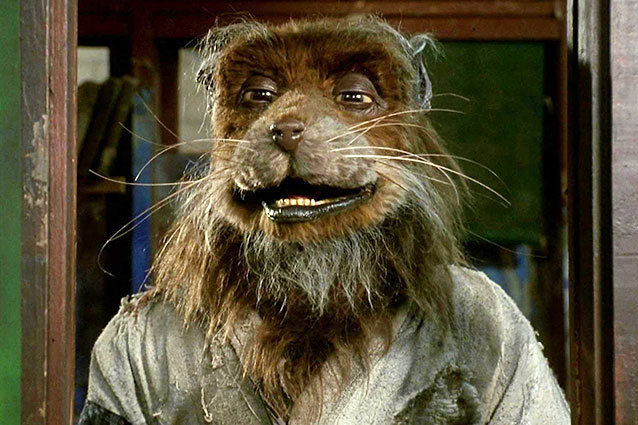
As a joke? To get back at some thin-skinned foreman? Whyever they did it, they voted to let the rat be the Head Signaler on their road crew. They even taped a little red flag to his little brown claw. People slowed as they passed in their cars, taking pictures, giggling. It was fun.
It was fine.
One day Rosa and her sister came back from the fabric store and began taking a picture with two of the tall, handsome road workers in front of their growing hole.
The rat was in Rosa’s hand, smirking, I felt.
They were all smirking, I felt.
I slammed the window of our apartment hard enough that everyone looked up.
But the only evidence of my tantrum was a bird flying into the bright afternoon.
~
That winter I coughed up juice or coffee while reading on my phone; the rat had saved one of his fellow construction workers from a “live wire” while working on the straightaway off Lundy Boulevard. It was a whole thing in the city.
The Rat Hero.
Rosa told me we had to go.
Or she’d go without me.
I couldn’t get out of bed on the day the rat was given his medal on the steps of the capitol for “distinguished bravery above and beyond that which is expected of any city employee.” I had the flu. Seriously.
“Seriously,” I said, as she sprayed perfume over her head.
~
Not long after the rat became president of Laborers, Local 76.
A Union chief.
I read about it in the big paper––the real newspaper, where the alderman fight and the city announces its plans for new stadiums and airports.
More specifically: a copy of the big paper, abandoned on the train seat next to mine.
“What is this?” I said to nobody, jaw out.
And nobody answered. Because I was alone on that train: just me and a newspaper and a rat I fetched from between our trashcans, his eyes black on the shoulders of our fine mayor.
~
I should’ve gone, I think.
Should have.
But I told Rosa she’d have more fun with her sister.
“The rat’s a big deal,” she told me. “He got his start on our block! Plus, open bar! A raffle!”
“No booze cruises for me,” I told her back. “I get sick.”
“Sick.”
“Collie’s wedding, remember?”
“Please.”
“Please?”
“Yes! Please! The lights! The city at night! The romance? Please!”
“I know, I know,” I said hard, sitting back on the sofa. A football game played silently on the television; a Giant’s fan streaked across the visitor’s endzone, only to be swarmed by security; they wrangled him, zipped him from the back and carried him off the field.
“I’m sorry,” I said. “I do want to.”
“Then you should,” she said. “If you want to, then you should. It’s not so complicated.”
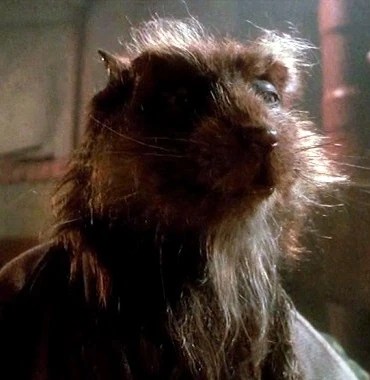
The day Rosa left me for the rat was a bad day.
Bad.
“Can’t we talk,” I pleaded, blocking her from our almost white door.
“Talk about what?” she asked, looking up from looking for the bag she kept her hair straightener in. “He’s downstairs in the car. It’s happening… you don’t even really like me.”
“I love you,” I said, because it did feel like the right moment to play that card.
“No,” she said, finding the bag. “You don’t!”
I reset.
“I made that rat,” I said, realizing immediately how crazy that probably sounded to her, but needing to say it, because I think––well, I think right then saying it meant more to me than anything I’d said in so long. Yeah. Right then I was proud, or something rhyming with proud. My cheeks grew red, grew hot.
“I made him,” I said, offkey, no longer sounding crazy but like a woeful little boy who’d lost his match.
But I’d committed.
I stood up all tall and powerful, filling myself with this new dazzling truth.
My truth.
“I made him more than a rat,” I said. “I gave him to you! The workers! The mayor! This whole city! It was me that plucked that little titmouse right from between the garbage cans!”
I held my palms towards the ceiling like a blackjack dealer.
Then I said my name twice, like it maybe meant something.
Rosa repeated it back to me like it didn’t.
That’s when I knew she’d really turned.
Or had finished turning.
She set down her bag and put her hand on my shoulder. She used a sad new voice I didn’t know she had. “Oh baby,” she said, “That’s what’s good about him, he doesn’t need the credit; he’s nothing like you. He’s better. And there’s a million more just like him crawling around in the sewer right now. Each one, like him, brilliant and perfect. Each one ready to shine.”
Then she had passed me.
And was gone.
Very gone.
Maybe with the rat.
Maybe.
Maybe with someone else. Or––heck––maybe just tired of me, and out there alone, folding towels and underthings, unbagging groceries, watching our city become not our city. Watching our city become a place where things bloom with change and rat-love and new garden boxes which are apparently anti-bug, yet are still, somehow, safe for the starlings and juncos and black birds to all land themselves in for a while. For a time.
~
Lonely.
Lonely.
I went to the U-Haul and rented a truck with a yellowish stripe and a nice painting of a tadpole on the side; the tadpole was eating the end part of a leaf. The leaf and tadpole were both indigenous to a single lake in Washington. Washington was west, far away from the city. That seemed like enough direction. I drove west and stopped where the sun felt massive yet bearable.
I got myself a nice big apartment that overlooked a little green town where it seemed everybody had already been rescued. No rat heroes. None.
That job didn’t exist here.
~
For a time, my life’s been better.
Yes.
My building has a gym with heavy steel I can lift if I’m feeling wild. I have an elevator with bright buttons and a doorman who stays until 11pm on weeknights and hands me breath mints if I’m running out in a collared shirt. There’s a rooftop pool with lengthy chairs for tanning. And a tiki bar you can slide up to the edge of the jacuzzi.
The apartment is good.
The town is good.
Quiet and clean. No dust in the air or holes in the street. Very few jackhammers and even less cranes moving slowly in the sky. The closest thing to vermin I’ve ever seen is a baby fox up on a hillside on my drive into work.
It’s better for me.
Healing.
And I am finding ways to be and to feel even greater than I ever have before.
I try things now.
Enjoy them.
I find new beauty whenever I hike past the water reserve.
I take dance classes on Second Sundays where the teacher wears a little microphone.
I watch sunsets from a bench that overlooks the car park and because all the GMC’s and Toyota’s have just-shined windows, it looks like 200 days all ending at once.
I’m good.
Everything is.
Has there been a bad night or two? Of course.
A bad night or two.
We all slip up a little.
Crack some, in some ways.
For example.
That night at the fair was not the best night I have ever had at a fair.
No.
Certainly not.
~
See.
What happened was I’d drank some at the bar at the way-far end of town and decided walking would be best. That it would be Safest. So, I followed the lights towards the Tilt-A-Whirl, the Big Wheel, and that thing with a long spine that would drop you from way, way up. The fair was beautiful; and grew more beautiful the closer I got. The smell of the petting zoo. The grateful huddle of strangers all bundling themselves to the neck in the back of their truck beds. The children. The children stretching themselves to be at least this tall to ride.
I felt I was a part of something.
A part of that night.
A part of this awesome new fair in my awesome new town.
But before the joy could begin––
I got to the roadblock.
Behind which the generators for the bounce castles hummed in all darkness.
So.
I thought it best to cut through the field.
~
In the field the teenagers were having a good time; practicing kissing; counting tokens; the boys were wrestling hard against the broken corn; the ones with sleeves controlling the action, while the ones without sleeves refused to tap; meanwhile, the girls lied flat on their stomachs and prayed for another great tornado; a bank robbery; one of the teachers at the school to marry one of the students; something; anything to liven up the moment.
I tried to walk quietly.
I didn’t want them to see me alone.
You need directions to the Goofy Convention? I imagined them asking.
Report to the nearest rainbow, I could almost hear.
Slowly and cautiously.
I continued towards the lights.
Making a point to keep my head down.
As I got as close to them as I was going to get, I peeked over in their direction.
The boys had moved on from wrestling and had started holding their breath to see who had the best lungs for smoking. It was quite a site.
Of course, I shouldn’t have stopped.
But of course, I did.
Just for a moment.
A moment.
Again––for real––I did not want to bother anybody.
That’s the truth.
The truth.
Which is when one of the boys turned around––with the veins in his neck beating and the rims of his eyes throbbing, his entire body falling into a lesser state of consciousness––and nodded.
He nodded: yes.
It was okay that I watched.
It was okay that I stayed watching.
Someone broke, a deep woofing cough.
Then they all started laughing.
And snorting.
And then laughing about snorting.
Which made me laugh.
All that laughing and snorting and laughing about snorting.
So, I, like a big fat excited moron, said, “You think that’s funny? I got a story for ya!”
And then they all looked at me like a new type of animal.
Or like a really old type of animal.
Maybe an old animal that felt new because it hadn’t been seen in such a long time.
Something.
“What?” they said.
Which is when the girls stood up from their blankets and walked over to the boys.
And they all looked upon me together.
~
I told them my story.
My awful story.
About acting like you’re in love and then finding out you really are. And a rat. A city. A girl that changed her telephone number or blocked mine. And joking that the rat that stole my girl, right then, probably, was running the circus right over there. And then pointing towards the Fun Slide or the caramel corn stand where they served everything up in a newspaper cone.
“He’s probably the ringleader,” I kept going. “The boss rat! Right over there!”
Which is when one of the teenage boys, presumably the one who tells people things for the rest of the group, told me to go, “Catch that little fuck and stomp his ratty brains out.”
And then all the teenagers started either laughing.
Or crying.
But I think laughing.
It’s hard to say.
All I knew for certain was that my eyelids were getting heavy; the alcohol was starting to slow me; so, whatever I was going to do to win them over I had to do it quick.
“I will go get him! I’ll go get him right now,” I said, getting all excited.
Then I smiled this awful smile.
And remembered Rosa teaching me how to smile so I could be more useful in our pictures.
Their cheers or wails of whatever had me going.
I was going pretty good.
“Oh yeah!” I yelled.
Then I jumped on the fence that separated us from that bright and shiny fair.
And I started climbing.
Best I knew how to climb.
While the teenagers starting howling.
The boys who refused to tap out and the girls who needed a war.
All of them going at once.
Higher and higher and higher.
They grew louder as I went.
I was so happy they were on my side.
Happy to have a side.
Happy that no one asked me who I knew. Or what I knew. Or what––if anything––I was doing. Happier still, that not one of those kids walked up and slapped me in the face. And so thankful I was not asked if I like getting my skull broke. I did not cry in front of them. I did not cry.
No.
I just got to the top of the fence and let my legs dangle over each side.
While the teenagers’ cries grew soft.
And eventually grew to be gone.
As they lost interest.
In me.
Which tends to be how it goes.
For me.
But in that moment, I was okay with it.
I was happy to be up there alone at last and with best seat in the house.
Finally getting a look at those lights up close.
Those spinning chairs that go out wide only to come back in.
And the big blinking buzzers.
And the hammer-bells you need a mallet and strong man to make loud.
I stared at it all for a time.
A long, long time.
Until the night whistle blew.
And the fair began clicking off.
Ride by ride.
Row by row.
The family men grabbing their wives, their wives grabbing their children, their children grabbing for their balloon prizes and goldfish––treasure not meant to last, but on that night, they might as well have been diamonds or emeralds. I watched as everyone headed for the exits. Then I watched while the runaways and palm readers, the animal trainers, and the semi-truck drivers, all padlocked what needed to be padlocked before retreating to their campers, taking great time and great care to bolt themselves from the outside in.
The teenagers who once cheered for me fell back into the field.
Back to their cars, their clever ways to be home before curfew. Some leapt the fence, cutting through the abutting tree farm––Douglas firs, Blue Spruce, and Cyprus trees––all small and with yellow ribbons tied snuggly around their trunks, all lucky to have survived of a nasty spate of pine wilt that’d infected and then spread throughout our beautiful valley in the early part of spring.
The teenagers disappeared into the timberline.
All that was left were the baby saplings.
Doing their best to grow big.
To thicken.
To become strong and full and earn their place in the thicket.
And they deserved it.
To be beautiful for a time.
Beautiful until next winter’s clearing.
Anyways.
I was then alone for real.
Which was fine.
And good.
I was fine and good.
In the dark with just my legs dangling.
I held the top of the fence like it was a bronco between my thighs. Squeezing. Un-squeezing. Releasing. “That’s good,” I said softly, running my hands over the fence-horses imaginary mane and imaginary ears, its forelock, nose, and the branches of its jaw.
Yeah.
Everything was perfect right then.
I had made no mistakes that night, not yet.
No.
Up to that point I had only gotten to know my beautiful town in a more beautiful way.
Met its teenage boys, holding their breath in search of a small and essential glory.
Climbed its fences.
Made a night horse of its fences.
Watched its county fair go from bright to dark.
I was good.
Getting better.
Whistling.
For a long time, this was the scene.
Until, of course, that all-too familiar gnawing began at the fence somewhere beneath me.
Chic-chic chic-chic chic-chic.
And I could smell the twist of wire.
And the little sparks.
As he bent and then tore at the metal.
And, of course, stupid me.
The me that can never hold my ground.
Any ground.
The moron that can never look away.
Of course.
I looked down.
And there he was.
Smiling sort of.
He’d had his teeth redone since I last saw his picture.
His mouth had become a gentle nest of pearly, unmarked dominos.
They were probably fantastic teeth for eating steak and potatoes at his hero banquets. And Rosa probably enjoyed joking with the other hero-wives that his new teeth tickled the tips of her nipples when he kissed her body slowly.
I let out a deep breath.
And turned my head up towards above the darkened fairgrounds.
An airplane dropped below the cloud line.
Its lights pressed purple against clouds.
I could feel its turbulence.
Its jostling.
The whir of its landing gear as it made its final decent into my beautiful city.
The fair sitting quiet below.
And me, quiet too on my silent fence.
And scared.
Always scared.
As he began to purr and fizzle.
Then growl.
And grow.
Molting, slowly.
Slowly.
Then quickly.
“I’ll make it easy for you,” said the Hero Rat.
His joints clicked.
Like a combination lock turning. Unfastening. Opening.
He stood onto his back legs.
Six feet.
I shut my eyes and felt the warm wind of my beautiful town.
Ten feet.
I kept them tight.
My eyes.
But I could feel the rat’s muscles growing in the dark.
And then he was fifteen feet tall, or however tall I was up there on the top of the fence.
And could feel his breath across eyelids.
The smell of hay.
Of water.
Rubbing alcohol and Montblanc, the same cologne Rosa would get me every easter.
The gentle clacking of his nails as he set them on my shoulders.
His whiskers sweeping across my forehead.
I could feel the hot spit winding inside his mouth.
“This won’t hurt,” said the Hero Rat. “This will not hurt you.”
“It will,” I said.
“It doesn’t have to,” he said, his nose searching the still-air around my body.
“I know that!” I yelled but also cracked. “I know. But it does, okay? It does hurt me.”
And I was sort of crying then.
With my eyes still closed.
Tight
Tighter.
The tightest they’d ever been tightened.
As his jaw began to stretch, to split.
And.
Then.
It started.
The thing I feared most.
The Hero Rat began to not hurt me.
And I began to not get hurt.
Sam Berman is a short story writer who lives in Boise, Idaho. He has had work published in Forever Magazine, Joyland, Expat Press, Maudlin House, the Northwest Review, the Idaho Review, The Masters Review, Vlad Mag, HAD, Hobart, X-R-A-Y, CRAFT, Dream Boy Book Club, and Soft Union. He was selected as the runner-up in The Kenyon Review’s 2022 Nonfiction Competition as well as a finalist for the 2022 & 2023 Halifax Ranch Prize. He has been nominated for the Pushcart Prize, Best Small Fictions and Best American Short Stories. In addition to his writing, Sam is also the Director of Storyfort, a literary festival held during Treefort Music Fest every March in Boise, Idaho
 High Horse
Leave a comment