Blaine Todd’s album Goodbye ‘Til I Do Good By You transports us to a western dreamscape that is beautiful and dusty, messy and literary. The album is reminiscent of one of Terry Allen’s radio dramas with notes of the legendary late night radio of Joe Frank and hints of Willie Nelson’s tale of the Red Headed Stranger. It takes you to different corners and crevices of the post-modern, deconstructed west. GBTIDGBY feels like an original and fresh take on a country album that is full of poetry and self-awareness.
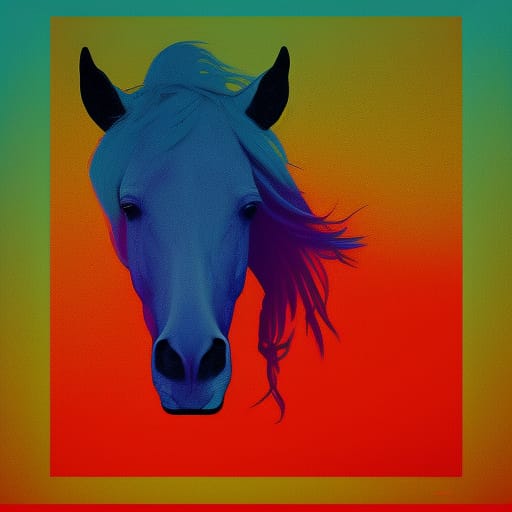
"Every man rides the horse that he deserves"
We meet the protagonist in “Everyman”, a “tired rider” caught up in a “cosmic joke”. He is searching for meaning, hungry for answers in a desolate land full of absurdities and riddles. These songs build on one another in their complexity into a sonic collage that you’ll want to absorb in order and all at once. It is hard to pick favorites as they all seem to exist as a whole and compound with energy as the album progresses. I guess there is an intermission built in if you buy the tape (or album?) as you’ll have to flip from side a to b… and maybe make yourself another drink before diving back in. We’ve been digging into Todd’s album GBTIDGBY and his back catalog; it felt like we needed some answers. Below is our interview with Blaine Todd:
So Blaine, I would like to start by asking when and how did you begin? Where did you grow up? How did you begin making music?
I grew up in North San Diego County—a community of marines, vatos, skaters and surfers, lifted-truck bros, niche religious cults, agricultural workers, Barbie doll people, hippies, and bikers. Skateboarding and surfing were my entrée to art and music. I bought an electric guitar from a friend at 12 and made tape recordings off the radio. I didn’t use a computer yet, so I didn’t know for quite some time about guitar tabs. I played the songs over and over and painstakingly learned them note by note. I tried to write songs simultaneously, emulating the artists that were formative to me and learned how to record myself on a 4-track. I did it quietly at night while my parents thought I was sleeping.
What is Other Minds and how are you associated with that organization?
Other Minds is an experimental music nonprofit that I help run. We release records, produce radio broadcasts, preserve analog recordings, and present concerts in San Francisco. I started in 2012 as a volunteer after seeing a mariachi band play Cage’s 4:33 at SF MoMA. I told my partner Riva afterward that I felt I should be working in the arts rather than making pizza in the Castro. She suggested I get in touch with the producers of the concert and offer to volunteer. I called OM and said that I’d been to their concert, and I wanted to help. Turned out they hadn’t produced the Cage concert after all—I’d misread the program in which OM had merely placed an ad for some other thing they were doing but they took me in anyway. I studied literature in school and earned my keep through writing—grant applications, program notes, marketing materials, and whatever else was needed. I stuck around, ate shit, and learned. Now I help curate, raise money, produce concerts, and manage the staff. The music tends toward the wildly unpopular, but it gives me ideas and puts me in contact with some interesting people. Charles Amirkhanian who runs the joint has been a mentor for many years.
How did the idea for Goodbye Until I Do Good By You come about?
Pretty gradually. It took a while to feel alright about leaning into genre-specific music and a while longer to figure out how to adapt it to my vision. I had to circle it before committing. A big part of it was identifying the resources. I had to phone in some favors for space, tools, and players. A lot of this music business is organizing—it’s not an aspect I particularly enjoy. As one or two songs took shape things began moving along more easily and I grew more comfortable with the idea of leaning into it. The vision wasn’t fully formed at any point, it was much more iterative. I sometimes envy people who have a clear idea of what they’re trying to do. I don’t know myself that way. One thing that I can recall early on in writing the record was being fascinated by Willie Nelson’s Red Headed Stranger. I love reading and have writing aspirations but that’s an ambition that’s hamstrung by work and family. The way Willie strung together a narrative across a record felt like a way to combine music and literature. There is no central character in my work or a linear plot, but as things proceeded I started to think more about throughlines and interludes.
Can you talk about the scene or school that you come from? Who were your teachers, influences, when it comes to your music?
Not one with any definable character I can summarize. Punk edges on the spirit, but I wasn’t part of the culture in terms of its signifiers. As a teenager, I hung out in taqueria parking lots with the other kids, skateboarding, fishing for booze, and listening to all kinds of music. I had very young parents who shared and bought music for me. My mom turned me on to Joy Division, R.E.M. and other arty pop groups from the 80’s. My dad gave me Sabbath and country music. His pop was a biker. We’d go to my grandpa’s house and there’d be a bunch of gruff MFs in the garage, smoking dope, painting bikes, and listening to music. I’d go through his records—Grateful Dead, David Allan Coe, Merle, Waylon…not poets per se, but those with spirit.
Later, I remember feeling like something switched for me when I heard Frankie Sparo’s record Welcome Crummy Mystics. It was angry, mysterious, and elegant. It combined songwriting and a distinctly experimental approach. I was also listening to Silver Jews and other “literary” songwriters.
When I moved to San Francisco I became friends with Rob Fisk, who some years before started the group Deerhoof. He and I went on a trip to Alaska to build a cabin on some land he owns, and we shot some video footage of the trip. When we got back, he invited me to make some recordings reflecting on the trip. It was a seismic shift in my life. Building a cabin during an Alaskan winter, interacting with the locals, moose, strangers warming my face with their hands to keep me from frostbite. When we got home, we played music about it. He held a single organ tone and told me to vocalize over it. Improvise—no words. He muted the take and told me to do it again. Then he did the same. All of the happenstance harmonies, the aggressively dissonant moments, and the mental imagery fucked me right up. He edited the footage we shot together and used the recording as a soundtrack. His process was so spontaneous and present. Like, ready? Go. Ok, that’s it. It was released as a DVD, CD, and book of photos. The DVD had half of the soundtrack and the CD had the other half. You were supposed to play them both at the same time on separate devices for an unrepeatable stereo experience. Afterward I joined Common Eider, King Eider—a collective he organized to make music of this sort. I owe a great deal to Rob. And also to my brother, Andrew Weathers, who I brought into CEKE and with whom I made many other records of a similar spirit.

What were you reading, listening to, watching, ingesting when you were conceiving of GBTIDGBY?
The record came so slow. I bailed on a lot of stuff between 2019 when my last record came out and now. Much was read and composted in the interim. What stands out during the making of the record are Freddie Exley’s novel A Sport’s Fan’s Notes, short stories by Lucia Berlin (many thanks, to Wes Tirey for rec), Dog Soldiers by Robert Stone. Listening influences were Austin Leonard Jones, Bruce Langhorne, D. Charles Speer, Flaco Jimenez, Lou Harrison, Scott Walker, Charlemagne Palestine. I held the imagery of films like Chulas Fronteras in mind, and the horse-mounted scene from either The Shooting or Ride the Whirlwind by Monte Hellman. I can’t remember which one it was, but the camera is in the rider’s perspective, sort of looking down. It’s woozy and vaguely psychedelic. I was also building a cabin in the Sierra Nevada mountains throughout the writing and recording of the record. Much of that experience made its way into the music and lyrics.
How did you get hooked up with Perpetual Doom and Worried Songs? Can you tell us a little bit about these labels and that process?
The process is dismal. Any unknown DIY musician can tell you—it’s a holler into the void. I don’t have money to blow on shit that’ll give me a leg up. I record the music myself on borrowed gear and call in a lot favors. My brethren turned me onto the labels. John Krausbauer, who I play in a group called Night Collectors with, turned me onto Perpetual Doom, and Henry Birdsey clued me in to Worried Songs. I recommend listening to both of those fellows’ music. Worried Songs feels like a natural fit for outsider music. The records Chaz put out by Ralph White hit me hard. In some ways, given his interest in things like Tongue Depressor and Old Saw, I felt like I might not have a chance, but his interests are wide. Henry assured me that Chaz is a lover of oddball literary country music. Perpetual Doom, I feel, holds the more accessible aspects of my music. Austin Leonard Jones and Greg Olin’s Graves project are very accessible. They’re poetic, thinking-man’s country music. Lou at PD has been a delight to work with. He’s someone who doubtless receives a metric shit-ton of submissions but obviously takes the time to listen. Not everything he puts out may be your bag, but he’s got a good ear and there’s a reason PD has a cult following.
Who was involved in the making of the record?
There are various players and I gave them very little instruction. In terms of the album’s conception and production, I was doing it alone. I recorded it in the studio of my friend, a composer named Brian Baumbusch, in a room he constructed and on microphones he made himself. Scott Siler who I played with in Andrew Weathers Ensemble and Real Life Rock & Roll Band played drums and piano. He improvised his parts on the spot, which I trust him to do. He comes from a new music and gamelan background and can do just about anything you can think of he’s also got good intuition. Scott’s one of my favorite musicians. Henry Birdsey played pedal steel and A. L. Lee fiddle. I didn’t have to tell those guys a thing. They got the tracks, did what they wanted, and it worked. Andrew Weathers mastered it. I’ve worked for many years with AW in a variety of contexts and I always share my music with him in its most inchoate stages.
From the first track Everyman, there is a looseness that feels very intentional… what was the thought process of how you wanted the album to sound?
I hoped to impart an arc to the sequence. The impression of exposition, conflict, and denouement. I wanted the sounds to be clear but to still feel ramshackle and homespun.
There’s also an element of collage that makes the album feel very well-thought out and unified…can you talk about how you put the record together?
I’ve been working on blending my appreciation for simple songs and experimental music together for a while. I’m a split person. Light and dark, abstract and representational and I struggle often with how to unify that stuff in my daily life. I don’t consider this record to be the synthesis of that quite yet. I had an idea when I started making the record that it should function like a radio dial moving between the bands, sort of in a Brion Gysin manner. To give the impression that it’s not left entirely up to chance but vaguely linked in its narrative having been stitched together from scraps of the same source material.
What is your relationship to country music? Can you talk about why you wanted to make a “country” record?
I was raised on it. I have countless memories of driving to the hardware store with my dad listening to and singing country music. The first pet I can remember was a beta fish I named after a Brooks & Dunn song. I see country music as being an underused and plastic genre. It’s literary, emotive, and pastoral. I think about the radio dramas of Terry Allen, the dusty soundscapes of Ry Cooder, and the avant-hillbilly music of Henry Flynt in terms of the ways it can be reshaped. It’s a space for masculine sensitivity, for experimentation, and understated wit. It’s an historical, American genre of music that’s constantly being reinvented to suit the needs of the times. I love the narrative qualities and the modal, trance-inducing aspect it can take when stretched out.
Can you talk a little about your music that came before the record? I’ve really enjoyed Every Road is a Good Road and I am currently working my way backwards through your catalog. There is a lot of biblical language that you use to name your songs… am i hitting on anything here? There is an old testament feeling…
I’ve been asked before if I’m a Christian. I like the stories and the imagery, but I don’t have a relationship with G-d in the traditional sense. I was raised Catholic, went to a Catholic school when I was real little, and I have a catholic proclivity toward the arts. I love the symbols, idols, and metaphors. It’s all fodder for manipulation. I remember going to church when I was little and singing the hymns. There’d always be someone whose voice was louder and than the rest and sort of out tune. I always felt like those brown notes they were hitting were the true essence of religious passion. Eyes closed making ugly, vulnerable sounds. The instrumental music tends to come from a complicated relationship with avant-garde classical music. Rural tone poems, inspired by flashes of the sublime—those moments when death and beauty get tangled up. If anything, my sense of the divine is wrapped up in nature in all of its terrifying beauty.
Is there anything different about this new record or do you consider it a continuation of what you had been cultivating and crafting before?
It’s different, sure, but a continuation. I think it sounds clearer and more confident but there are some essential elements that are pervasive. Sounds getting stretched a little past their expected expiration, turns of phrase, introversion, domestic struggles, absurdity…
Indeed…
Blaine Todd’s album can be purchased from Perpetual Doom and streamed on all platforms on July 19th, 2024.
 High Horse